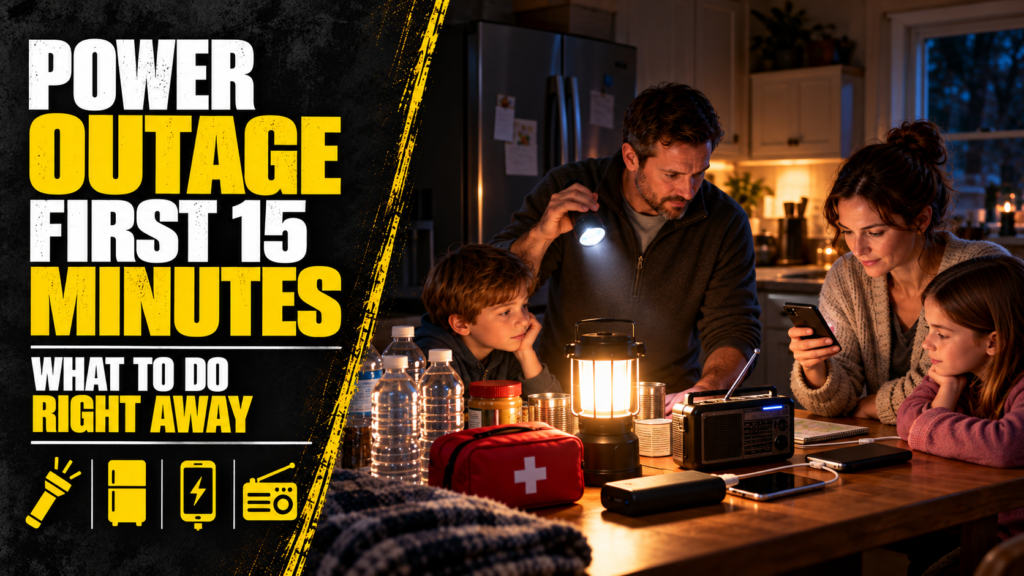
The First 15 Minutes of a Power Outage:
When the power goes out, do not try to solve the whole emergency at once. The first 15 minutes have a simpler purpose: keep a routine outage from turning into a larger problem.
Start with people and hazards. Switch to flashlights or other battery lighting, check whether anyone depends on powered medical equipment, leave the refrigerator and freezer closed, conserve phone battery, and find out whether the outage is limited to your home or affects the neighborhood. If you see fire, electrical arcing, a downed line, flooding around electrical equipment, or structural damage, the normal checklist stops. Move away from the danger and follow emergency-service or local-authority instructions.
A simple way to remember the first quarter-hour is 0–5–15: stop hazards first, protect what is time-sensitive next, then build a picture of what is happening.
0–2 Minutes: Make the House Safe Enough to Think
Forget the restoration estimate for a moment. First make sure nobody is standing in a problem that needs attention now.
Use a flashlight, headlamp, or battery lantern if you have one. Skip candles and improvised flame lighting; a dark house already makes trips, spills, and mistakes more likely, and an open flame adds another hazard. Then do a quick people-and-house check. Is anyone hurt? Does anyone rely on an oxygen concentrator, powered mobility equipment, refrigerated medicine, or another device that cannot simply wait? Do you smell smoke or something burning? Did you hear a pop or see a flash before the lights went out? Is water entering a basement or room where electrical equipment is located?
If a medical device loses power, use the person’s established backup plan. Depending on the device and circumstances, that may mean backup power, contacting a healthcare provider, relocating to a powered location, or calling emergency services. Do not wait for an outage estimate before dealing with a genuine medical-power problem.
Treat downed utility lines as dangerous and stay away. Do not approach them to inspect the damage yourself.
For an ordinary outage with no immediate danger, a useful household sentence is:
> “Lights are out. Nobody opens the fridge. Grab the flashlights, check on everyone, then we’ll find out how wide the outage is.”
That short instruction does something useful: it gives everyone a job before people start wandering around, opening doors, burning phone batteries, or improvising.
2–5 Minutes: Protect the Things That Start Losing Time
Once immediate hazards are under control, protect the things that quietly become harder to recover as the clock runs.
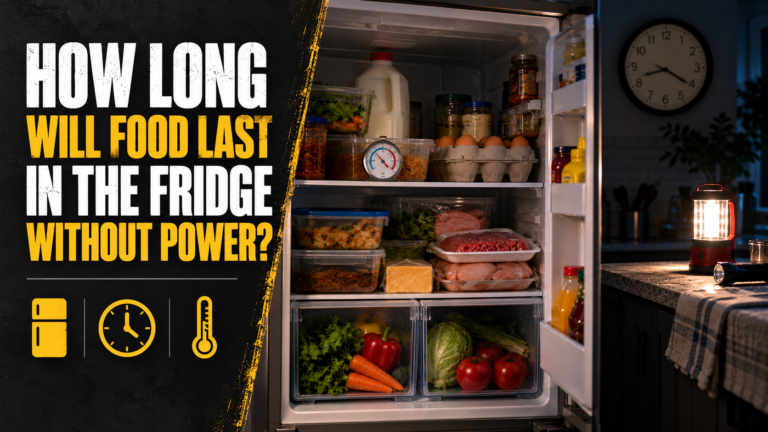
Keep the refrigerator and freezer closed
Do not open either appliance just to see whether the light comes on. You already know the power is out. Every unnecessary opening lets cold air escape.
CDC guidance uses about four hours as the refrigerator safety window during a power outage when the door stays closed. A full freezer can hold a safe temperature for about 48 hours, and a half-full freezer for about 24 hours, if the door remains closed. Treat those as decision points, not guarantees: time, starting temperature, door opening, and the condition of individual foods still matter.
If the outage lasts, food safety becomes its own decision problem. In the first 15 minutes, the best move is simpler: keep the doors shut and preserve the cold you already have.
Check essential powered equipment
Separate “inconvenient without power” from “important without power.” A television is inconvenient. A medical device may be urgent. A sump pump during heavy rain may become urgent. A well pump means your household water situation may change even if the taps still work for the moment.
This is where knowing your home’s dependencies matters. City households can have their own cascading dependencies too; the broader pattern is explained in City Infrastructure Dependencies You Notice Only When They Fail.
Preserve communications
Your phone may be your best link to people, utility updates, weather information, and emergency alerts. Protect the battery. Lower the screen brightness, close unnecessary apps, and skip entertainment until you have some idea whether this is a 20-minute outage or a 20-hour one.
If you have a charged power bank, keep it available. You do not necessarily need to plug the phone into it immediately if the phone is already well charged.
5–15 Minutes: Find Out What Kind of Outage You Have
With the immediate problems handled, figure out what you are actually dealing with.
First, determine the scope without taking electrical risks. Look outside from a safe place. Are streetlights and neighboring homes dark? If only your home appears affected, the problem may be limited to your service or household electrical system rather than the wider grid. Check the utility outage map or alert system before assuming the fault is inside the house. If you are unsure what happened electrically, do not open panels, remove covers, or attempt repairs beyond actions you already know are safe and appropriate for your home.
Check your utility’s outage information if cellular service is working. Local emergency alerts or a battery radio can also help during a wider event. You are looking for a few practical facts: how broad the outage is, whether there is a known hazard, whether officials have issued any instructions, and whether restoration appears likely to be quick or uncertain.
Then check the household systems that depend on electricity.
If your water comes from a private well, loss of the pump may eventually mean loss of running water. Municipal water can also be affected by major infrastructure failures. Do not assume that an outage automatically makes tap water unsafe, but pay attention to local notices. If authorities issue a boil-water or do-not-use notice, follow it. For longer interruptions, Household Water Storage That Still Works When the Tap Stops gives you a better starting point than trying to improvise storage after pressure disappears.
Extreme heat or cold can turn an otherwise manageable outage into a safety problem. Pay particular attention to infants, older adults, medically vulnerable people, and anyone whose health depends on safe indoor temperatures or powered equipment. If the home is becoming dangerously hot or cold, do not wait for a restoration estimate before considering a safer location.
Do Not Create a Carbon-Monoxide Emergency
Generators and combustion appliances deserve special attention because the mistake can be invisible.
Never run a portable generator inside a house, basement, garage, or other enclosed or partly enclosed space. CDC guidance calls for generators to be used outdoors at least 20 feet from the home and away from doors, windows, and vents. Point the exhaust away from the home, and use working battery-powered or battery-backup carbon-monoxide alarms.
The same basic warning applies to charcoal grills and other fuel-burning devices: outdoor equipment stays outdoors. Do not use a gas range or oven to heat the home.
And do not improvise a generator connection to household wiring. Backfeeding or bypassing proper transfer equipment can endanger you, other people in the building, and utility workers. If your home is not already set up for generator power, an outage is the wrong time to invent a connection method.
The 15-Minute Decision Point
At roughly 15 minutes, you may still have no reliable restoration time. You do not need one yet. What matters is that you now know more about the people, the house, and the outage than you did when the lights first went out.
Ask three questions:
- Is anyone becoming unsafe? Think medical needs, temperature, fire, flooding, electrical hazards, or another immediate threat.
- What stops working if this lasts several hours? Think water, sump pumps, heat, cooling, cooking, refrigeration, communications, and access needs.
- What should we preserve now because it is hard to replace later? Cold food, phone power, backup batteries, stored water, fuel, and safe shelter options all fit here.
If the answers are manageable, move into your longer-outage routine. If they are not, escalate early. Do not make relocation depend on a utility estimate alone. A medically vulnerable person, loss of essential powered equipment, rising indoor heat or cold, flooding, or another developing hazard can justify acting before the rest of the neighborhood does. Moving while conditions are still manageable is usually easier than waiting until the situation is urgent.
An outage is also an honest test of your preparations. Dead flashlights, an empty power bank, or uncertainty about backup power for the well pump, sump pump, heat, or medical equipment are useful information. Do not try to rebuild your whole preparedness system while the lights are out. Handle the immediate need. When things are stable, write down what failed or caused confusion. The Beginner Preparedness Guide for Real Life can help turn that short list into a practical plan rather than a shopping spree.
Key Takeaways
- The first 15 minutes are about preventing avoidable problems, not solving the entire outage.
- Check people and immediate hazards before checking restoration estimates.
- Use battery lighting, protect essential medical-power needs, and keep refrigerator and freezer doors closed.
- Preserve phone battery until you understand the likely duration and scope of the outage.
- Treat generators, grills, gas appliances, damaged wiring, and downed lines as serious safety issues.
- At 15 minutes, decide whether the household can safely wait or needs to begin a longer-outage or relocation plan.
Step-by-Step Actions
- Switch to a flashlight, headlamp, or battery lantern.
- Check every household member for injury or urgent powered-medical-equipment needs.
- Look and listen for fire, arcing, downed lines, flooding, structural damage, or other immediate hazards.
- Tell everyone to leave the refrigerator and freezer closed.
- Identify other time-sensitive systems such as a sump pump, well pump, essential medical equipment, heating, or cooling.
- Conserve phone battery and keep backup charging available.
- Determine whether the outage is limited to your home or affects the surrounding area.
- Check utility information, emergency alerts, or a battery radio for verified updates.
- Consider weather, household vulnerabilities, water dependencies, and how conditions change if power stays off for several hours.
- At about 15 minutes, choose the next posture: safely wait, begin longer-outage measures, seek assistance, or relocate if conditions require it.
Checklist
- [ ] Battery lighting in use
- [ ] Everyone checked
- [ ] Medical-power needs addressed
- [ ] No fire, arcing, downed-line, flooding, or structural hazard requiring immediate action
- [ ] Refrigerator and freezer closed
- [ ] Phone battery being conserved
- [ ] Essential pumps/heating/cooling dependencies identified
- [ ] Outage scope checked safely
- [ ] Utility or official information checked
- [ ] Water and temperature risks considered
- [ ] No generator, grill, or fuel-burning appliance being used unsafely
- [ ] Next decision made for a short outage versus a longer event