
Wound cleaning after an emergency starts with recognizing injuries that need medical help and protecting minor cuts from further contamination.
A small cut can become a serious nuisance when the power is out, water is limited, and everyone has bigger problems to handle. Dirt left in a scrape, a damp bandage, or an injury nobody checks the next morning can turn a manageable problem into one that needs medical care.
For an ordinary minor cut, the job is simple: stop the bleeding, rinse out the dirt, clean the skin around it, put on a clean dressing, and look at it again tomorrow. That sequence is for minor cuts and scrapes. A deep wound, a puncture, an animal bite, severe bleeding, or a wound with something embedded needs a different response and medical assessment.
Wound Cleaning: Check for Emergency Signs First
Before opening the first-aid kit, ask three questions: Is the bleeding dangerous? Could this be deeper or dirtier than it looks? Can the injured person feel and move the area normally? Look at the whole person, not just the cut. Is blood flowing heavily or spurting? Is the person pale, faint, confused, or having trouble breathing? Is there a deep opening, exposed tissue, a loss of sensation, or trouble moving the injured part? If so, get emergency help.
For life-threatening bleeding, call emergency services and apply firm, continuous direct pressure with gauze or a clean cloth. For life-threatening bleeding from an arm or leg, use a commercial tourniquet if available and follow its instructions; apply direct pressure while preparing it or if one is unavailable. Do not delay bleeding control to rinse the wound. Cleaning can wait.
If a large object is embedded, do not pull it out. Stabilize it and seek emergency care. Deep punctures can look deceptively small on the surface; washing the opening does not establish that the deeper tissue is clean.
For an ordinary shallow scrape or small cut with manageable bleeding, cleaning is appropriate once the bleeding is controlled. Wash your hands first. If you are helping another person, use disposable gloves when available. Avoid touching the open wound with dirty fingers.
Rinse out the dirt instead of trying to disinfect it away
Clean running tap water is suitable for rinsing many minor wounds. Sterile saline is another good option. Let water flow over the injured area until visible dirt and loose material are washed away. A quick splash is not enough when grit is still visible. A scraped knee with road grit may need more careful rinsing than a clean paper cut. If the flow is weak, use a clean container to pour safe water steadily across the wound; the objective is to carry loose contamination away, not to blast tissue with excessive pressure. Recheck under good light before dressing it.
Use mild soap to wash the skin around the wound, then rinse away any soap. Do not scrub raw tissue. If a small, loose speck remains near the surface, it may be lifted carefully with tweezers cleaned with alcohol. Do not dig for buried material or keep probing a painful wound. If debris will not come out easily, seek medical care.
Hydrogen peroxide and rubbing alcohol are not better simply because they sting or fizz. They can irritate injured tissue. Routine cleaning of a minor wound is generally better accomplished with water or saline than by pouring harsh antiseptics into it.
When the tap water cannot be trusted
After flooding, a broken water main, or a prolonged outage, do not assume water from a tap is safe just because it looks clear. Use commercially bottled water or a known safe supply for wound rinsing. Sterile saline from an intact container is useful if available.
If all you have is floodwater, ditch water, or water with uncertain contamination, do not pour it into an open wound as though it were a cleaning solution. If the wound is already exposed to contaminated water, remove the person from that exposure, cover the injury, and seek prompt medical assessment. Floodwater exposure can introduce organisms that ordinary household wound care may not address.
Prioritize stopping bleeding and protecting the injury while obtaining safe water or medical help. A wound contaminated with floodwater, sewage, soil, or other dirty material deserves prompt medical evaluation, even when it initially looks manageable.
Keep some clean water available for first aid as well as drinking. During an outage, a sealed bottle and a few clean dressings may be more useful than a shelf full of antiseptics.
Cover it, then keep checking it
Once a minor wound is clean, pat the surrounding skin dry. A thin layer of plain petroleum jelly can help keep a superficial wound from drying out; some people use topical antibiotic ointment, but these products can cause skin reactions and do not replace cleaning. Stop using a product if irritation develops.
Cover the area with a sterile nonstick pad or clean suitable bandage, especially if the wound will rub against clothing, get dirty, or be exposed during work. Secure it without wrapping so tightly that fingers or toes become cold, numb, or discolored.
Change the dressing at least daily and whenever it becomes wet or dirty. Each change is a chance to inspect the injury. Do not assume that a bandage you put on Monday is still doing its job on Thursday. When removing an old dressing, moisten it with clean water or saline if it sticks rather than tearing it free. Watch whether swelling, tenderness, and drainage are improving or moving in the wrong direction.
Watch for a wound that is getting worse
Increasing pain, spreading redness, warmth, swelling, pus, foul drainage, or fever can signal infection. Seek medical care rather than repeatedly cleaning and re-covering a worsening wound. Red streaking, rapidly spreading inflammation, severe pain, or systemic symptoms call for urgent assessment.
Seek prompt medical evaluation for deep or gaping cuts, wounds that may require closure, bites, punctures, injuries with retained foreign material, and wounds contaminated with soil, sewage, or floodwater. People with diabetes, poor circulation, or weakened immune systems should have a lower threshold for professional evaluation.
Tetanus is a separate question from visible cleanliness. A wound can look clean and still require a vaccine review. CDC guidance distinguishes clean minor wounds from dirty or major wounds. If the primary vaccine series is complete, a booster is generally recommended when the last tetanus dose was ten or more years ago for a clean minor wound, or five or more years ago for a dirty or major wound. Unknown or incomplete vaccination history calls for medical assessment; some dirty or major wounds may also require tetanus immune globulin. Antibiotic ointment does not prevent tetanus.
Do not seal dirt inside a wound
A nail puncture through a shoe is not the same as a shallow scrape, even if both leave a small visible mark. Think about what caused the injury, what the object passed through, and whether fragments may remain.
Not every wound should be closed with strips or glue at home. A dirty puncture, bite, or wound with trapped material can develop an infection when its surface is sealed over contamination. Do not improvise closure of these injuries. Protect them with a clean dressing and seek professional care.
For a shallow cut with edges that meet easily, a dressing may be enough. For a deeper cut whose edges gape, especially on a hand, over a joint, or near the face, timely medical assessment matters because closure decisions are time-sensitive and depend on contamination, location, and injury depth.
Put a usable wound kit where you can find it
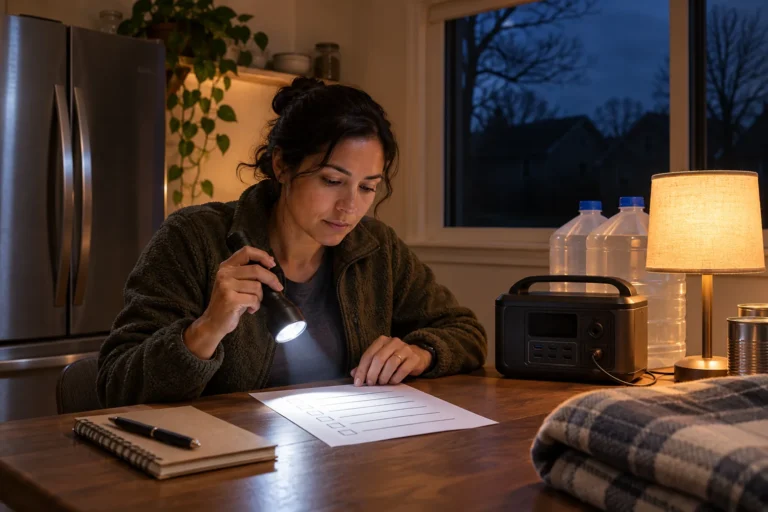
Keep the kit where it can be reached during an outage, with a flashlight nearby. Store clean dressings away from used supplies and possible floodwater. Put a short reminder in the kit: stop dangerous bleeding first, check for deeper injury, and review tetanus protection.
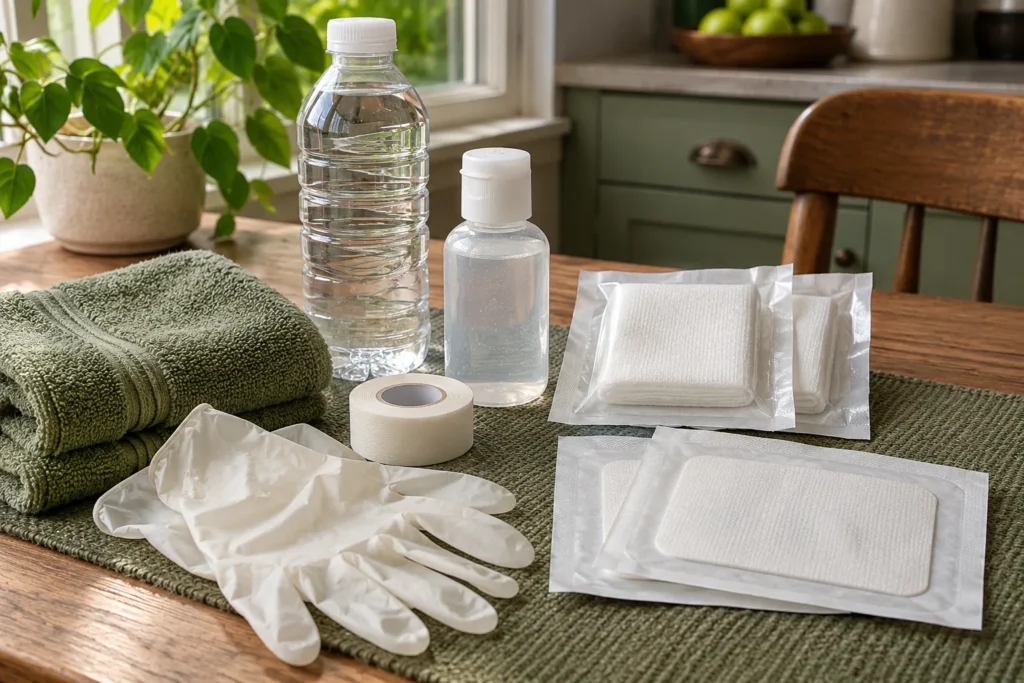
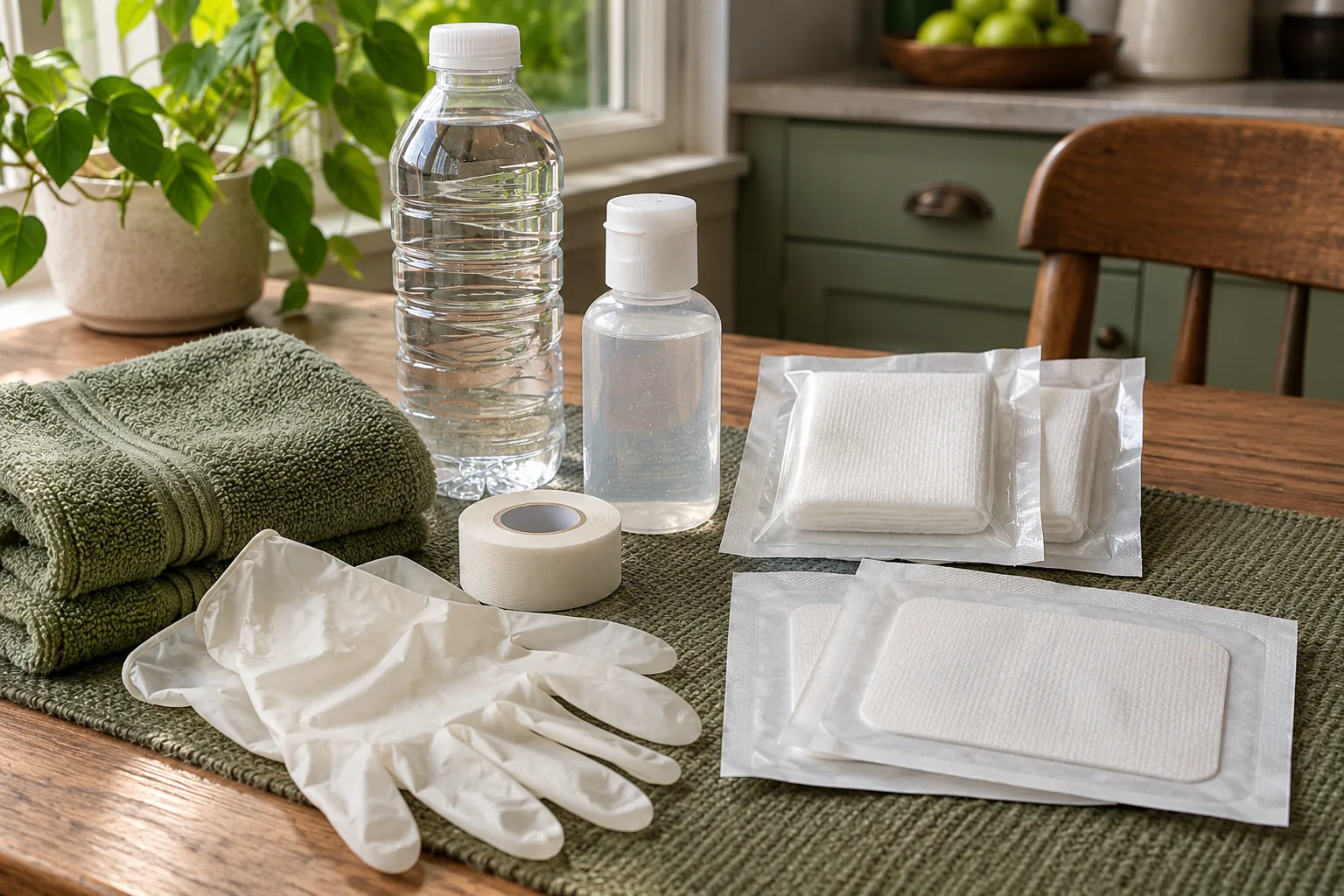
A practical home kit has disposable gloves, gauze, nonstick dressings, adhesive bandages, medical tape, clean tweezers, a small container of sterile saline, and access to clean water. Add a way to record the injury time and check it the next day. Keep supplies dry and protected from floodwater or household chemicals.
Picture a common situation: a storm knocks out power, someone trips over debris in the garage, and a forearm scrape fills with dust. First check for significant bleeding or deeper injury. Then wash hands, rinse with known-safe water, clean around the scrape, cover it, and check the dressing later that day. If the scrape contains embedded grit that will not rinse away, stop trying to excavate it and arrange medical care. There is no trick to it. Recognize the injury that needs help, clean the one you can safely handle, and do not forget to check it again.
Key Takeaways
Minor wounds need prompt, thorough rinsing with clean water or saline, not aggressive chemical treatment. Control bleeding before cleaning. Keep contaminated water and dirty hands away from injured tissue. Protect a clean wound with an appropriate dressing and inspect it daily. Deep wounds, punctures, bites, embedded objects, severe bleeding, and infection signs require medical attention. Check tetanus protection based on wound type and vaccination history.
Step-by-Step Actions
- Check the person and injury for severe bleeding, deep damage, embedded objects, and other emergency signs.
- Control manageable bleeding with direct pressure; call emergency services for life-threatening bleeding.
- Wash hands and put on gloves when helping someone else.
- Rinse a minor wound thoroughly with clean running water or sterile saline.
- Clean the surrounding skin gently; do not scrub inside the wound or dig for debris.
- Cover with a suitable clean dressing and change it when wet, dirty, or at least daily.
- Check for worsening pain, spreading redness, swelling, drainage, fever, or other warning signs.
- Arrange professional evaluation when the wound type, contamination, symptoms, or tetanus history calls for it.
Checklist
□ I can recognize a wound that needs urgent help instead of home cleaning.
□ I have a dependable source of clean water or sterile saline.
□ I have gloves, gauze, nonstick dressings, and tape.
□ I know not to pour peroxide or rubbing alcohol into a routine minor wound.
□ I will not remove embedded objects or dig out deep debris.
□ I will inspect the dressing and wound every day.
□ I know my household's tetanus vaccination records or how to retrieve them.
□ I have a plan for getting medical help when services are disrupted.
Related Guidance and Medical Sources
Keep clean dressings and safe water with your 72-hour emergency supplies, and use a maintenance schedule to replace damaged or expired items. Review Mayo Clinic’s minor-cut guidance and the CDC’s wound and tetanus guidance. This article covers minor wound care; urgent injuries need professional assessment.