Decision-making under stress starts with immediate safety and a clear next action. Emergencies don't arrive with all the facts neatly laid out. The power fails. A warning comes through. Someone gets hurt, or the road home is suddenly closed. Now you have to decide whether to stay, leave, help, or wait—and you may not have much time. You don't have to feel calm to make a useful decision. You need to recognize the danger and choose the next safe move with what you know.
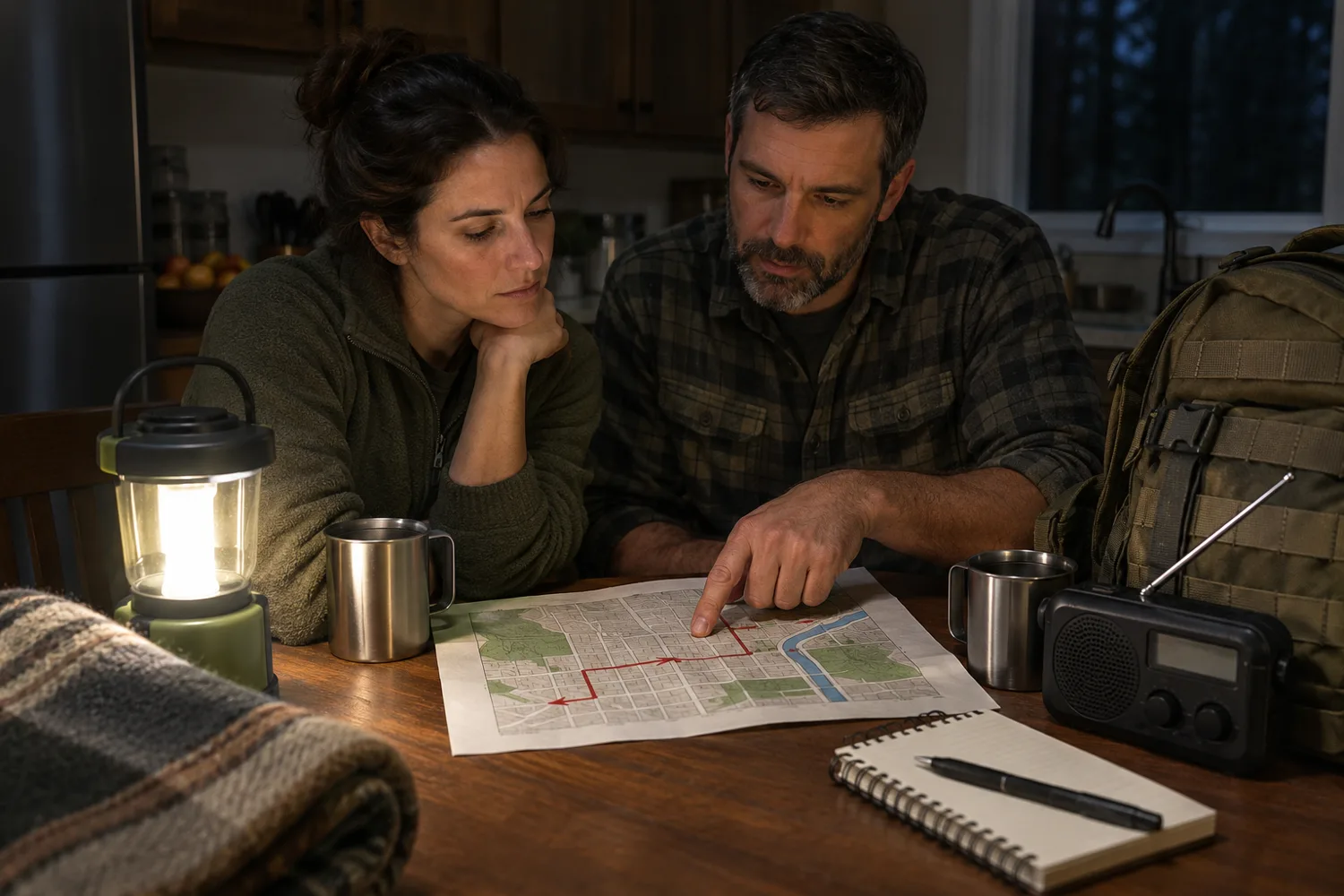
Start with this rule: deal with immediate danger first, then decide what matters next. If there is smoke, rising water, an unstable structure, a medical emergency, or an official evacuation order, do not spend precious time running a long mental checklist. Move away from the hazard, call emergency services when needed, and follow applicable official instructions. The method below is for decisions where there is enough time to think, even briefly.
Why your thinking changes under pressure
Stress can narrow attention. People may fixate on the most dramatic detail, miss an exit, repeat an unhelpful action, or accept a confident rumor as fact. Others freeze because every option looks bad. These are possible reactions, not proof that someone is weak or incapable. The CDC notes that traumatic incidents can affect concentration, problem-solving, alertness, and judgment. For practical emergency communications, agree on information sources and backup contacts beforehand. Preparation matters because a familiar sequence is easier to use than an improvised one.
Decision-Making Under Stress: Use the CHECK Method
For decision-making under stress, CHECK is a practical household decision aid, not a formal emergency-service protocol. It has five parts: Check danger; Hear the facts; Evaluate options; Choose the next action; Keep reassessing. For a non-immediate choice, say the five steps aloud with another adult if one is available. This is a way to stop going around in circles, not a promise that every choice will be right. When time permits, slow down enough to check your thinking.
Check danger. Ask: What could hurt someone in the next sixty seconds? Look for fire, moving traffic, electricity, floodwater, unstable objects, severe weather exposure, and people needing urgent care. Establish a safer position before collecting details. Never enter floodwater or a dangerous building just to investigate.
Hear the facts. Put what you know in one pile and what you have only heard in another. Then notice the assumptions you're making. “Water is at the bottom stair” is an observation. “The whole neighborhood is flooding” may be a report. “We have twenty minutes” is an assumption unless an authoritative warning supports it. Check official alerts and local instructions when available. If communications are down, say what you do not know rather than filling the gap with confidence.
Evaluate options. Name two or three realistic actions, not ten imaginary ones. For each, ask: What is the worst plausible consequence if we are wrong, and how soon would it happen? Consider exposure to danger, travel conditions, children or people who cannot move quickly, medical dependencies, and whether you can reverse course. Eliminate any option that requires entering an immediate hazard merely to gather more information. Comfort is not the deciding factor. Safety is.
Choose the next action. Give yourself a clear instruction: “We are moving to the designated shelter now,” or “We are staying away from the damaged room and calling for help.” Assign jobs by name. One person collects medication, one checks on a child, and one brings the emergency bag—only when those tasks do not delay escape from immediate danger.
Keep reassessing. A good decision can become a bad one when conditions change. Set a trigger: if an official warning changes, conditions deteriorate, if indoor temperature becomes unsafe, or if a family member's condition worsens, reconsider immediately. Do not wait for a planned review time when danger increases.
A power-outage example
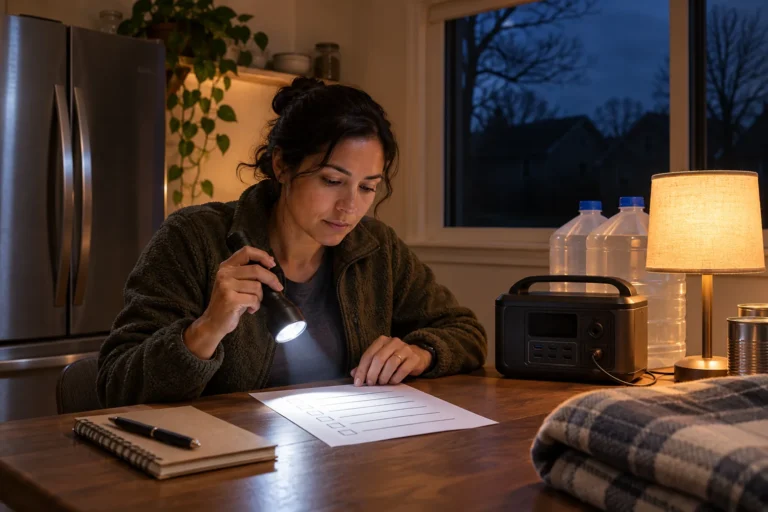
Imagine a winter outage at 8 p.m. The furnace is off, phones are partly charged, and a family member needs refrigerated medication. This is a decision-making under stress scenario, not a universal medical plan. A neighbor says power will return by morning, but no utility estimate is available. One person wants to drive immediately; another wants to wait.
First check immediate hazards: no generator indoors, no unsafe alternative heating, and no blocked exits. Next separate facts from guesses. The power is out and the indoor temperature is falling; the neighbor's estimate is unverified. Then identify practical options: remain temporarily with warm clothing and a monitored indoor temperature, relocate to a known heated destination, or contact emergency services if a medical or exposure emergency develops. Check the medication's actual storage instructions and obtain pharmacist or manufacturer guidance rather than assuming all refrigerated medicines have the same limits.
The family chooses a provisional plan and a departure trigger based on indoor conditions, medical needs, travel safety, and official warnings.
If the dependent person needs powered equipment or temperature-controlled treatment, the contingency must come from their existing care instructions and qualified clinical guidance, not a guessed household threshold. Someone checks reliable utility updates; someone prepares essential medications and documents. They do not wait for the house to become dangerously cold before reconsidering. They aren't choosing between staying forever and leaving forever. They're choosing what to do now—and what would make them change that choice.
Three traps to recognize
The first is false urgency. A loud rumor or alarming social post can make a choice feel immediate even when there is time to verify. Ask whether the threat is present, predicted, or merely repeated. But do not use verification as an excuse to delay an actual evacuation or emergency response.
The second is sunk-cost thinking. People remain in unsafe places because they already spent hours preparing to stay, or keep driving into a blocked route because they have traveled so far. The miles already driven won't make the road ahead safe. Decide from what is happening now.
The third is group confusion. Several people shouting different instructions can waste time. Choose one coordinator for a short task, state the decision plainly, and ask others to repeat their assignments. The coordinator should still listen when someone spots a new hazard. Clear roles are useful; unquestioned authority is not.
Prepare for Decision-Making Under Stress Beforehand
The strongest stress decision is often one you have partly made in advance. Walk through your household's most likely emergencies: fire, severe weather, prolonged outage, medical crisis, or evacuation. Identify exits, meeting places, contact methods, medication needs, transportation limits, and official alert sources. Practice one scenario with the people who would actually be there.
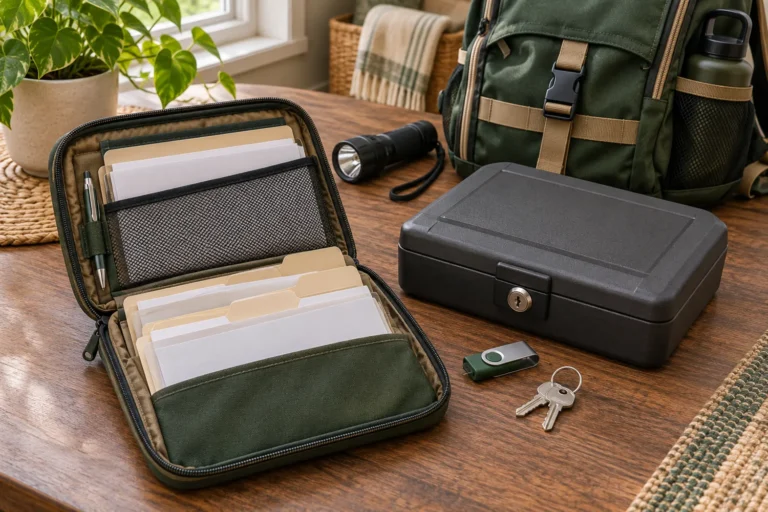
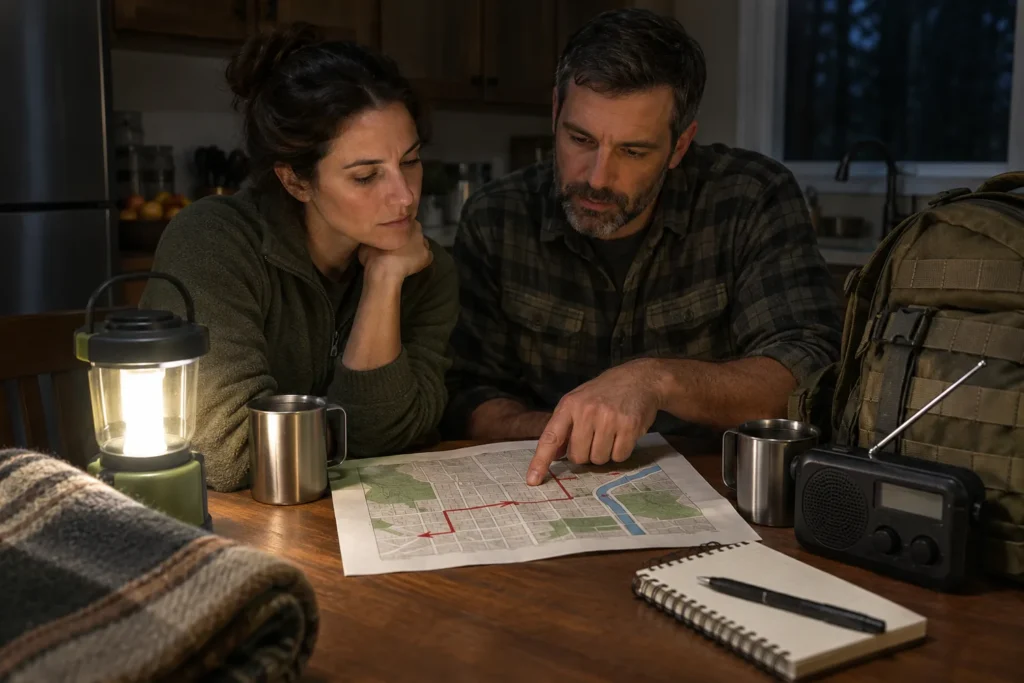
Try a five-minute tabletop drill: announce a realistic disruption, have each person name one confirmed fact and one unknown, choose a next action, then introduce a changed condition and ask what would trigger a different choice. Keep the exercise calm; do not simulate dangerous conditions or interrupt essential equipment. Keep key contacts and instructions in your offline emergency document system. If only one person knows the plan, the household doesn't really have a working plan.
Write a few decision triggers on paper. “If the smoke alarm sounds, get out and stay out.” “If officials order evacuation, follow the route and instructions provided.” “If a dependent medical device cannot be supported safely, activate the backup-care plan.” Avoid inventing universal temperature, water-depth, or time thresholds that ignore the hazard and the people involved.
When someone freezes or becomes overwhelmed
Give one short, concrete instruction instead of a lecture: “Come to the door,” “Call 911,” or “Take my hand.” Move to safety when possible. Do not shame someone for being frightened. If a person is confused, faint, has chest pain, has trouble breathing, or may have suffered an injury, treat it as a possible medical emergency rather than merely a stress reaction.
After the immediate threat passes, rest, reconnect with others, and review what worked. The CDC advises practical preparation, trusted information, social support, and seeking professional help when distress persists or interferes with daily life. Review supports better decision-making under stress next time. The purpose of review is to improve the next response, not to assign blame.
Key Takeaways
Stress can interfere with attention and decisions, but simple rehearsed actions help you keep moving. Immediate danger and official emergency instructions outrank any homemade framework. Separate observation from rumor, choose a realistic next action, assign clear jobs, and change course when the facts change.
Step-by-Step Actions
- Identify the immediate threat and move to a safer position.
- Call emergency services or follow official alerts when the situation requires it.
- State what is confirmed, what is reported, and what remains unknown.
- Compare two or three realistic choices and the consequences of being wrong.
- Choose one next action and assign specific safe tasks.
- Set a condition that will trigger reassessment.
- Afterward, revise the household plan and practice it.
Checklist
- Immediate hazards checked; no unnecessary exposure.
- Emergency services or official instructions addressed where applicable.
- Facts separated from assumptions and rumors.
- Two or three realistic options considered.
- Decision stated clearly; responsibilities assigned.
- Reassessment trigger identified.
- Children, mobility needs, medications, and dependent equipment accounted for.
- Family plan updated after the event.