Household water storage sounds simple right up until you try to build a plan you would actually trust during a real interruption. Most people know they should store water. Fewer know how much they can realistically manage, how to rotate it without wasting time, or how to keep it from turning into a stale collection of half-forgotten containers in a hot garage.
The problem is not awareness. The problem is that water preparedness gets treated like a checkbox instead of a system. A case of bottled water goes in a closet. A few jugs get filled in a hurry. Then months pass, labels fade, one container leaks, and nobody in the house knows what is safe to drink first. When a blackout or other disruption finally hits, people do not feel prepared. They feel uncertain.
A useful household water plan starts by accepting one uncomfortable truth: water gets heavy, bulky, and inconvenient fast. That is exactly why it matters. You cannot improvise your way around the absence of safe water for very long. Drinking, basic cooking, limited hygiene, medications, and pet care all start competing for the same supply. If the outage lasts longer than expected, small mistakes in storage become large problems.
The first step is to think in layers instead of in one giant pile of water, which is also why a household water storage checklist helps people turn good intentions into a real system. Every household should have at least three categories in mind. The first is immediate access water: the bottles or small containers you can grab without thought if the power goes out tonight. The second is short-duration household reserve water: enough stored water to get the household through the first meaningful stretch of disruption without panic. The third is recovery water: the way you refill, filter, purify, or stretch the system if the outage or contamination issue keeps going.
This layered approach matters because different water problems require different responses. If you only store a few disposable bottles, you may be comfortable for a day but exposed after that. If you only store a few giant containers, you may technically have water but no practical way to move it, rotate it, or use it efficiently. Good preparedness usually comes from mixing container sizes and purposes.
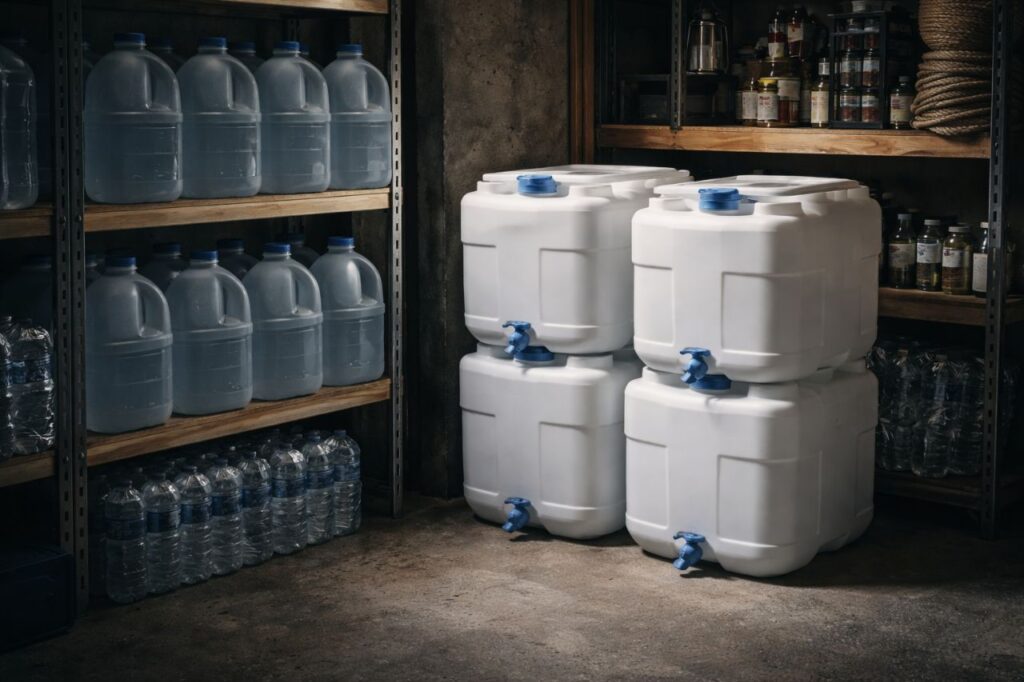
Small bottles are convenient for mobility, medication, and quick use. Medium jugs are useful for daily household access and ration control. Larger food-safe containers are efficient for deeper storage if you actually have the space and the discipline to manage them. What fails many plans is not total volume. It is the mismatch between the container and the real-world use case.
Storage location matters more than many people realize. Heat, sunlight, freezing risk, and chemical contamination all quietly damage a water plan. A hot shed or garage may feel like free storage space, but extreme temperature swings shorten container life and create avoidable risk. Water stored near fuel, paint, pesticides, or harsh cleaners can also become part of a bigger contamination problem if containers degrade or leak. A cooler, darker, more stable location is usually the better choice, even if it limits how much you can store in one place.
Rotation is where serious plans separate from wishful ones. People often avoid rotation because they imagine it as a tedious project, but the real issue is poor design. Rotation becomes manageable when every container is labeled with a fill date and intended use, and when the household already has a routine for checking supplies. The goal is not perfection. The goal is to avoid the common situation where nobody knows how old the water is, where it came from, or whether the oldest containers should be used first.
For many households, the smartest system is a simple one: label each container clearly, keep newer water behind older water, and review the whole supply on a repeating schedule that is easy to remember. The best system is the one someone will actually maintain after a long workweek, not the one that looks impressive on paper.
It also helps to think in terms of failure points. What if one container leaks? What if the main storage area becomes inaccessible? What if the tap water remains available but the boil-water advisory makes direct use unsafe? What if you have to leave the house quickly? A resilient water plan answers those questions in advance. Redundancy is not paranoia here. It is design discipline.
That is why water purification still matters even when storage is the main topic. Stored water gives you breathing room. Purification gives you options. If your only plan is stored water, then every delay, leak, guest, pet need, or extended disruption reduces your margin. If you also have a way to treat questionable water, capture additional water through rainwater collection, or safely refill containers, the entire plan becomes less brittle.
Another overlooked part of household water storage is rationing behavior. People tend to imagine water use in vague terms until they have to account for it. A plan becomes more real when you think about priority order: drinking first, critical food preparation second, medications third, limited hygiene next, and only then less essential uses. That mental rehearsal matters because stress makes people waste supplies when they are uncertain. A household that has already talked through how water gets used is calmer and more effective.
There is also a morale side to this. Water stress changes the mood of a household quickly. People get irritable, rushed, and careless when they feel the basics are slipping. A modest but well-managed water reserve does more than protect health. It buys decision-making time. That time is often the difference between controlled response and avoidable chaos.
The best household water plans are not glamorous. They are quiet systems built from practical containers, sane rotation habits, realistic volume goals, and a backup treatment path. They assume inconvenience instead of denying it. They respect the physical reality of storage instead of pretending unlimited space exists. And they are built so that another person in the house could understand the system without a lecture.
That may be the clearest test of whether the plan is real. If you were not home, could someone else find the water, understand which containers to use first, and continue the routine without guessing? If the answer is no, the plan is not finished yet.
Preparedness tends to improve when it becomes ordinary. Household water storage should be visible enough to be maintained, organized enough to be trusted, and flexible enough to survive small failures. You do not need a perfect bunker system. You need a working household system that remains useful when life gets noisy, inconvenient, and uncertain.
That is what water storage should do. It should reduce uncertainty, not add to it.
Key Takeaways
- Water storage failures usually come from rotation problems, contamination risks, and unrealistic volume planning.
- A household water plan should separate short-term grab-and-go water from longer-duration stored reserves.
- Containers matter as much as quantity because weak storage choices create leaks, taste problems, and sanitation issues.
- Labeling, rotation dates, and storage location discipline make water usable when stress is high.
- Water planning works best when storage, treatment, and rationing are treated as one system.
Step-by-Step Preparedness Actions
- Calculate a realistic minimum household water target based on people, pets, climate, and likely disruption length.
- Divide your plan into portable water, daily-use reserve water, and deeper backup storage so one problem does not ruin the whole system.
- Choose food-safe containers in multiple sizes instead of relying on a single large container.
- Label every container with fill date, source, and intended use so rotation stays simple.
- Store water away from heat, direct light, fuel, chemicals, and areas with freeze or burst risk.
- Add purification and refill options to the plan so stored water is not your only answer.
Quick Preparedness Checklist
- Food-safe water containers
- Rotation labels or marker
- Stored drinking water supply
- Separate portable water supply
- Backup purification method
- Basic rationing plan
- Cool dark storage location
- Inventory check routine
Skills Practiced in This Module
- water planning
- container selection
- storage rotation
- contamination prevention
- rationing awareness
- household preparedness design