
City Infrastructure Dependencies: The Systems You Never See Working
Most people think about infrastructure one piece at a time. Power goes out. Water shuts off. The trains stop. Cell service gets weird. Traffic lights go dark. That’s how it feels from street level. One thing broke. Then something else got annoying.
But cities do not really work that way. Cities are stacked systems. They borrow strength from one another right up until they start borrowing weakness too.
That matters more than people realize.
If you live in a city, your daily life depends on networks you probably don’t think about much once they become normal: electricity, water treatment, pumping stations, fuel distribution, road access, payment systems, data networks, hospitals, elevators, trash pickup, refrigeration, public transit, sewer systems. The list is long, and it’s connected in ways that are easy to miss until one failure starts tugging on the others.
A city can look fine for a while even when the trouble has already started. Lights may still be on in some blocks. Stores may still be open. Trains may still be running on reduced schedules. Water may still come out of the tap. People mistake that partial function for stability all the time. It isn’t always stability. Sometimes it’s just lag.
That lag is where preparedness matters most. Not after everything has obviously fallen apart. Before that. During the stage where a person can still move, buy, fill, charge, call, leave, or stay put on purpose.
What Infrastructure Dependency Really Means
When I say infrastructure dependency, I mean one essential system relying on another system to keep doing its job.
Water depends on power more than many people think. Treatment plants need electricity. Pumps need electricity. Monitoring systems need electricity. Some gravity-fed systems have more resilience than others, but even they usually depend on powered equipment somewhere in the chain. So when people say, “At least we still have water,” what they often mean is, “The water problem has not arrived yet.”
Fuel distribution depends on electricity too. Gas stations need power to run pumps, payment systems, lighting, refrigeration, and often basic security functions. Deliveries depend on working roads, available drivers, dispatch systems, warehouse operations, and fuel for the trucks bringing more fuel. That loop gets ugly fast.
Transit depends on power, communications, staffing, fuel, traffic control, and maintenance capacity. Hospitals depend on power, fuel, water, sanitation, supply chains, working roads, and people who can actually get to work. Grocery stores depend on refrigeration, trucking, payment networks, warehouse software, road access, and labor. Waste removal depends on fuel, labor, road conditions, dispatch, and disposal site operations. You can keep going almost forever, which is sort of the point.
Cities are complex because they save time for people. They concentrate labor. They specialize. They move resources fast. That efficiency is real. But efficiency usually means dependency. A thing works beautifully because ten other things are quietly cooperating in the background.
And maybe that’s the simplest way to say it: urban resilience is not just about whether a system exists. It’s about how many hidden supports that system needs before it can serve you.
A Simple Example That Gets Big Quickly
Take a citywide blackout, or even a neighborhood blackout. Not the dramatic kind in movies, just a real one. Transformers fail, a substation trips, weather knocks out lines, whatever the cause is.
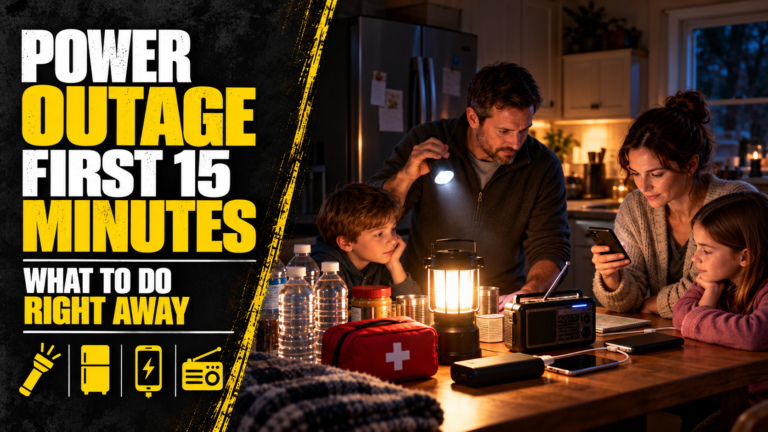
At first it looks manageable. The lights are out. Fine. Phones still have some battery. Maybe the water still runs. Maybe nearby blocks still have power. You use a flashlight, open the fridge less, and assume utility crews will get it sorted.
Then the second-order effects start showing up.
Your building entrance may rely on electric locks. Your apartment building may rely on pumps for upper-floor water pressure. Elevators stop, obviously, but so do some accessibility supports people quietly depend on. The corner store can’t process cards. The gas station nearby can’t pump. Cell networks get congested because everyone starts checking at once, and then charging becomes a problem because cars suddenly look like generators and everyone has the same idea. Traffic gets worse if signals fail. Deliveries slow down. People start buying ice, batteries, and shelf-stable food. By the time somebody says, “This is turning into more than a blackout,” the pattern was already there.
That kind of observation matters because it changes how you prepare. If you only prepare for the first failure, you’ll keep getting surprised by the second and third one.
Practical Observations That Change What You Do
One useful habit is to stop thinking in terms of “Do I have enough stuff?” and start thinking in terms of “Which city systems am I borrowing from today?” That question is a lot better.
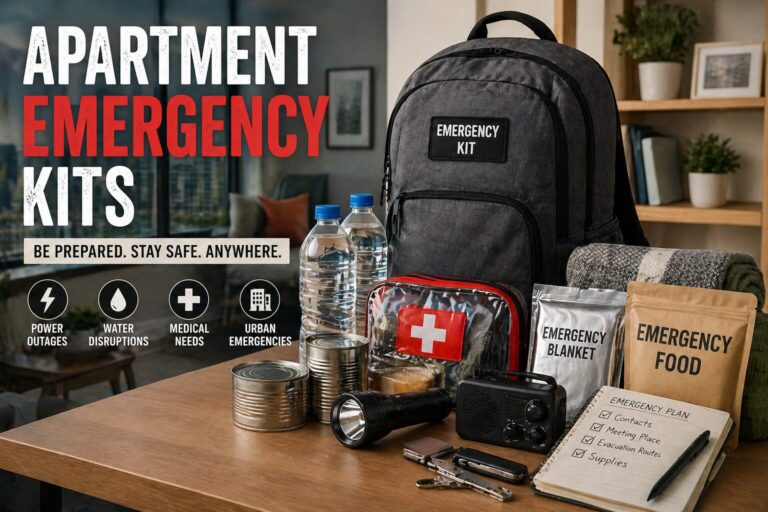
If you live on the tenth floor, your water plan is not the same as someone living in a small ground-floor house with a yard, which is exactly why a high-rise blackout checklist is worth having. If you rely on refrigerated medication, your outage plan is not the same as someone worried mainly about comfort. If you commute by subway and do not keep much food at home, a transit disruption plus payment outage plus store rush hits differently than it does for someone with a pantry and a car.
Preparedness gets more realistic when it becomes personal dependency mapping.
I think that’s the part people skip because it sounds abstract. It isn’t abstract. It’s very ordinary. How do you get water? How do you cook if the power is out? How do you enter your building? What happens if the card readers are down? How many days can you eat from home without shopping? How do you charge lights, phones, radios, or power banks? Do you have any backup solar power that actually fits your real loads? If the buses stop and your usual route home is broken, what then?
None of this requires doomsday thinking. It just requires looking at your normal life honestly.
Another practical observation: some systems fail soft, others fail hard. Water pressure dropping is often a warning. Store shelves thinning out is a warning. Transit delays stacking up is a warning. Payment systems getting slow is a warning. A hospital asking people not to come unless necessary is a warning. You want to learn which signals give you time.
Because time is the resource people waste first.
What to Prepare for First
I usually think urban infrastructure preparedness works best in layers.
The first layer is immediate continuity, the same foundation that shows up in a good family emergency plan. Light, water, communications, medications, essential food, and safe movement inside your home. This is the twelve-to-seventy-two-hour layer. Flashlights that actually work. Stored water inside the home that you can access without thinking. Battery banks that are charged before the outage, not after. Food that does not require a full kitchen performance. Shoes you can use on stairs. A simple way to keep informed if mobile networks get unreliable.
The second layer is short-term adaptation. That is where most people start realizing the event may not clear quickly. Can you stay home another couple days? Can you leave if you need to? Do you have cash for a payment outage? Can you manage sanitation if water service gets sketchy? Are you dependent on one store, one route, one charger, one medication refill window, one elevator, one nearby fuel station? Single points of failure matter a lot in cities.
The third layer is decision-making. Stay, move, help, conserve, or leave early. This is harder than gear talk, but it matters more. If a disruption affects power, water, transit, fuel, and communications all at once, even unevenly, you need thresholds. Not dramatic thresholds. Practical ones. If water pressure drops below usable levels for a full day, what’s your move? If building access becomes unreliable, what’s your move? If the local area is still functional but your block is not, do you relocate for a night or grind it out? Thinking through those questions in advance removes a lot of bad decision-making later.
The Case for Redundancy Without Going Crazy
Preparedness people talk about redundancy all the time, and sometimes they make it sound like a shopping addiction with moral language wrapped around it. That’s not the useful part.
Useful redundancy is simple. Two ways to light a room. Two ways to charge a phone. More than one way to store and drink water. More than one route home. More than one payment method. More than one location for critical information. It’s not about building a private bunker in a studio apartment. It’s about making your life less brittle.
That word matters here. Brittle.
A brittle urban routine works beautifully until one hidden support breaks. A resilient routine bends a little before it snaps. That can be as plain as keeping a few extra meals, a small radio, a printed contact sheet, and enough water for the household to stop you from joining the first rush of panic buying.
Preparedness at city scale is often less about surviving the apocalypse than refusing to be thrown off balance by predictable friction.
Why This Topic Matters More Than It Sounds
Infrastructure dependency sounds academic until you’re the one carrying water up stairs, looking for an open pharmacy, or realizing your fuel gauge matters less than whether any local station can actually pump.
The reason to study this isn’t to memorize technical diagrams. It’s to stop being surprised by obvious consequences. If power failure can affect water, fuel, elevators, traffic control, refrigeration, payments, and communications, then your personal preparedness has to reflect that chain, including a real emergency communication plan. If one transit shutdown can trap workers, slow deliveries, and raise demand at the exact wrong time, then your home setup should buy you time, not force you immediately back into the crowd.
This is really about noticing dependency before it becomes desperation.
And once you start noticing it, city preparedness becomes clearer. You don’t need to prepare for every nightmare in detail. You need to identify the systems your daily life leans on most heavily, then reduce the pain if one of them stumbles and the others start leaning with it.
That’s not paranoia. That’s just paying attention a little earlier than most people do, especially in city emergencies.
Key Takeaways
- City systems rarely fail in isolation.
- Power disruptions often trigger water, fuel, payment, and transit problems.
- Personal preparedness improves when you map your own daily dependencies.
- Early warning signs matter because they give you time to act.
- Simple redundancy makes urban life less brittle during disruptions.
Step-by-Step Preparedness Actions
- List the city systems you rely on every day, including water, power, transit, payments, refrigeration, and building access.
- Store enough drinking water and no-cook food to reduce your need for immediate shopping during a disruption.
- Build two backup options for light, communication charging, and payment methods.
- Identify alternate ways to enter, leave, and move around your building or neighborhood if elevators, card readers, or transit fail.
- Keep a small amount of cash, printed contact information, and critical medical information in an easy-to-grab location.
- Set simple decision thresholds for when you will stay put, relocate temporarily, or leave early.
- Review your setup every few months and update it when your living situation or commute changes.
Quick Preparedness Checklist
- Water stored inside the home
- Shelf-stable food that needs little preparation
- Flashlight or headlamp with spare batteries
- Charged power bank
- Cash in small bills
- Printed contacts and essential addresses
- Comfortable stair footwear
- Basic sanitation supplies
- Alternate route home
Skills Practiced in This Module
- infrastructure awareness
- household continuity planning
- urban risk assessment
- redundancy planning
- disruption decision-making