72-Hour Emergency Supplies Checklist: What to Gather Before You Actually Need It
Three days is not everything. It is just a useful starting line.
Most households do not need to prepare for cinematic collapse before they become more resilient. They need enough basics to stay steady through the first 72 hours of a power outage, storm disruption, water problem, or supply interruption.
That is what a 72-hour checklist is for, and it works best when it supports a bigger family emergency plan. Not fear. Not overbuying. Just enough structure that your home is less fragile when the normal systems stop cooperating.
Water
- Stored drinking water
- Extra water for pets
- Some water for basic hygiene where practical
- Containers that are easy enough to pour and move
- Backup plan for additional water if the disruption runs longer
Water is usually the first category worth getting right. Without it, everything else feels more chaotic quickly.
Food
- Shelf-stable foods your household will actually eat
- Simple ready-to-eat options that do not depend on cooking
- Manual can opener if needed
- Snacks that are compact, calorie-dense, and easy to rotate
- Any specific dietary or child-related food needs handled in advance
The best emergency food is usually boring food you already know how to use.
Light and Power
- Flashlight or headlamp
- Spare batteries or charged rechargeable lights
- Power bank
- Charging cables that fit the devices you actually use
- Simple plan for conserving phone battery if an outage stretches longer
Light and phone power calm people down more than they realize.
First Aid and Medication
- Basic first aid kit
- Backup prescription medications where possible
- Pain relief and common household medical basics
- Gloves and basic wound-care items
- Medical notes or contact information if someone in the home has a condition that matters during disruption
Preparedness gets harder fast when a household is improvising around medical needs.
Clothing and Comfort
- Weather-appropriate layers
- Gloves, hats, or dry socks if cold conditions are realistic
- Basic cooling or shade plan in hot weather
- Blankets or compact warmth layers
- Simple hygiene items and sanitation basics
Comfort sounds secondary until discomfort starts affecting judgment.
Documents and Communication
- Printed emergency contacts
- Basic family communication plan
- Copies of important documents where appropriate
- Local meeting point or fallback plan if family members are separated
- Pen and notebook
Supplies help. Structure helps too.
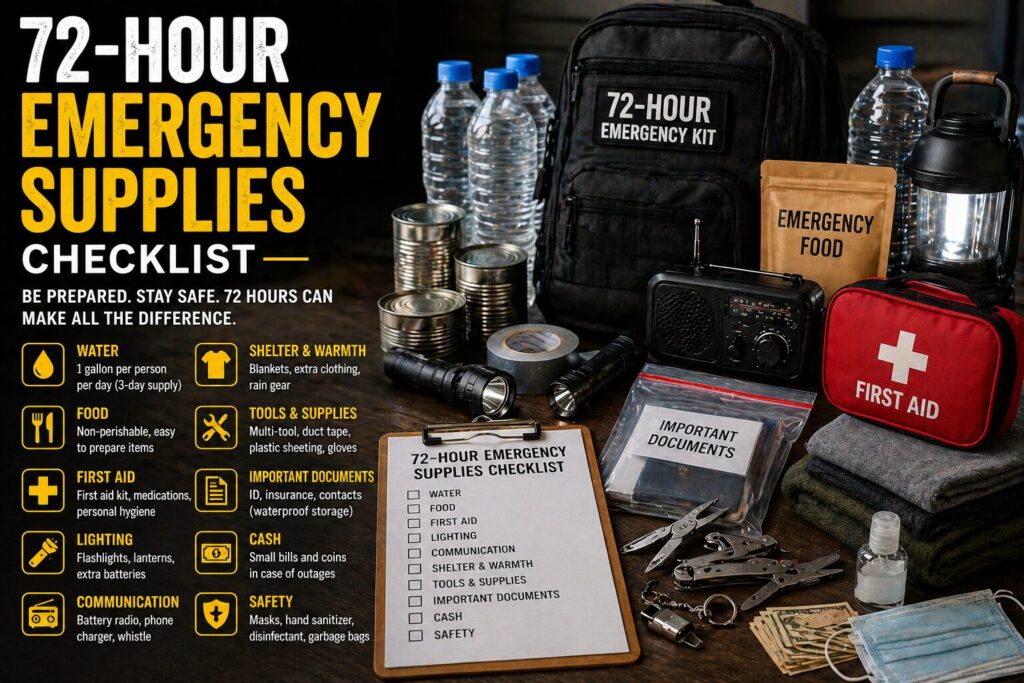
Quick 72-Hour Emergency Supplies Checklist
- Water
- Food
- Flashlight or headlamp
- Power bank and charging cables
- First aid kit
- Medications
- Weather-appropriate clothing
- Blankets or warmth layers
- Printed emergency contacts
- Basic hygiene items
- Pet supplies if needed
- Household-specific medical or mobility items
A 72-hour kit does not need to be perfect to be useful. It just needs to exist before everyone else is standing in a store aisle trying to build one under pressure.