

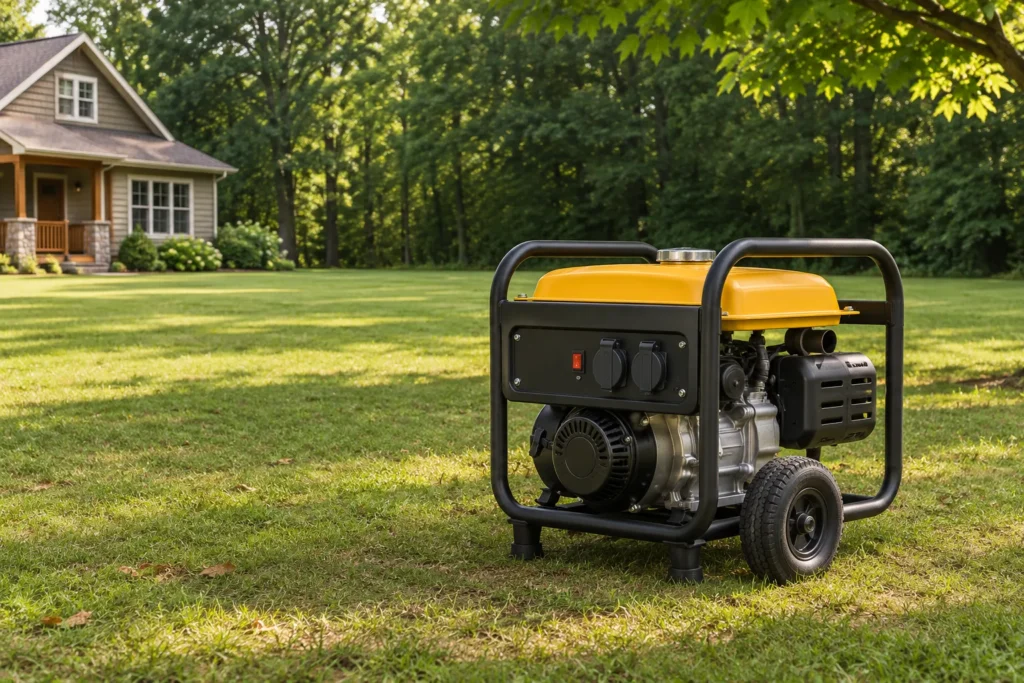
Portable generator safety starts before the engine runs: choose an outdoor site well away from openings, check connections and alarms, and know the equipment limits.
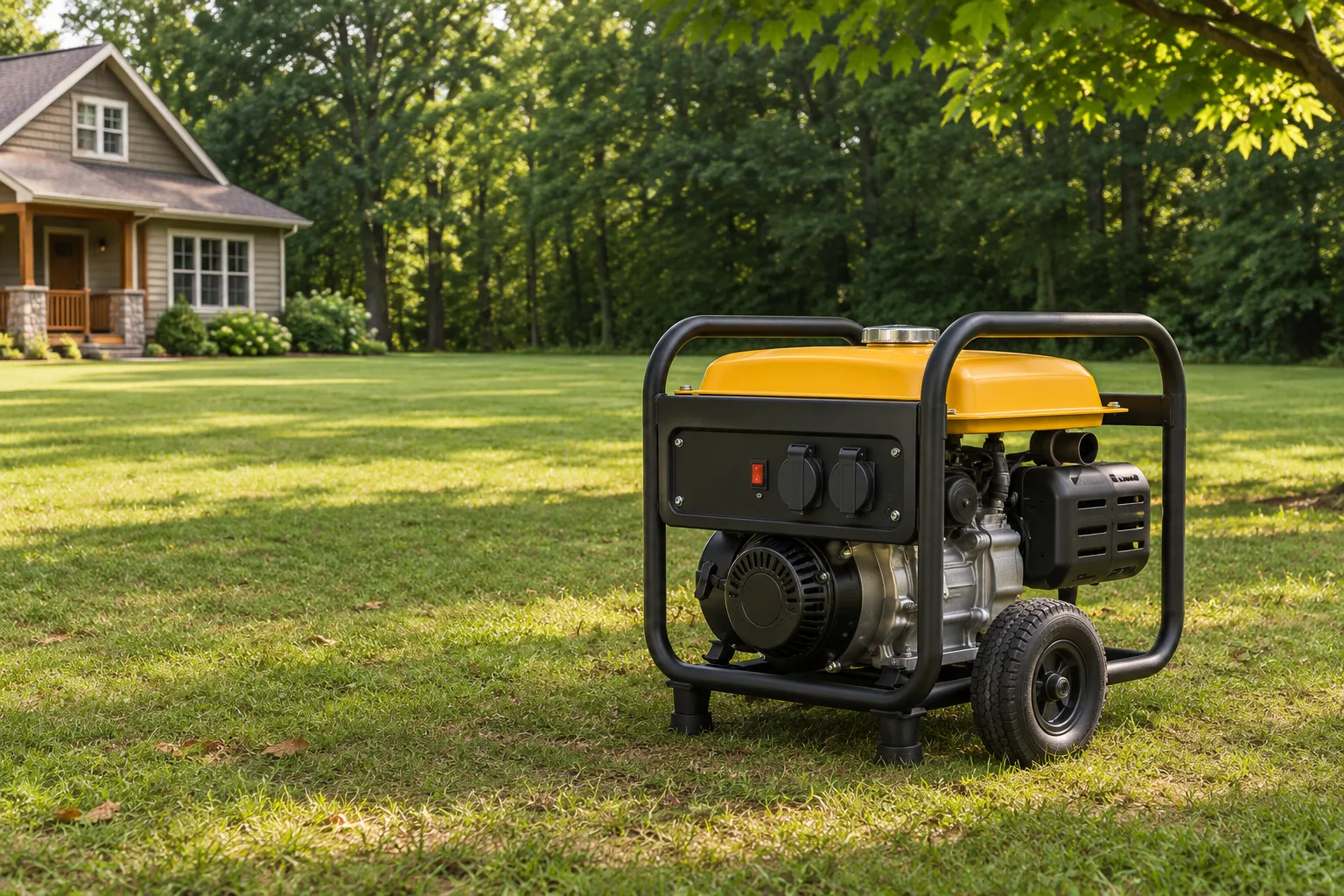
A portable generator can keep a refrigerator cold, run a sump pump, charge phones, or keep a few essential lights on when the grid is down. It can also create three serious hazards at once: carbon monoxide, electrical shock, and fire.
The safe setup is straightforward, but the details matter. Run the generator outside and well away from the house. Point the exhaust away from people and openings. Keep the unit dry. Connect only loads the generator and cords are designed to carry. Shut it down and let it cool before refueling. If you want to power household circuits, use properly installed transfer equipment. Never improvise a connection into the house wiring.
Portable Generator Safety: Keep at Least 20 Feet Away
Before you think about cords or appliances, decide where the generator will run.
The U.S. Consumer Product Safety Commission says portable generators should be operated outside only, at least 20 feet from the house, with the exhaust directed away from the home and other buildings people can enter. A garage does not count as outside. Neither is a basement, shed, porch, crawlspace, or carport. Opening a garage door or window does not make those locations safe.
Carbon monoxide is colorless and odorless. You will not smell carbon monoxide coming. Generator exhaust can make people sick, unconscious, or dead before they understand what is happening.
Before starting the generator, move it at least 20 feet from the house, point the exhaust away from the home and neighboring occupied buildings, and keep it away from doors, windows, vents, and other openings. Make sure working carbon-monoxide alarms with battery backup are installed in the home.
If a CO alarm sounds, or anyone develops headache, dizziness, nausea, weakness, or confusion while a generator is operating, get everyone into fresh air immediately and call 911. Do not go back inside simply because the generator has been shut off.
Never Backfeed the House
There are two sensible ways to get generator power where you need it.
For limited emergency power, selected appliances can be plugged directly into the generator using cords and connections allowed by the generator manufacturer. That can work well for a refrigerator, lights, phone charging, or another essential load within the generator's capacity.
If you want to feed household circuits, use properly installed transfer equipment. That is electrical-system work, not an outage improvisation.
Never try to power a house by plugging a generator into a wall receptacle, dryer outlet, or other building receptacle. Backfeeding can energize wiring in dangerous ways and can endanger utility workers, neighbors, and people inside the home.
If panel-fed backup power is part of your plan, have a qualified electrician install appropriate transfer equipment before the outage. Solve that problem while the grid is working, not in the dark with an extension cord in your hand.
Treat Extension Cords as Part of the System
When you plug appliances directly into the generator, the extension cord becomes part of the electrical system. Treat it that way.
Use heavy-duty outdoor-rated cords that are in good condition and have the grounding configuration required by the equipment. The cord must be rated for the load it will carry. A cord that is too light can overheat.
Inspect cords before use. Reject cracked insulation, damaged plugs, exposed conductors, loose connections, or other obvious defects. Route cords where people will not trip over them and where doors, windows, or furniture will not crush them.
Do not assume that one available generator outlet means you can keep adding splitters. The generator has a finite capacity, and the cord has a finite capacity too.
Decide What Actually Needs Power
A generator is emergency power. It does not need to imitate the entire electrical grid.
Start with loads that protect safety, food, water, communications, or the home itself. Depending on the household, that might mean a refrigerator or freezer, sump pump, limited lighting, phone and radio charging, a properly configured well pump, or medically necessary equipment backed by a plan appropriate to that equipment.
Then compare the equipment's running and starting requirements with the generator's rated capacity. Motors and compressors can draw substantially more power for a short period when they start. A refrigerator that runs comfortably after startup can still contribute to an overload when another motor starts at the same time.
If you do not know a load, check the appliance label, manual, or manufacturer information rather than guessing.
A good outage rule is to start with fewer loads than you think the generator can handle, then add them deliberately. If overload protection trips, a breaker opens, a cord or plug becomes unusually hot, or the engine sounds badly overloaded, stop and reduce the load instead of repeatedly resetting protection.
Keep It Dry Without Moving It Indoors
Rain creates an awkward problem: the generator needs to stay dry, but it still has to stay outside. Moving it into a garage trades an electrical hazard for a carbon-monoxide hazard.
The generator should remain outdoors while protected from rain and wet conditions in a way permitted by its manufacturer and designed to preserve safe ventilation. Do not operate it while standing in water. Do not handle plugs or cords with wet hands.
If storm conditions make it impossible to operate the generator outdoors, dry, and safely separated from the house, leave it off. Temporary loss of power is safer than creating a CO or electrocution hazard.
Shut Down and Cool Before Refueling
A running generator gets hot. Fuel spilled onto a hot engine or exhaust component can ignite.
When fuel is needed, shut the generator down and let it cool according to the manufacturer's instructions before refueling. Keep gasoline or other fuel in approved containers and away from the running generator, flames, cigarettes, water heaters, and other ignition sources. Do not store gasoline in living areas. Follow local fire codes and the generator manufacturer's fuel-storage instructions.
This is one of those rules that becomes tempting to bend during a long outage. The refrigerator is cold, the lights are on, and nobody wants to interrupt a setup that is working. Shut it down anyway. A planned refueling pause beats a fire.
Make the Generator Part of the Outage Plan
The middle of an outage is a lousy time to discover that you have the wrong cord, stale fuel, a dead starter battery, or no safe way to connect the equipment you expected to run.
Before outage season, read the owner's manual, test the generator outdoors under a realistic load, confirm the cords and connectors you actually need, test CO and smoke alarms, know the generator's running and starting capacity, and maintain it on the manufacturer's schedule. If you intend to power household circuits, have the transfer equipment installed before you need it.
Decide your priority loads in advance too. Battery lights, charged power banks, safe food practices, water storage, and a way to stay warm or cool without depending completely on the generator reduce the pressure to keep the machine running continuously.
Most important, keep the owner's manual with the generator. It controls the exact startup, grounding, connection, and shutdown procedure for your model. Generator designs differ. General guidance should never override the instructions for the machine sitting in front of you.
Key Takeaways
- Run a portable generator outdoors only, at least 20 feet from the house.
- Point exhaust away from the home, neighboring occupied buildings, windows, doors, vents, and other openings.
- Never operate a generator in a garage, basement, shed, porch, crawlspace, or carport.
- Keep working CO alarms with battery backup in the home.
- Never backfeed a house through a receptacle.
- Use properly installed transfer equipment if you want to power household circuits.
- Use outdoor-rated, properly sized, undamaged extension cords for direct appliance connections.
- Keep the generator dry without enclosing it.
- Stay within the generator's rated capacity and account for motor starting loads.
- Shut the generator down and let it cool before refueling.
- Follow the owner's manual for the exact requirements of your model.
Step-by-Step Actions
- Place the generator outdoors at least 20 feet from the house and direct exhaust away from buildings and openings.
- Check fuel, oil, cords, and the generator itself according to the owner's manual.
- Confirm that CO alarms and smoke alarms in the home are working.
- Make sure the generator is dry and on a stable surface.
- Start the generator with electrical loads disconnected unless the manufacturer directs otherwise.
- Let it stabilize as directed by the manufacturer.
- Connect essential loads one at a time, staying within the generator's capacity.
- Periodically check the generator, cords, plugs, fuel situation, and surrounding area.
- Before refueling, disconnect or shut down loads as appropriate, stop the generator, and allow it to cool.
- When utility power returns, disconnect the generator system according to the equipment and transfer-system instructions before returning to normal operation.
Checklist
- [ ] Generator is outdoors and at least 20 feet from the house
- [ ] Exhaust points away from occupied buildings and openings
- [ ] Generator is not in a garage, porch, shed, carport, basement, or crawlspace
- [ ] CO alarms with battery backup are working
- [ ] Smoke alarms are working
- [ ] Generator is protected from wet conditions without being enclosed
- [ ] Extension cords are outdoor-rated, properly sized, and undamaged
- [ ] No improvised backfeed connection is being used
- [ ] Transfer equipment was professionally installed if household circuits are being powered
- [ ] Essential loads have been prioritized
- [ ] Total load is within generator capacity, including starting loads
- [ ] Fuel is stored in approved containers away from heat and ignition sources
- [ ] Generator is shut down and cooled before refueling
- [ ] Owner's manual is available
Put the Plan Into Practice
Plan essential loads with your outage supplies and include checks in the maintenance schedule. Read the CPSC portable-generator safety guidance alongside the manufacturer’s manual.