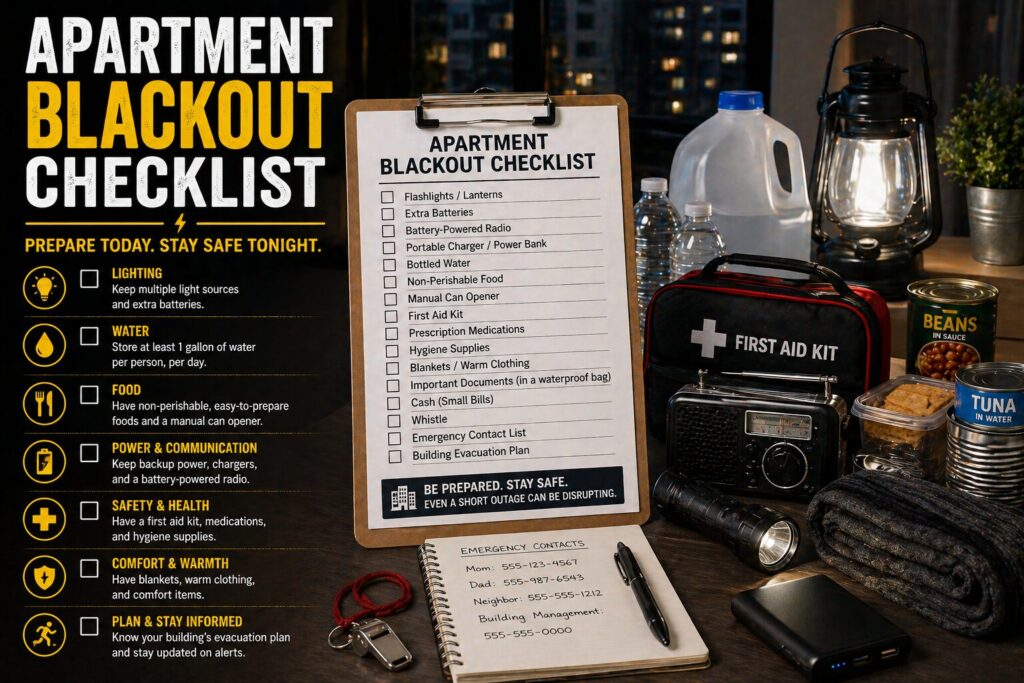
Apartment Blackout Checklist: What to Do Before, During, and After the Power Goes Out
Most blackouts are not dramatic at first. The lights cut out. Appliances stop. Wi-Fi disappears. The building gets quieter for a second, then noisier in a different way.
In an apartment, the problem is rarely just darkness. Elevators stop. Hallways feel strange. Water pressure may drop. Entry systems may behave differently. Phones get used harder than usual. People start opening refrigerators too often. Small building-level dependencies show up fast.
That is why a blackout checklist helps. It turns a vague idea of preparedness into specific actions that are easy to follow before, during, and after an outage.
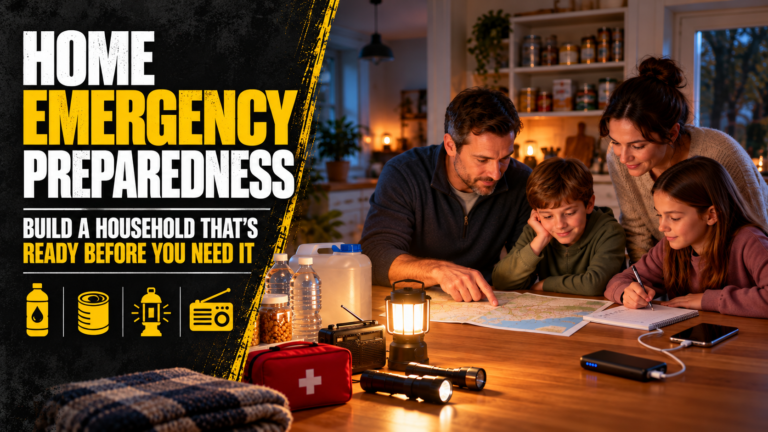
Before the Blackout: Build the Basics First
- Keep at least one working flashlight or headlamp where you can reach it without searching.
- Store backup batteries or keep rechargeable lights topped off.
- Maintain a charged power bank and charging cable that actually fits your phone.
- Store drinking water that can cover at least a short outage.
- Keep simple shelf-stable food that does not depend on cooking.
- Know how your building handles locked entrances, stairwells, and common-area lighting during power failures.
- Keep a basic first aid kit in one known location.
- Have a printed emergency contact list in case your phone battery drops or service becomes unreliable.
- Keep shoes, a jacket, and keys easy to grab in the dark.
- Know whether anyone in your household depends on refrigerated medicine, powered equipment, or mobility assistance.
If you live in a high-rise, this preparation matters even more. The higher up you live, the more annoying and time-consuming simple movement becomes once elevators stop.
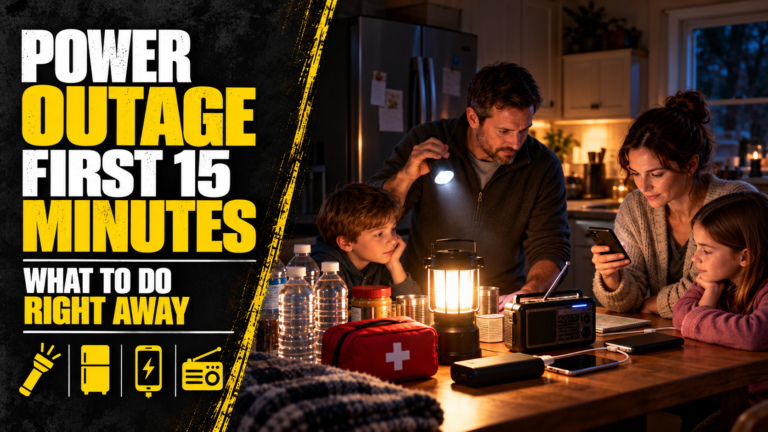
During the Blackout: First 15 Minutes
- Confirm whether the outage is only your unit or the wider building/block.
- Use battery-powered light instead of candles if possible.
- Check on children, older adults, pets, and anyone who may need help moving safely.
- Plug phones into power banks early instead of waiting until they are nearly dead.
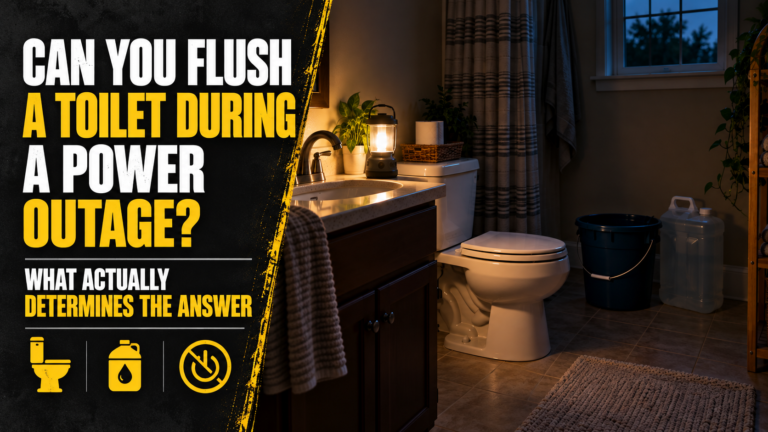
- Fill containers with water if service is still running and you are not sure how long pressure will hold.
- Keep refrigerator and freezer doors closed as much as possible.
- Avoid using elevators, even if one appears to reset temporarily.
- Use calm, specific communication instead of spreading rumors about how large the outage is, especially if panic is starting to travel through the building.
Those first few actions buy stability. Most problems feel worse when people lose structure early.
During a Longer Outage
- Conserve phone battery by reducing brightness and closing unnecessary apps.
- Use one room as your main activity/light area if that makes the space easier to manage.
- Keep stairwells and walk paths clear.
- Check food safety timelines if refrigeration is becoming uncertain.
- Limit unnecessary door opening if outdoor temperatures are making your apartment hotter or colder.
- Use text messaging when possible if calls are failing.
- Check on vulnerable neighbors if it is safe and practical.
- Pay attention to building security if doors, gates, or entry systems are behaving differently.
Apartment outages are often part utility problem and part coordination problem. The calmer household usually does better because it wastes less energy on confusion.
After the Power Returns
- Confirm that major appliances came back normally.
- Check refrigerators, freezers, and medication storage conditions.
- Recharge lights, batteries, and power banks immediately.
- Refill used water and restock snacks or medical items.
- Make note of what you wished you had during the outage.
- Adjust the apartment kit before the next one instead of trusting memory.
That last step matters. Every outage is useful if you treat it like feedback instead of inconvenience only.
Quick Apartment Blackout Checklist
- Flashlight or headlamp
- Backup batteries
- Charged power bank and cable
- Stored drinking water
- Shelf-stable food
- Basic first aid kit
- Shoes and jacket accessible in the dark
- Printed emergency contacts
- Knowledge of stairwell and building access routes
- Plan for refrigerated medicine or special equipment
Preparedness in an apartment is not about pretending you live off-grid. It is about understanding what breaks first in multi-unit living and getting ahead of it while the lights are still on.