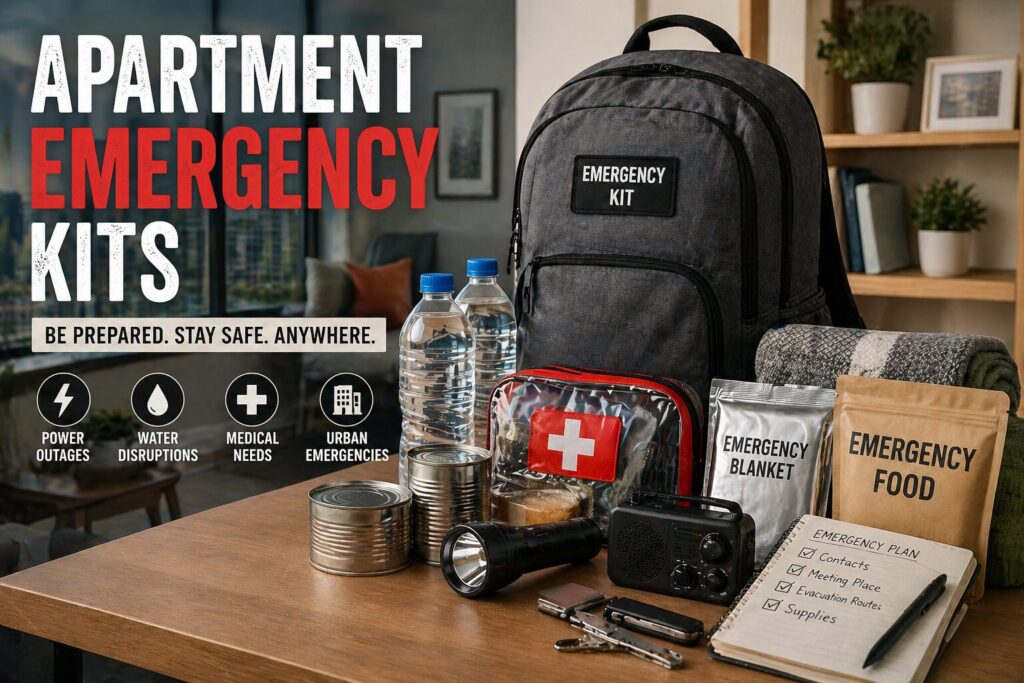
Apartment Emergency Kits That Make Sense in Small Spaces and Shared Buildings
Apartment preparedness gets treated like a watered-down version of “real” preparedness. I think that is backwards.
Apartment living has its own pressure points. Shared systems. Elevators. Water dependence. Limited storage. Hallway visibility. Stair travel. Neighbors close enough to matter but not always close enough to help usefully. The environment is tighter, which means some disruptions hit faster and feel stranger than they do in detached houses.
That is why a good apartment emergency kit should be built for apartment problems, not copied from a generic wilderness bag or a broad suburban checklist.
What Apartment Kits Are Really For
Most apartment emergencies are not dramatic. They are layered inconvenience under pressure.
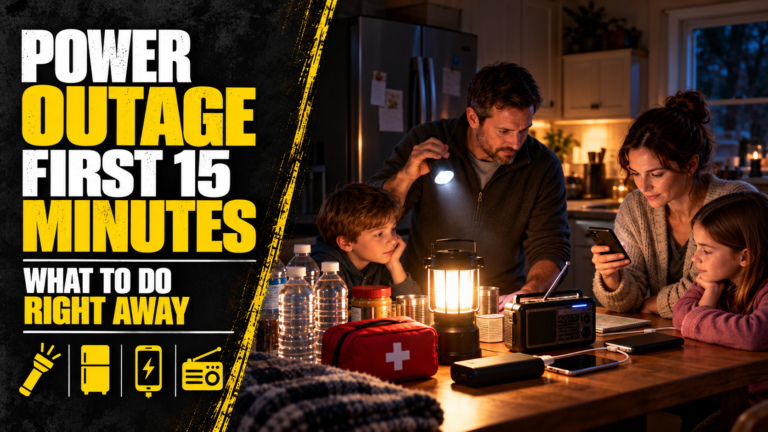
The power goes out and hallways change immediately, which is why a lot of apartment preparedness starts with blackout readiness. Water pressure becomes uncertain. Entry systems behave differently. Phones start draining faster than usual because everyone is checking the same outage maps and rumor streams. If the building is tall, stairs become part of the problem, which is exactly what a high-rise blackout checklist forces people to think through. If the building is old, temperature drift can get ugly in a hurry. If the outage is longer, carrying even simple supplies starts costing more effort.
An apartment emergency kit exists to absorb some of that friction before the building starts imposing it on you all at once.
Start With the Real Apartment Problems
- Dark hallways and stairwells
- Elevators out of service
- Water pressure loss
- Phone battery drain
- Harder movement in and out of the unit
- Smaller storage and tighter living space
- More dependence on centralized systems
Once you name the real failure points, the kit gets easier to build.
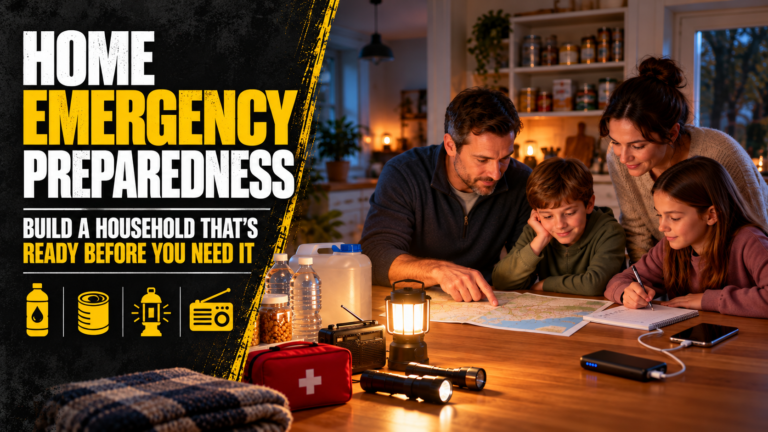
What to Keep in an Apartment Emergency Kit
- Headlamp or flashlight
- Power bank and charging cable
- Stored drinking water or immediate access to it
- Basic first aid supplies
- Simple shelf-stable snacks
- Shoes that are easy to put on quickly
- Jacket, warmth layer, or weather-appropriate backup clothing
- Printed contact sheet
- Medications or household-specific medical essentials
- Small carry bag in case repeated stair trips become necessary
That list is not glamorous. It is still the kind of kit that changes a bad evening into a manageable one.
Small Space Changes the Design
Apartment kits should be compact, easy to carry, and easy to reach.
I think this is where people lose the thread. They try to build one giant emergency bin that technically contains useful things but is awkward to move, annoying to store, and not something anyone is going to drag down twelve flights of stairs if the building is getting hotter, darker, or stranger by the hour.
A better apartment kit is usually layered. Some supplies are meant to stay put in the unit. Some should be easy to grab. Some belong in a smaller bag that can move with you if building conditions force repeated trips or a faster exit than you expected.
Preparedness in small spaces rewards portability more than volume.
A Real Example
Picture a fourth-floor apartment during a summer blackout. The first hour is annoying. The third hour is different. The hallway is hotter. The stairwell is dim. A family member wants to go down to the lobby for better cell signal, but shoes are scattered and the good flashlight is somewhere nobody can remember. The water still runs, maybe, but nobody knows for how long. A power bank exists, but it is almost empty because no one topped it off after the last outage. The building starts feeling less like shelter and more like one more system that used to function automatically and no longer does.
The apartment with a real kit feels different. Shoes by the door. Light ready. Water already stored. Phone backup charged. A small stair bag easy to grab. Medications accounted for. The outage still matters. It just does not control the whole emotional tone of the apartment.
That is what a good kit is buying.
What People Usually Get Wrong
- They build for dramatic escape scenarios instead of building-specific friction.
- They underestimate stair travel.
- They assume water access will remain stable.
- They rely too heavily on phones for light and communication.
- They build one oversized storage bin instead of something layered and portable.
All of that is fixable once the apartment itself becomes part of the plan instead of just the background.
What Good Apartment Preparedness Really Looks Like
Good apartment preparedness is not trying to imitate a cabin, bunker, or bug-out fantasy. It is understanding the systems your building depends on and keeping a little independence ready inside your own unit.
That means light, water, power backup, footwear, first aid, communication structure, and enough practical comfort that a blackout or utility disruption does not instantly turn the apartment into a stress machine, especially if you are already building around power-failure preparation.
Apartment life is more system-dependent than people think. That is the weakness. The good news is that small, specific preparation usually goes a long way.
That is why I like apartment kits. They force honesty. The useful gear is the gear that solves the exact problem in front of you, not the one that photographs well online.