Cities feel permanent.
Steel, concrete, glass, miles of pavement. Towers full of people and light. Traffic flowing every direction like veins carrying blood through a body that never quite sleeps. It gives the impression of stability. Infrastructure everywhere. Services layered on services.
But cities only feel solid when the systems underneath them are working.
Electricity. Water pressure. Traffic control. Fuel deliveries. Communication networks. Grocery logistics. Waste removal.
Take away two or three of those at the same time and a city changes quickly. The buildings stay put, obviously, but the way the place behaves shifts. Movement slows. Information gets strange. Small problems start stacking up in ways people didn’t expect.
People who live in rural areas tend to picture survival as wilderness skills. Fire, shelter, navigation. Useful things.
Urban survival is different.
It’s less about nature and more about systems. Systems behaving normally… and then suddenly not behaving normally.
That difference matters more than people think.
Cities Depend on Timing More Than Stockpiles
One thing that becomes obvious once you start noticing it is how little buffer exists in most cities.
Grocery stores don’t keep weeks of food sitting in the back. They run on delivery cycles. Trucks arrive, products move to shelves, customers buy them, trucks come again. The system works well, but it’s very dependent on timing. Almost everything shows up exactly when it’s supposed to.
If deliveries pause for even a few days—fuel shortages, road closures, labor issues, storms—shelves start looking thin fairly fast.
You see it every time a storm warning hits the news.
Milk disappears first. Bread. Bottled water. Batteries.
People respond emotionally to perceived shortages. The problem isn’t always the shortage itself. Sometimes it’s the reaction speed. People see other people buying things and then suddenly everyone is buying the same things.
Now imagine that reaction happening during something larger than a storm warning. A regional power outage. A cyberattack affecting financial systems. Civil unrest that shuts down parts of the transportation network.
Preparation for urban emergencies isn’t really about hoarding supplies.
It’s about buying yourself time.
Time to watch what’s happening before you have to decide anything.
Time to avoid crowded stores and frantic lines.
Time to stay home while everyone else is trying to figure out what’s going on.
Even a modest buffer changes your position in that situation. It just does.
Water Becomes the First Real Problem
People often assume food is the primary concern.
Usually it isn’t.
Water is almost always the first issue that becomes serious.
Cities rely on electrically powered pumping stations to maintain water pressure across large distances and elevation changes. When power fails, backup systems sometimes take over, but they don’t always run forever.
Pressure can drop. Treatment plants pause operations. Boil advisories appear.
Even without a full system failure, temporary contamination or mechanical issues can interrupt supply.
A practical urban baseline is simple enough:
- One gallon of water per person per day
- A minimum of three to seven days stored at home
- A basic water filtration option as backup
Stored water doesn’t need to be complicated. Food-grade containers. Refilled occasionally. Kept somewhere cool and out of direct sunlight.
People sometimes overthink this step.
The city water system usually works very well. Until it doesn’t. And when it stops, it tends to stop pretty suddenly.
Having water already handled removes a large piece of stress from the situation. Maybe not all of it, but a lot.
Movement Inside a City Can Become the Hardest Part
In rural emergencies, distance is usually the obstacle.
In cities, it’s congestion.
Road networks that move millions of people efficiently under normal conditions can gridlock almost instantly once panic or disruption enters the picture.
One traffic accident can snarl several miles of roadway during rush hour. Most people have seen that happen. Now imagine road closures combined with evacuation orders or public transportation shutdowns.
Movement becomes unpredictable.
That’s why urban preparedness often focuses less on leaving the city immediately and more on maintaining options.
Walking routes matter.
People sometimes forget how close many places actually are when you remove the assumption of driving everywhere. A three-mile distance in a city might be a ten-minute drive on a normal day. On foot, maybe forty-five minutes. Maybe a little less depending on the streets.
That changes the mental map a bit.
Pay attention to things like:
- Secondary streets that run parallel to major roads
- Pedestrian bridges or underpasses
- Rail corridors or greenways that cut through dense areas
- Locations of hospitals, police stations, and public buildings
You’re not memorizing escape plans like a movie scene.
You’re just becoming familiar with how the city connects when vehicles stop moving.
That familiarity reduces confusion if movement becomes necessary. Or at least it helps.
Electricity Is the Hidden Foundation of Modern Cities
A surprising amount of city infrastructure depends quietly on electricity.
Not just lighting and home appliances. Much deeper systems.
Elevators. Water pumps. Traffic lights. Fuel pumps. Cellular towers. Refrigeration. Payment systems.
When power outages stretch beyond a few hours, the ripple effects start appearing.
Restaurants close because refrigeration becomes unreliable.
Gas stations can’t pump fuel.
Apartment buildings lose elevators and sometimes water pressure on higher floors.
Even small backup systems become valuable in that environment.
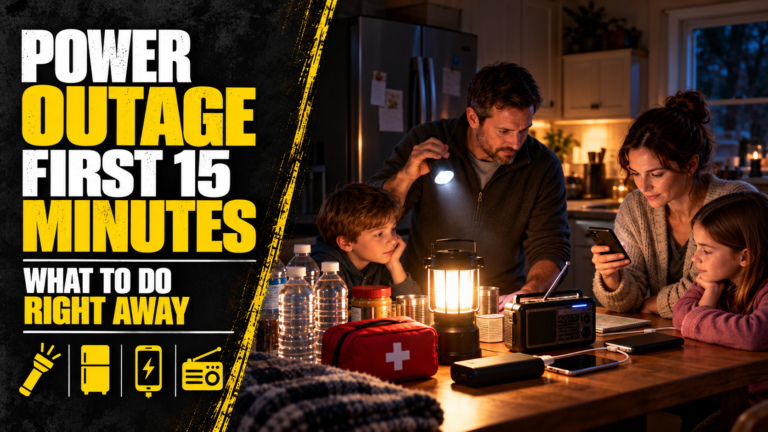
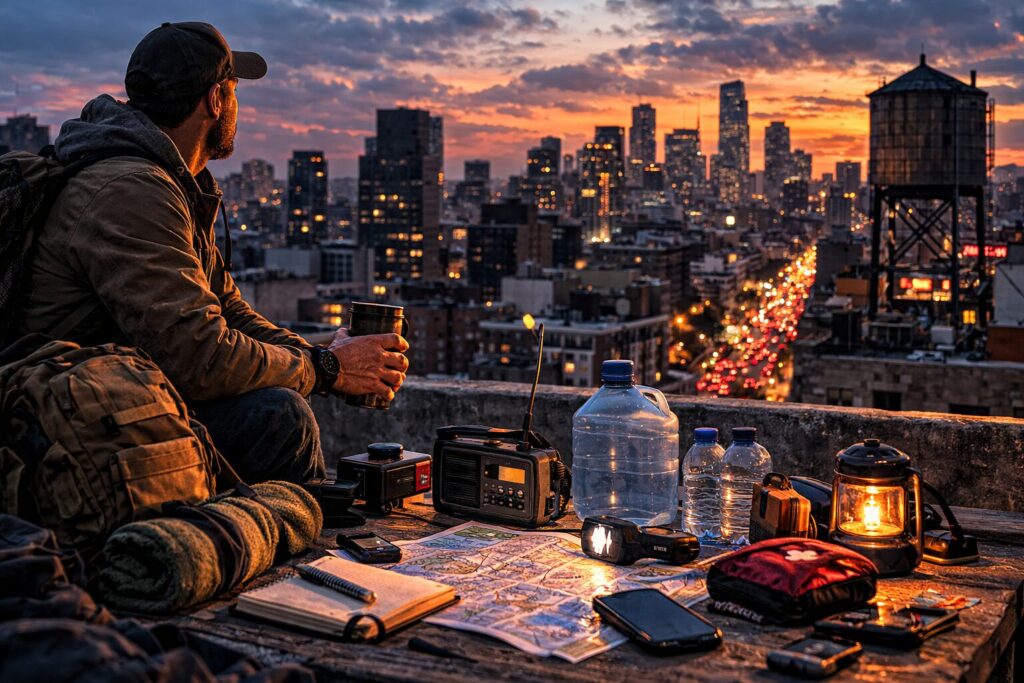
Flashlights. Power banks for phones. Battery-powered radios. Portable lighting that doesn’t depend on wall outlets.
I’ve seen people store dozens of gadgets while overlooking something basic like spare batteries.
Simple tools often outperform complicated ones during outages.
Candles technically work, but they introduce fire risk in crowded living spaces. Flashlights and lantern-style lights are usually the better option.
Small solar chargers can also be useful if outages stretch longer than expected. Not perfect. Still helpful.
Urban Communication Becomes Fragmented During Emergencies
People assume communication networks are resilient.
They are—until they aren’t.
Cell towers depend on power and backhaul connections. During large events, network congestion alone can slow everything down.
Text messages often succeed when calls fail. They use smaller packets of data and require less bandwidth.
That’s worth remembering.
But communication planning in cities sometimes benefits from something more old-fashioned.
Pre-arranged meeting points.
Families or roommates who agree in advance where to meet if communication stops entirely. A park nearby. A familiar public building. A specific intersection.
It sounds almost unnecessary while everything is functioning normally.
Then something happens and everyone suddenly realizes they don’t know where anyone else is. Phones are quiet, or overloaded, or the batteries are gone.
Even a simple plan reduces that uncertainty. Not completely, obviously. But enough that people start moving in the same direction.
The Crowd Factor Changes How Problems Spread
Cities amplify human behavior.
A single rumor can move through thousands of people in minutes. Anxiety spreads quickly in dense environments.
That doesn’t mean panic is inevitable. Most people remain surprisingly cooperative during real emergencies. But uncertainty pushes people into bad decisions sometimes.
Prepared individuals tend to move earlier and more calmly.
They leave stores before shelves empty. They travel before congestion peaks. They stay home when unnecessary movement creates risk.
The difference is subtle but important.
Preparedness isn’t about dramatic survival scenarios.
It’s more about staying slightly ahead of the curve when normal patterns begin to break.
Sometimes that simply means watching carefully before reacting.
A Small Urban Emergency Kit Goes a Long Way
Urban survival kits don’t need to resemble wilderness expedition packs.
They’re usually smaller and more practical.
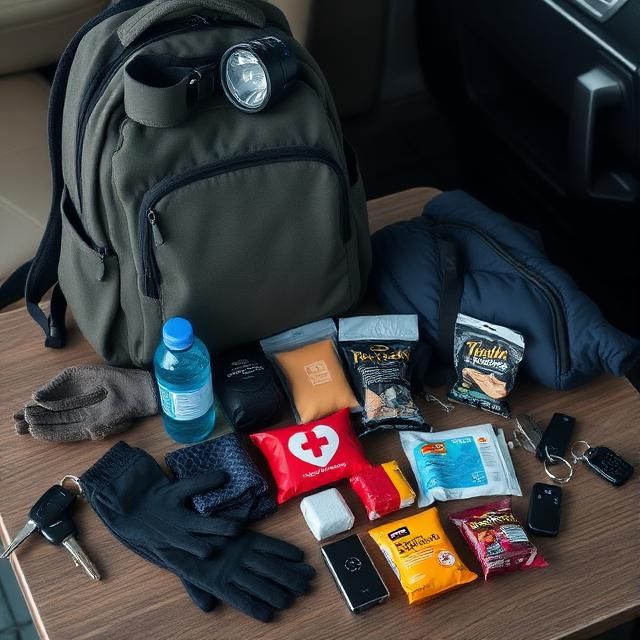
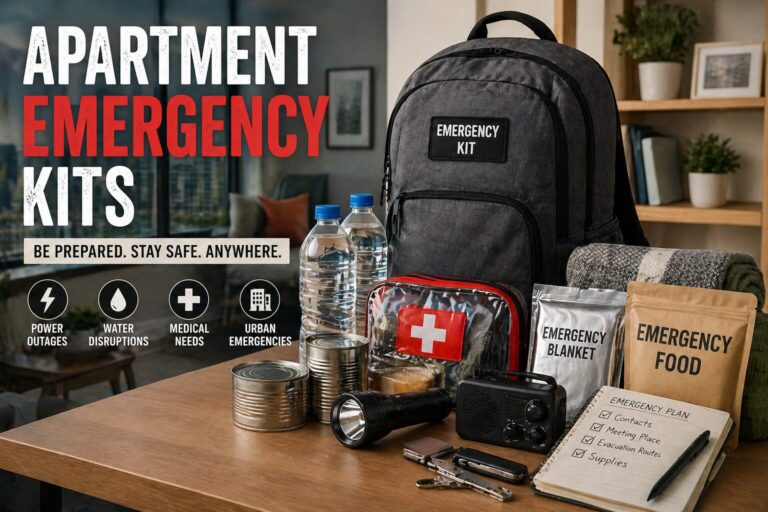
Something like this covers most situations:
- Drinking water
- Shelf-stable food for several days
- Flashlight and spare batteries
- Phone charger or power bank
- Basic first aid supplies
- Cash in small bills
- Portable radio
- Warm clothing or blanket
Cash deserves a quick mention here.
Electronic payment systems fail more often than people expect during outages. Card readers require connectivity. ATMs require power.
A little physical currency solves a surprising number of small problems.
Not huge amounts. Just enough to handle purchases when digital systems stall. Even twenty or forty dollars in small bills can help.
A Short Story About Elevators
A few years ago I watched something small unfold in a high-rise apartment building during a regional blackout.
Nothing dramatic.
The building lost power. Emergency lighting activated in the hallways. Elevators stopped between floors until the backup system reset them.
People stepped out of their apartments into the hallway and looked around, a little uncertain.
Within an hour the situation shifted from inconvenience to problem for several residents.
The building had twenty floors.
People living on upper levels suddenly realized water pressure had dropped. The booster pumps for higher floors depended on electricity.
Carrying water up the stairs from the lobby became the only option.
And twenty floors is a long way to carry anything heavy.
Now imagine that situation lasting two or three days instead of a few hours.
It changes how people experience something as simple as living several floors above ground.
After seeing that play out, I started paying more attention to how buildings function during outages. Elevators, pumps, emergency generators. Quiet systems most residents never notice.
Cities contain thousands of these hidden dependencies.
Once you notice them, preparation becomes more practical.
The Quiet Advantage of Thinking Ahead
Urban survival preparation doesn’t need to feel extreme.
Most of it is simply thinking about systems that usually operate in the background.
Water. Electricity. Transportation. Communication. Supply chains.
Cities function beautifully when those systems align.
Preparation is just acknowledging that sometimes they don’t.
And when they don’t, people who have already considered the possibility tend to move through the situation with a little more calm. A little more patience.
Not because they predicted the future.
Just because they spent a little time thinking about how fragile modern convenience can be.
Once you see that clearly, preparing for city emergencies stops feeling dramatic.
It starts feeling more like common sense.
Or at least… closer to it.