Solar Power Basics That Still Work When the Grid Doesn’t
People talk about solar power in two completely different ways. One version is aspirational, clean rooftops, independence, a kind of polished future where the lights stay on because you planned ahead. The other version shows up the first time somebody tries to run real equipment from a small panel and a battery pack and realizes they do not actually have a power system. They have a charger with good marketing.
That gap matters. A lot.
Solar power is useful for preparedness, but only when a person stops thinking in vague terms and starts thinking in loads, storage, sunlight, and priorities. I know that sounds less exciting than a big panel unfolded on a tailgate, but this is one of those subjects where boring realism saves money and disappointment. In an outage, disappointment is not just emotional. It means the phone dies, the radio goes quiet, the freezer warms up, or the medical device does not get the runtime you thought you paid for.
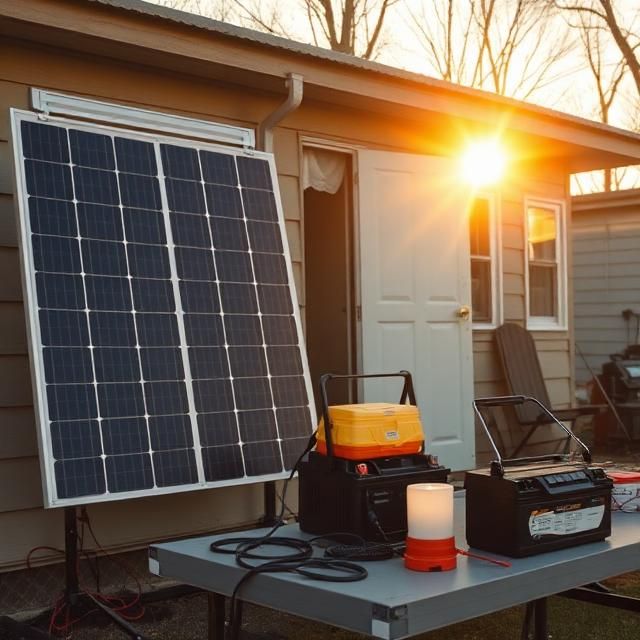
The first thing to understand is that solar is not really about the panel. Not by itself. The panel collects energy when conditions allow. The battery stores some of it. The charge controller manages how that energy moves. The inverter, if you need AC power, converts it, while wasting a little in the process because nothing is free. Then your devices pull from the system according to their own demands, which are often less modest than people assume.
Start With the Load, Not the Dream
Most bad solar planning starts with the wrong question. People ask, what solar generator should I buy? Or how many watts of panel should I get? Those are not useless questions, but they come too early. The better question is what do I actually need to keep running, for how long, and under what conditions.
A phone, a flashlight, and a weather radio are one kind of problem. A chest freezer, a well pump, and a CPAP are another. It is not just about total wattage either. Some devices pull a modest amount steadily. Others surge hard when they start. A system that looks fine on paper can still fail the moment a motor kicks on.
This is why people should make a plain, almost dull list before they buy anything. Write down the device. Write down its watt draw if you know it, or look at the adapter, label, or manual. Write down how many hours per day you realistically need it. Then multiply. That gives you an energy picture instead of a wish. It is not perfect, but it is much better than shopping by vibes.
And honestly, a lot of systems get better the moment the load gets smaller. Charging phones and radios, running LED lights, keeping battery banks topped off, that is one lane where solar is genuinely strong. Trying to run heat, air conditioning, cooking, and large refrigeration from a small emergency setup, that is where fantasy enters the room.
Panels Matter, but Sunlight Matters More
A 100-watt panel is not a promise. It is a rated output under favorable test conditions, and real life is not generous enough to match those conditions all day. Cloud cover cuts production. Poor angle cuts production. Dirt cuts production. Shade cuts production hard, sometimes more than people expect. Winter days are shorter. Storm seasons do not care what your battery level is.
So when somebody says they have 200 watts of solar, I always want to ask, in what season, for how many useful sun hours, with what placement, and charging what. The label number is not meaningless, but it is incomplete.
Preparedness people sometimes underrate this because panels feel tangible. Weather does not. Yet weather is part of the system. So is geography. So is tree cover. So is whether you can reposition the panel or whether it is stuck where it gets mediocre light for half the day.
Portable panels can be very useful because they let you chase better sun, but they also ask for setup time, protection from wind, and a bit of discipline. Fixed panels are convenient, but they are only as good as where they live. The point is not to distrust panels. The point is to stop treating watt ratings like guarantees.
Batteries Decide Whether the System Feels Useful
People get excited about generation and forget that storage is usually what makes a solar setup feel calm instead of annoying. If you only have power when the sun is hitting well, then you do not really have much resilience. You have opportunity. That is not the same thing.
A battery smooths the whole experience. It lets you collect during the good hours and use during the bad ones. It gives you overnight capability. It gives you buffer against clouds. It gives you options, which is a big part of preparedness.
Battery chemistry matters too, though I think a lot of people drown in spec sheets before they learn the practical difference. Lead-acid batteries are cheaper up front and familiar, but they are heavy, less efficient, and do not like being deeply drained over and over. Lithium iron phosphate systems cost more, but they tend to be lighter, more usable across repeated cycles, and just easier to live with. Not magic. Just often better in real use.
The bigger lesson is simpler than the chemistry argument: if the battery bank is too small for the load, the system will feel weak no matter how proud you are of the panels.
Charge Controllers and Inverters Are Where Small Mistakes Become Big Friction
Charge controllers are not glamorous, which is probably why people want to skip understanding them. But they matter because batteries do not enjoy being charged badly. The controller regulates the flow from panel to battery, and a decent one helps the whole system behave in a more stable way.
Inverters matter for a different reason. The moment you need standard wall-plug AC power, conversion losses show up. Some devices also dislike poor-quality power. Others pull more than expected during startup. So when people say their battery station is rated for a certain output and still struggles with a real appliance, this is often part of the story.
I think one of the better habits in preparedness is to favor DC charging where possible. Charge phones, radios, lights, and small gear directly in the most efficient path you can manage. Every conversion step costs something. If you do not need AC, avoiding it can stretch a modest system quite a bit.
A Real Outage Example
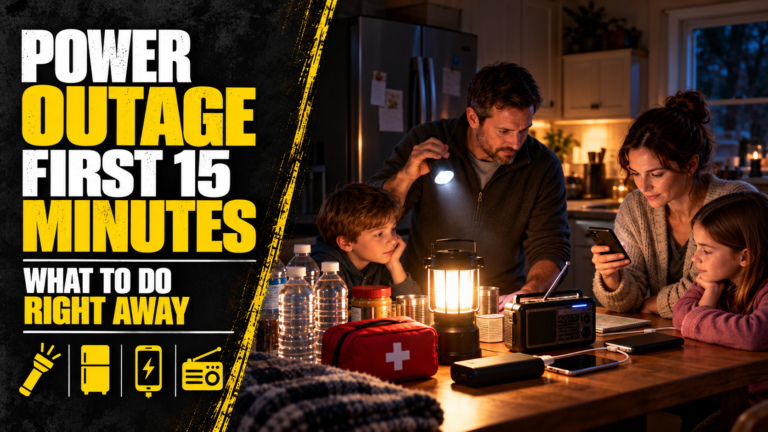
Picture a household after a summer storm line comes through. Trees are down in parts of the county, the utility estimate keeps sliding, and now people are realizing this is not a two-hour outage. In a real citywide blackout, small power decisions stop being small very quickly. A family has a folding solar panel, a mid-sized battery station, a cheap inverter from an older car kit, and a pile of devices they never really tested together.
The first few hours feel manageable. Phones charge. A lantern comes on. A fan runs in the living room and lifts everyone’s mood. Then evening arrives and the battery percentage drops faster than expected because people are trying to solve comfort, communication, lighting, and food preservation all at once. Someone plugs in a coffee maker because the system has an AC outlet and, in their mind, an outlet means normal life. The inverter protests. The battery loses ground. The next morning is cloudy.
This is where good solar planning shows its value. Not in the first successful charge, but in the second day when conditions are worse and priorities have to hold. A better-prepared household would already know which loads are essential, which ones are optional, which devices charge during peak sun, and what the battery can really support overnight. They would know that lighting and communications are easy wins, that refrigeration is a more serious commitment, and that heat-producing appliances are usually rude customers in a small system.
That example is ordinary on purpose. Most preparedness failures are ordinary. They happen because a system was never turned into a routine.
Build Around Priorities, Not Pride
If a person wants emergency solar to be useful, the system should be built in layers. First layer, communication and information: phones, radios, flashlights, maybe a small router if that helps and your internet path still works. Second layer, medical or safety needs that genuinely matter, including basics like refrigeration support and household water storage when broader utilities get shaky. Third layer, comfort and convenience if the numbers support it.
That order sounds obvious, but pressure scrambles obvious things. People start making power decisions emotionally. They try to preserve normal life instead of preserving critical function. Sometimes those overlap, but often they do not.
The good version of solar preparedness is not a huge heroic system by default. Sometimes it is a modest, well-understood kit that does a few important jobs reliably. There is a lot to be said for reliable. Quite a lot.
Testing Is What Separates Equipment From Capability
An unopened solar panel is not preparedness. A battery station at eighty percent because you forgot to top it off is not preparedness either. Capability means you have tested the panel, tested the cables, tested the charging rate, tested your real devices, and seen what happens over an actual day instead of a fantasy day.
Run a drill on a decent weekend. Use the system for the devices you claim it supports. Watch the battery level. Track the recharge window. Notice what gets hot, what charges slowly, what connectors feel flimsy, what assumptions fall apart. These are cheap lessons when the grid is up.
This is also where people learn whether their system is expandable or boxed in. Some all-in-one units are convenient but limited. Some modular setups ask more of the user but scale better. Neither approach is automatically right. The wrong one is the one you bought without understanding how you would grow it later.
Keep the System Maintained and Boring
Preparedness gear should get more boring as it gets more dependable. Solar is no exception. Keep panels clean enough to work properly. Store cables where they do not get damaged. Recharge and cycle batteries on a sensible schedule. Label adapters if you have a pile of them. Protect gear from moisture and casual abuse.
A small power system that is organized and practiced will beat a larger neglected one more often than people like to admit. Disorder steals capacity. So does confusion. In outages, confusion can feel like a power problem even when it is really a planning problem.
Key Takeaways
- Emergency solar planning starts with the load, not the panel size.
- Rated panel output is not the same as real-world energy production.
- Battery storage often determines whether a solar setup feels truly useful.
- Conversion losses and startup surges matter more than most people expect.
- Testing under normal conditions is what makes emergency solar dependable later.
Step-by-Step Preparedness Actions
- List the devices you actually need to power and estimate their daily energy use.
- Separate essential loads from comfort loads before buying or expanding a solar setup.
- Test your panel, battery, and charging paths with real devices, not assumptions.
- Favor efficient DC charging when possible to reduce conversion losses.
- Track how your system performs in different weather and light conditions.
- Maintain batteries, cables, connectors, and panels so the system stays ready.
Quick Preparedness Checklist
- Essential device list with estimated daily usage
- Working solar panel or panels
- Charged battery storage
- Charge controller matched to the system
- Required cables and adapters organized
- Efficient charging path for phones, radios, and lights
- Basic understanding of inverter limits and surge loads
- Practice run completed before the next outage
Skills Practiced in This Module
- load planning
- energy budgeting
- sunlight awareness
- battery management
- conversion-loss judgment
- outage power prioritization