Water Purification Methods That Matter When Clean Water Stops Being Easy
The moment people start worrying about water, they usually jump straight to the product question. Which filter. Which purifier. Which tablets. Which gadget goes in the bag. I get why. Gear feels concrete. It feels like progress. But clean water problems are not really solved by brand names first. They get solved by understanding what kind of contamination you are dealing with, what your method actually removes, and what mistakes you are likely to make when you are tired, rushed, or cold.
That is the part that matters more than most people want it to. A lot more.
Water purification is one of those subjects where bad confidence is dangerous. People assume clear water is safe. They assume moving water is safe. They assume cold water is safer than warm water. They assume one treatment method does everything. Usually it does not. That gap between appearance and reality is where people get themselves in trouble.
I think the best way to approach water purification is to stop treating it as one skill. It is really a stack of smaller judgments. You are evaluating source quality. You are reducing contamination when you collect. You are picking a treatment method that matches the risk. You are storing the treated water without ruining the whole effort afterward. Miss any one of those steps and you can end up doing a lot of work for a result you still should not trust.
Start With the Source, Not the Tool
The cleanest purification method in the world still works better when the source water is less terrible to begin with. That sounds obvious, but people skip right past it. If I have a choice between clearer moving water upstream from obvious human activity and stagnant water near runoff, trash, or animal concentration, I do not need a seminar to know where I would rather start.
Purification methods are not magic. They are risk reduction tools. The dirtier and more chemically questionable the source, the more careful I have to be about what method I trust. Muddy water, water with heavy sediment, or water with visible organic matter should usually be settled or strained first, even if a later treatment step is coming. This is not just about taste. Heavy sediment reduces the effectiveness of some purification methods and can clog filters faster than people expect.
A bandana, cloth, coffee filter, or improvised pre-filter is not true purification, but it can make the next step work better. That distinction matters. Straining is not enough. It just helps.
Filtration and Purification Are Not the Same Thing
This is one of the most important things people should understand before they are thirsty and impatient. A filter and a purifier are not automatically the same thing, even though people use the words that way all the time.
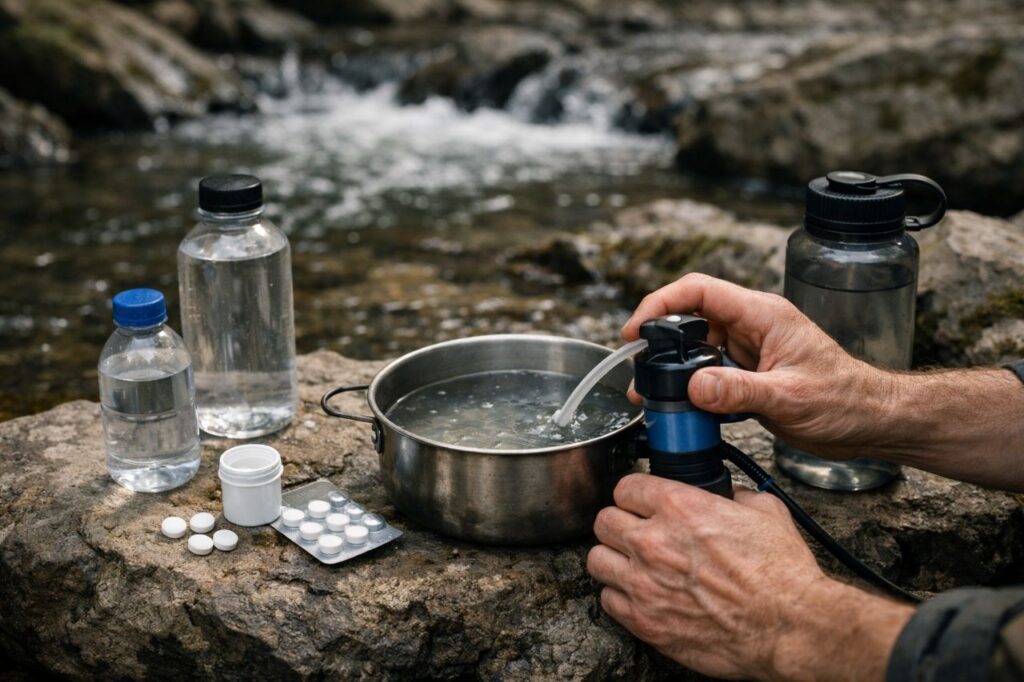
Many portable water filters are designed mainly to remove sediment, protozoa, and bacteria. That is useful. Very useful. But some do little or nothing for viruses, and many do little or nothing for chemical contamination. A purification method may deal with a broader set of threats, but even then the details matter. If you do not know what your equipment is designed to handle, you are guessing with a better-looking object in your hand.
That is why I tend to think people should learn categories before brands. Learn what boiling does. Learn what mechanical filtration does. Learn what chemical disinfectants do. Learn where activated carbon helps and where it does not. Once those categories make sense, gear choices stop feeling mystical.
Boiling Is Old for a Reason
Boiling remains one of the most dependable treatment methods because the principle is simple and hard to misunderstand. Bring water to a proper rolling boil and most biological threats people worry about are handled. It is not elegant. It is not always convenient. But it is dependable when you can make fire, have a stove, and have the time and container for it.
Now, I think one reason people underrate boiling is that it feels low-tech, almost boring. But boring is not a weakness in survival work. Boring can be exactly what you want.
That said, boiling does not remove sediment, heavy metals, fuel contamination, agricultural runoff, or other chemical problems. If the source is chemically questionable, boiling can make the situation worse by concentrating contaminants as water evaporates. That is a detail people forget. Boiling is excellent for pathogens. It is not a universal answer to every ugly water source.
Still, for backcountry use or short-term emergency use where the main concern is biological contamination, boiling is hard to dismiss. It asks for fuel, time, and a container. That is the trade.
Mechanical Filters Are Practical, but They Have Boundaries
Portable filters are popular because they are fast, compact, and relatively easy to use. Good ones make bad-looking water much more usable. They are especially valuable when fuel is limited or when you need a repeatable field method without waiting for boil times or chemical contact times.
But this is where people can become a little too romantic about gear. Filters clog. Membranes freeze and get damaged. Dirty hands contaminate clean containers. Hoses touch bad water and then touch good water. Users fail to backflush them, or they use a filter outside its intended range and assume the name on the packaging protects them from consequences.
A filter is excellent when it is maintained, understood, and paired with decent source selection. It is not a license to stop thinking. In some situations I would trust a filter as a primary method. In others I would use it as part of a layered approach, especially if the source quality or context leaves room for doubt.
Chemical Treatment Is Lightweight, Slow, and Often Underappreciated
Chemical disinfection, usually tablets or liquid drops, gets dismissed because people do not like the taste, the wait, or the idea. I understand that. But chemical treatment has real value because it is light, compact, inexpensive, and easy to store as a backup.
That backup role matters. Maybe your filter cracks. Maybe you cannot make fire. Maybe you are in transit and need something small that works while you keep moving. Chemical treatment fills that gap pretty well.
The downside is not small, though. Contact time matters. Water temperature matters. Cloudy water reduces effectiveness. Different products target different threats more effectively than others. And again, chemical treatment is mainly about biological contamination. It is not a cure for industrial runoff or mystery sludge in a drainage ditch.
Some people treat tablets like an afterthought. I think that is a mistake. A decent water plan usually includes chemical treatment even if it is not your favorite method, just because redundancy beats preference when things get weird.
UV Devices Are Clever, Useful, and a Little Conditional
UV purification devices can work well if the water is relatively clear, the batteries are good, and the unit is functioning properly. They are attractive for obvious reasons. Fast, clean, no strange taste, not much mess. For some kits they make real sense.
But they are conditional. That is the word I keep coming back to.
If the water is cloudy, UV becomes less dependable because organisms can hide behind particles. If the batteries are dead, the method is done. If the device breaks, there is not much to improvise. So I do not dislike UV devices at all, but I would not want them to be my only answer unless the rest of my system is strong.
Preparedness works better when your best method is supported by a second method that operates on a different principle. That way one failure does not erase your whole plan.
Carbon Helps, but People Overstate What It Means
Activated carbon is useful, especially for improving taste, reducing some odors, and helping with certain chemical contaminants depending on the setup. It can make treated water much more drinkable, and that matters because people drink too little when the water tastes foul.
But carbon gets over-promoted in casual conversation. People hear “removes chemicals” and then mentally expand that into “solves chemical contamination.” That is not how reality works. Carbon has strengths. It also has limits, contact-time issues, and lifespan issues. It helps in a broader purification strategy. It is not a blank check.
Layered Treatment Is Often the Smartest Approach
If I had to reduce this whole subject to one practical principle, it would be this: stack methods when the risk justifies it.
Maybe you strain dirty water first, then filter it, then boil it. Maybe you filter and then chemically disinfect. Maybe you settle sediment, decant the clearer water, then use your main treatment method. The exact sequence depends on the source and the tools you have, but layered treatment gives you margin. Margin is precious.
I think people sometimes avoid layered treatment because it feels inefficient. Sure. It can be. But efficiency is not the only value when bad water can disable you fast. The point is not elegance. The point is confidence grounded in reality.
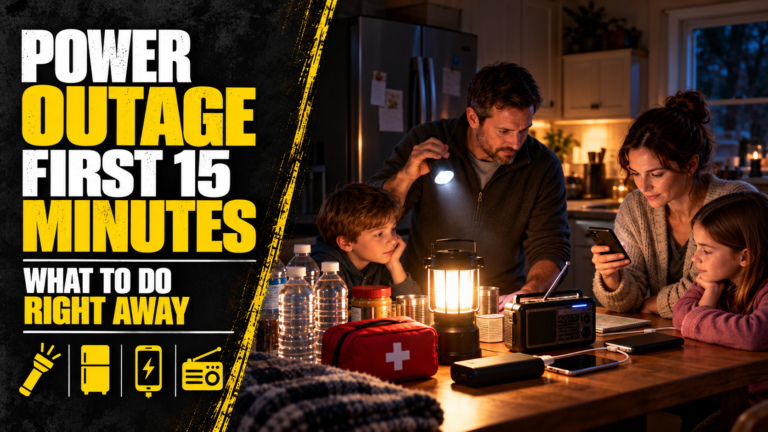
A good example is storm-related outages. People may suddenly rely on questionable local sources, water from containers they have not cleaned well, or standing water that looks less awful than it is. In those moments, doing two sensible things instead of one marginal thing is often the right call.
Storage After Treatment Still Matters
This part is easy to overlook because once people treat water, they mentally mark the problem complete. But post-treatment contamination is real. Dirty bottle threads, unclean hands, bad lids, containers that held something sketchy before, all of that can undo good treatment work.
Stored household water still needs discipline after treatment. Clean container discipline is not glamorous, but neither is spending a day wrecked because you contaminated your own “safe” water at the last step.
If possible, dedicate containers to water use, keep treated water separated from untreated water, and pay attention to which surfaces touch what. A lot of water safety is really contamination management. The treatment step is central, but it is not the only thing.
What Actually Belongs in a Real Water Plan
I would not build a water plan around one heroic item. I would build it around a few boring pieces that work together.
One dependable primary method. One backup method. One way to pre-filter dirty water. Clean storage containers. A habit of choosing better sources when possible, including from a maintained rainwater collection system when that makes sense. And enough familiarity that you are not reading instructions for the first time while you are already short on water.
That last part matters more than people admit. Stress makes ordinary tasks clumsy. If you have never used your filter, never timed your tablets, never boiled and stored emergency water carefully, your plan is still mostly imaginary. That sounds harsher than I mean it to, but not by much.
Practice turns purification from a concept into a routine. That routine is what you need.
Key Takeaways
- Water purification starts with source choice, not just gear choice.
- Filtration, boiling, chemical treatment, UV, and carbon all solve different parts of the problem.
- No single method handles every kind of contamination equally well.
- Layered treatment often provides the safest margin when the source is questionable.
- Clean storage after treatment matters almost as much as treatment itself.
Step-by-Step Preparedness Actions
- Learn the strengths and limits of your main water treatment method before you need it.
- Add a backup treatment method that works on a different principle.
- Practice pre-filtering muddy water so your main method works better.
- Keep dedicated clean containers for treated water and avoid cross-contamination.
- Test your gear at home and in field conditions instead of trusting unopened packaging.
- Build the habit of judging source quality before treatment instead of collecting blindly.
Quick Preparedness Checklist
- Primary filter or purification method
- Backup chemical treatment or boil capability
- Metal container or pot for boiling
- Cloth or pre-filter material
- Clean treated-water container
- Spare batteries if using UV
- Basic understanding of source selection
- Routine practice with your gear
Skills Practiced in This Module
- source evaluation
- contamination risk judgment
- layered purification
- clean-water handling
- backup method planning
- field water discipline