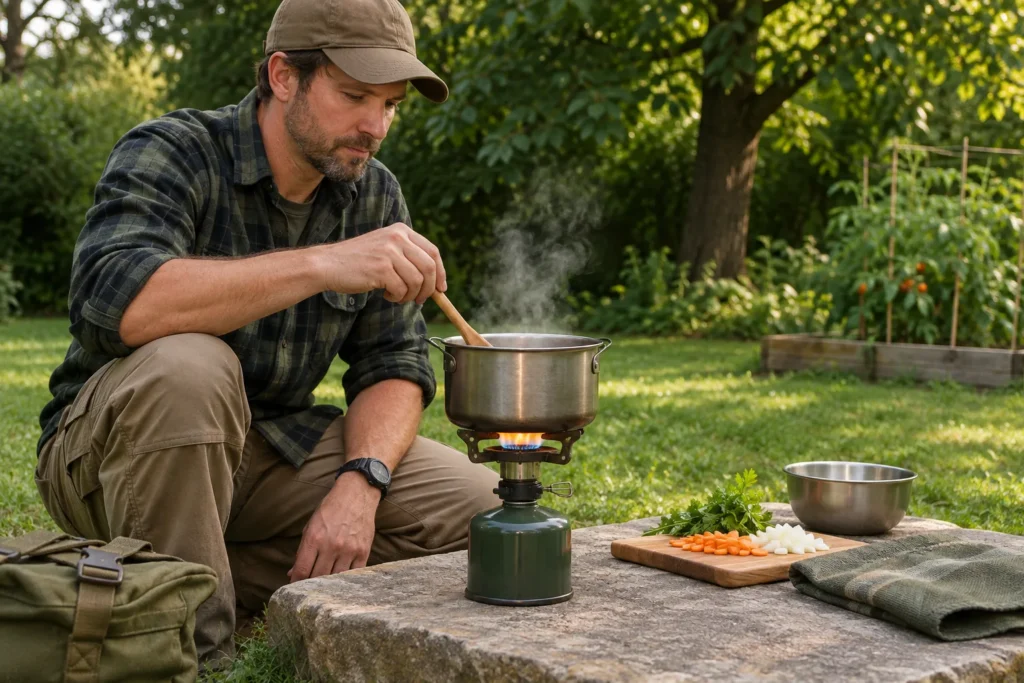
To cook without power, begin with no-cook food and only add a heating method you can operate safely in the conditions you actually have.
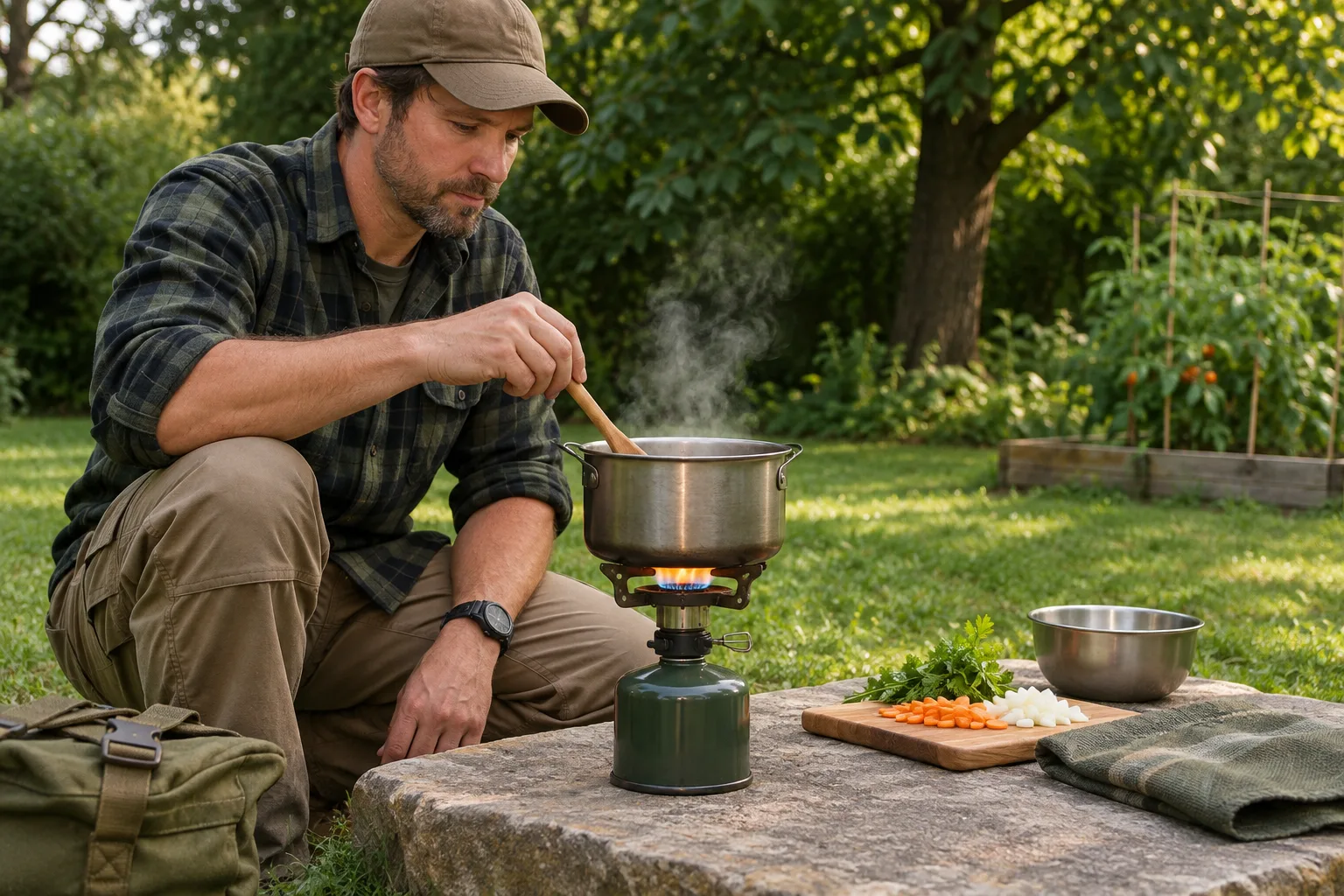
When the power goes out, dinner stops being just a recipe problem. Now you are managing fuel, ventilation, clean water, food safety, and a household that may already be tired or stressed.
The safest plan is not to improvise a new kitchen after the lights go out. It is to build a simple cooking ladder before you need it: eat foods that require no cooking first, use only equipment you already know how to operate, move fuel-burning cooking outdoors, protect your clean water, and save fuel for meals that actually need heat.
It is not as exciting as buying a pile of emergency gadgets. It is far more useful when the lights are actually out.
Cook without power: start With the Safest Cooking Ladder
During an outage, use the simplest method that can safely prepare the meal.
- No-cook food.
- A permanently installed indoor appliance that is designed for indoor cooking and can be used safely under its manufacturer’s instructions during the outage.
- Electric cooking from a properly sized and properly operated backup-power system.
- Outdoor camp stove or propane grill.
- Outdoor charcoal or wood cooking.
- Specialized options such as solar cooking when conditions actually support them.
The order matters, but do not treat it like a rigid checklist. Use the safest method your equipment, weather, fuel, water, and power situation actually support. Before you light anything, stop and ask three questions: Is this device designed for the place I am about to use it? Can exhaust or carbon monoxide reach anyone? Do I have enough light, space, and attention to run it without improvising? If one answer gives you pause, change the plan. Flame, fuel, smoke, hot cookware, and generators all add failure points.
A shelf-stable meal that needs no heat may be the better choice during a short outage. Save the propane for day two. Save the charcoal for when you have enough daylight and weather protection to use it safely. Save generator fuel for loads that matter more than making coffee.
Preparedness works better when resources are treated as a system instead of as separate pieces of gear.
The Hard Rule: Fuel-Burning Emergency Cooking Belongs Outdoors
Carbon monoxide is especially dangerous because you do not get a useful warning from your senses. It is colorless and odorless, and fuel-burning equipment can create a dangerous buildup before anyone recognizes the problem.
Do not use a charcoal grill, propane camp stove, gasoline-burning appliance, generator, or similar outdoor fuel-burning device inside a house, basement, garage, carport, camper, or other enclosed space. An open garage door does not turn a garage into a safe outdoor cooking area. Do not set the equipment beside an open door, window, or vent where exhaust can enter the building. And do not use a gas oven or range as a space heater; cooking appliances are not emergency heating systems.
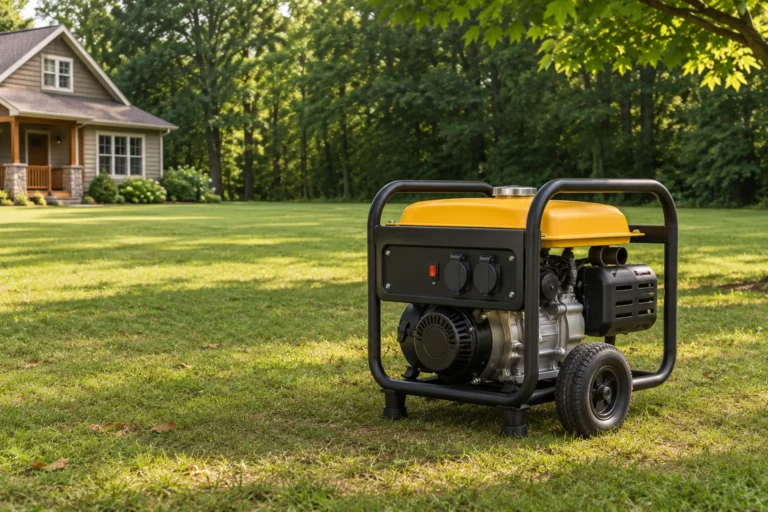
CDC power-outage guidance says generators should be operated outside and at least 20 feet from doors, windows, and vents. That is a useful minimum planning distance for the generator itself. Grills and camp stoves also belong outdoors, away from building openings, with the manufacturer’s clearance rules followed.
A battery-powered or battery-backup carbon-monoxide alarm adds another layer of protection, but it does not make unsafe indoor use acceptable.
If the weather is bad enough that outdoor cooking is unsafe, change the meal. Rain, cold, or inconvenience does not make the garage a safe place for a grill.
That one decision prevents a cooking inconvenience from becoming a medical emergency.
Method 1: Build a No-Cook Layer First
The easiest off-grid cooking method is sometimes not cooking at all.
Keep foods that can make a real meal without heat, such as shelf-stable protein, crackers or tortillas, nut or seed butter, canned foods that are safe to eat without heating, dried fruit, ready-to-eat cereals, and other foods your household already eats.
You do not need to live on snack food for a week. You just need enough real no-cook meals to remove the pressure to light a stove every time someone gets hungry.
No-cook meals are especially useful when:
- the outage is expected to be short
- weather makes outdoor cooking unsafe
- fuel is limited
- you are trying to preserve clean water
- people are tired and making mistakes
- darkness makes setup harder
If you need to open cans, keep a manual can opener with the food. That is the kind of small detail that separates a stored-food plan from a usable meal plan.
Method 2: Use an Outdoor Camp Stove or Propane Grill
A camp stove is one of the most practical emergency cooking tools because it is compact, controllable, and familiar to many households. A propane grill can do the same job on a larger scale.
Use either one only in a safe outdoor location and follow the manufacturer’s instructions. Set up on a stable surface. Keep children and pets out of the cooking zone. Keep combustible material away from the burner. Do not improvise fuel connections or use damaged hoses, regulators, or cylinders.
Once the stove is running, treat fuel like a limited resource.
Instead of heating three separate meals, heat one pot. Use lids. Choose foods with shorter cooking times. Plan the meal before you light the burner so the flame is not running while you search for ingredients, utensils, or the next step.
Fuel goes faster than most people expect when every outage meal is cooked as though the normal kitchen were still available.
A better question is: What is the minimum heat needed to make this meal safe and useful?
Method 3: Charcoal and Wood Work, but They Change the Job
Charcoal grills and outdoor wood fires can cook food without electricity, but they require more attention than a small controlled burner.
They are outdoor methods. They create carbon monoxide, hot embers, sparks, and a larger fire-management problem. Local fire restrictions, drought conditions, wind, apartment rules, or damaged surroundings may make them a poor choice even when you technically have fuel.
If you use them, establish the cooking area before the emergency. Know where hot coals can cool safely. Keep water or an appropriate fire extinguisher available for the hazards you are managing. Never dump hot ash into a trash can or against a structure.
Wood is not automatically “free fuel,” either. Wet wood burns poorly. Unknown construction scraps may contain paint, preservatives, adhesives, or other materials you do not want around food or in smoke. Use appropriate cooking fuel, not whatever happens to be nearby.
Method 4: Backup Electricity Can Keep Cooking Familiar
If you have a properly sized backup-power system, a small electric appliance can sometimes be the simplest cooking method because it avoids an open flame at the cooking point. The power source still has to be operated safely.
A microwave, electric kettle, induction burner, rice cooker, or multicooker may use less total energy than running a large electric range, depending on the appliance and the meal. But wattage matters. Heating appliances can draw substantial power, and a battery power station that easily charges phones may not be able to run a cooking appliance for long.
Check the actual wattage before the outage. Test the combination you intend to use. Do not discover during an emergency that the inverter trips every time the kettle turns on.
If the electricity comes from a portable generator, the generator stays outdoors. Never backfeed a house through a wall outlet. Use the connection method, transfer equipment, cords, and load limits appropriate to the system.
Our guide to generator sizing explains why running watts, starting loads, fuel, voltage, and connection method all matter: https://survivalmanualsonline.com/what-size-generator-do-i-need-for-a-power-outage/
Method 5: Solar Cooking Is a Bonus, Not a Foundation
Solar cookers can reduce fuel use when the sun, season, temperature, and cooking window cooperate. That makes them useful in the right environment.
They are not a dependable primary emergency method everywhere.
Cloud cover, short winter days, wind, shade, and the time required to reach and hold cooking temperatures can all interfere. If you use a solar cooker, learn it before an emergency and use a food thermometer when safe internal temperature matters.
Think of solar as a fuel-saving option, not as permission to skip a more dependable plan.
Food Safety Does Not Disappear When the Stove Does
An outage creates two separate food problems: how to cook and what is still safe to cook.
Keep refrigerator and freezer doors closed as much as possible. A closed refrigerator generally gives you about four hours of cold-holding time; a full freezer about 48 hours and a half-full freezer about 24 hours. Those are planning windows, not magic expiration timers. Temperature and time still decide whether perishable food is safe.
The detailed keep-or-discard process is covered here: https://survivalmanualsonline.com/how-long-will-food-last-in-the-fridge-without-power/
Do not waste scarce fuel cooking food that should already be discarded. Cooking does not reliably erase every food-safety problem created by improper storage.
Also keep raw meat separate from ready-to-eat foods, wash hands when possible, clean utensils and surfaces, and protect cooked food from recontamination. A power outage is not the time to become casual about basic kitchen hygiene.
Water Can Become the Hidden Limit
Cooking plans often assume unlimited clean water. That assumption can fail at the same time the power does.
A private well may lose pumping power. Municipal treatment or pressure problems may trigger a boil-water advisory. Cleanup can consume more water than the meal itself.
Plan meals that match the water you can safely spare. One-pot meals usually beat complicated meals with several dirty pans. Disposable plates may make sense for a short emergency if they reduce sanitation water use. Shelf-stable foods that do not require boiling can preserve both water and fuel.
If officials issue a water advisory, follow the current local instructions for drinking and food preparation rather than assuming clear tap water is safe.
Signals Most People Ignore
Most weak cooking plans advertise their problems before the emergency ever starts.
You own a camp stove but have never lit it. The propane cylinder is almost empty. The manual can opener is missing. The grill sits directly beside a window. The only emergency food in the house needs twenty minutes of boiling. The power station has never been tested with the appliance you expect it to run. Nobody knows where the lighter is. The carbon-monoxide alarm is chirping because its battery is dying.
Those details look small on an ordinary day. During an outage, they are the warning signs that your plan is not ready.
There is an easy way to find those weaknesses: choose one dinner this month and make it without the normal kitchen power supply. Do it safely and deliberately, not as a stunt. Notice how long setup takes, how much fuel and water you use, what gets harder after dark, and what you forgot to stage beforehand. One ordinary practice meal can teach you more about your real cooking plan than another hour spent shopping for emergency gear.
Build a Two-Level Cooking Plan
Keep the plan simple enough that another adult in the household can use it without needing you to explain the system in the dark.
Level 1: No flame required
Choose at least three meals that need no cooking. Store the food, manual opener, utensils, and clean water needed for them together or in known locations.
Level 2: Outdoor cooking
Choose one primary outdoor cooking device and one backup method. Store compatible fuel safely. Know where the equipment will be used, including a bad-weather alternative that is still truly outdoors and does not violate clearance requirements.
Then decide which meals deserve fuel. A useful rule is to reserve heat for food safety, drinking-water treatment when authorities require it, genuinely hot meals that improve household function, and foods that cannot be eaten safely or practically without cooking. Do not burn scarce fuel merely to preserve a normal routine.
For many short and medium outages, that is enough. Dinner should not become an engineering project just because the power is out.
Key Takeaways
- Start with no-cook food and use heat only when it adds real value.
- Fuel-burning grills, camp stoves, and generators belong outdoors, away from doors, windows, and vents.
- Never move outdoor cooking equipment into a garage, basement, or house because of bad weather.
- Match the cooking method to your available fuel, water, daylight, weather, and household skill.
- Test electric cooking loads before relying on a generator or battery power station.
- Protect food safety separately from the cooking problem.
- A simple two-level plan is more useful than owning several untested cooking gadgets.
Step-by-Step Actions
- List three meals your household will eat without cooking.
- Choose one outdoor cooking method you already own or can operate confidently.
- Read the manufacturer’s instructions and identify a safe outdoor operating location.
- Check fuel condition and quantity, then store it according to applicable safety rules.
- Confirm that working smoke and carbon-monoxide alarms have battery backup where appropriate.
- Add a manual can opener, lighter or ignition method, pot, lid, utensils, and heat-resistant gloves to the plan.
- Check how much clean water your planned meals require for cooking and cleanup.
- If using backup electricity, record appliance wattage and test the actual appliance with the intended power source.
- Make one complete practice meal without normal kitchen power.
- Correct every problem the practice meal exposes.
Checklist
- Three no-cook meals selected: Yes / No
- Manual can opener available: Yes / No
- Primary outdoor cooking method selected: Yes / No
- Safe outdoor cooking location identified: Yes / No
- Fuel stored safely and checked: Yes / No
- Equipment tested before an emergency: Yes / No
- Working carbon-monoxide alarms available: Yes / No
- Working smoke alarms available: Yes / No
- Pot, lid, utensils, and ignition method ready: Yes / No
- Clean water requirement calculated: Yes / No
- Food thermometer available: Yes / No
- Backup-power appliance wattage checked: Yes / No
- One practice meal completed: Yes / No
Put the Plan Into Practice
Check the menu against stored water quantities and your pantry inventory. Follow CDC carbon-monoxide precautions for outdoor fuel-burning equipment and FoodSafety.gov outage charts for perishable food.