

Free printable resource / food preparedness
Know what you have. Plan what you can actually use.
This emergency pantry inventory printable helps you count supplies, connect them to meals, and keep a simple rotation record. Use the four-page worksheet pack to find gaps before buying more food or relying on a shelf you have not checked.
Join the newsletter & get the free pack
Your PDF link appears after signup. Includes preparedness tips and product updates from Survival Manuals Online.
What is included in the pantry worksheet pack?
Pantry inventory
Write down the food, package size, quantity, exact label date, and storage location. Print extra sheets for separate shelves or containers.
No-cook meal planner
Turn supplies into meal ideas. Note the amounts, household needs, tools, and any water or refrigeration requirements.
Rotation log
Record review dates, what you used, what needs replacing, and the next action for each item.
Gap & shopping list
Prioritize missing items against your meals, storage space, and budget, then assign a person and date for the next check.
Get your free emergency pantry inventory PDF
Join the Survival Manuals Online newsletter for preparedness tips and product updates. The four-page PDF download appears immediately after you submit the form.
No purchase required. Request removal from the email list through our Contact page. See our Privacy Policy. Your inventory stays on your printed copy; this signup asks for your email only.
Know someone who would use this?
Share the free worksheet pack with a family member or friend. The link explains the newsletter signup and gives them their own download.
Or copy this page link:
Get a preview image for sharing
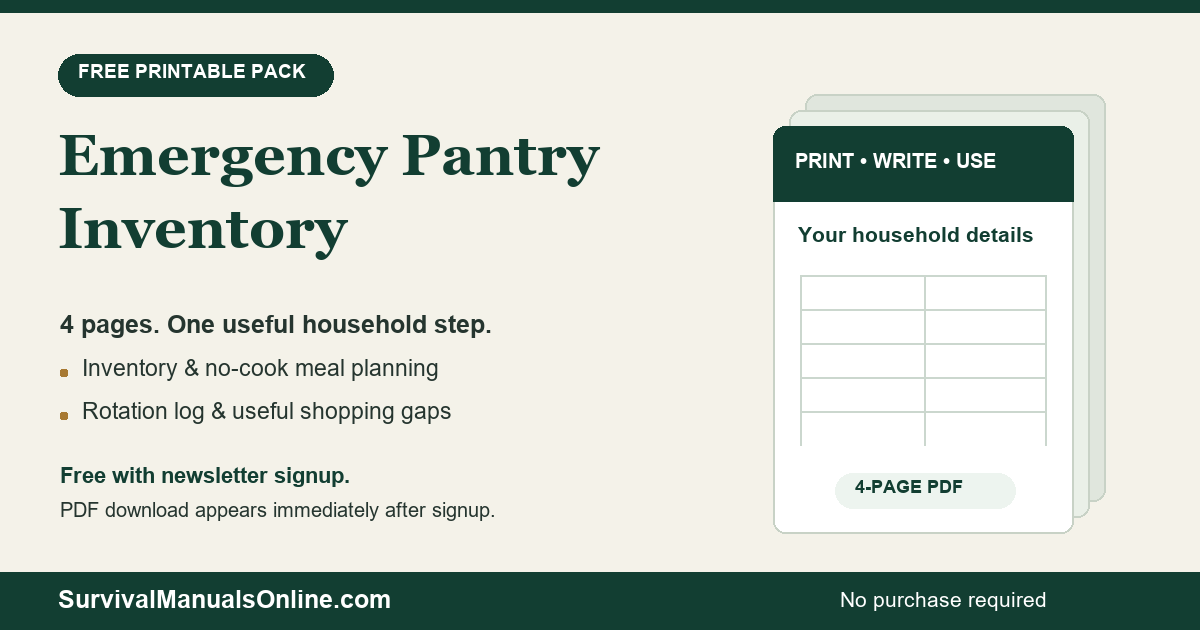
Save this card to share alongside the page link.
 Download the preview image
How to inventory emergency food without making it a project
- Choose one storage area. Start with a shelf, cupboard, or container you can finish. Write the area and count date on the sheet so the record has a clear boundary.
- Count in consistent units. Record six 15-ounce cans as six cans, not simply “beans.” Package sizes matter when you later turn a shelf count into a meal plan.
- Copy the label exactly. Record the printed date and its wording. Add storage instructions or opened-package notes where needed. Do not turn a date column into a claim that food is safe.
- Match supplies to meals. List foods your household will eat and the amounts you need. Check tools such as a manual can opener. Separate foods you can use as stored from ingredients requiring cooking or additional water.
- Write the useful gaps. Move missing meal ingredients and tools to the shopping page. Prioritize what closes a specific gap rather than buying an impressive quantity of one ingredient.
- Set a review routine. Record used supplies and replacements. Assign a household member and a review date that fit your normal shopping habits.
For the wider planning decisions, read our emergency food basics and 72-hour emergency supplies checklist. This printable is the recordkeeping layer that helps you apply the plan.
Example: turn a pantry entry into a useful decision
| Illustrative entry | Question to check | Next action |
|---|---|---|
| Six cans of beans, package size recorded | How many servings does each label list, and what meal will use them? | Add the cans to a meal idea and check the opening tool. |
| Dry rice | Does this plan have the water and a safe cooking method it requires? | Record the dependency; do not classify it as a no-cook meal. |
| Food stored in two cupboards | Will another household member know where to look? | Write the location next to each entry. |
| An opened package | Do the storage instructions change after opening? | Record the opened date and follow the manufacturer’s directions. |
These are examples of inventory decisions, not a prescribed menu or a calculation of how long your household can safely live on a particular quantity of food.
Build a rotation habit you will maintain
A perfect inventory that nobody updates becomes a historical record. Keep the worksheet where the supplies are easy to review, and choose a repeatable moment to check it, such as your usual shopping-list day.
When you use an item, reduce the count. When you replace it, record the new label details. When an item does not fit your household’s meals or storage conditions, mark the problem instead of quietly counting it as readiness. The goal is a pantry you understand and can use.
Questions about the free pantry printable
Is this emergency food inventory sheet free?
Yes. Newsletter signup includes the original four-page PDF pack. No purchase or paid membership is required.
Does the PDF calculate how many days of food I have?
No. It is a print-and-write organizer. Use package serving information, actual meals, and your household’s requirements when planning quantities. It does not provide personalized nutrition advice.
Can I use it for a small apartment pantry?
Yes. Use one sheet per cupboard, shelf, or storage box. Recording the location is often more useful than maintaining a single long list without a way to find the items.
Is it a fillable PDF or spreadsheet?
It is a printable US Letter PDF designed to fill in by hand. Print more inventory pages whenever you need them. No app, spreadsheet software, or subscription payment is required to use the downloaded sheets.
How is this different from the paid food checklist?
This free pack records what you own, the meals you plan, and your rotation actions. The paid Complete Survival System provides a broader set of readiness checklists, a preparedness book, Survival Assistant, and a deeper manual library.
Keep household contacts and handoff details alongside your food plan with our free printable emergency binder template.
Keep building your household system
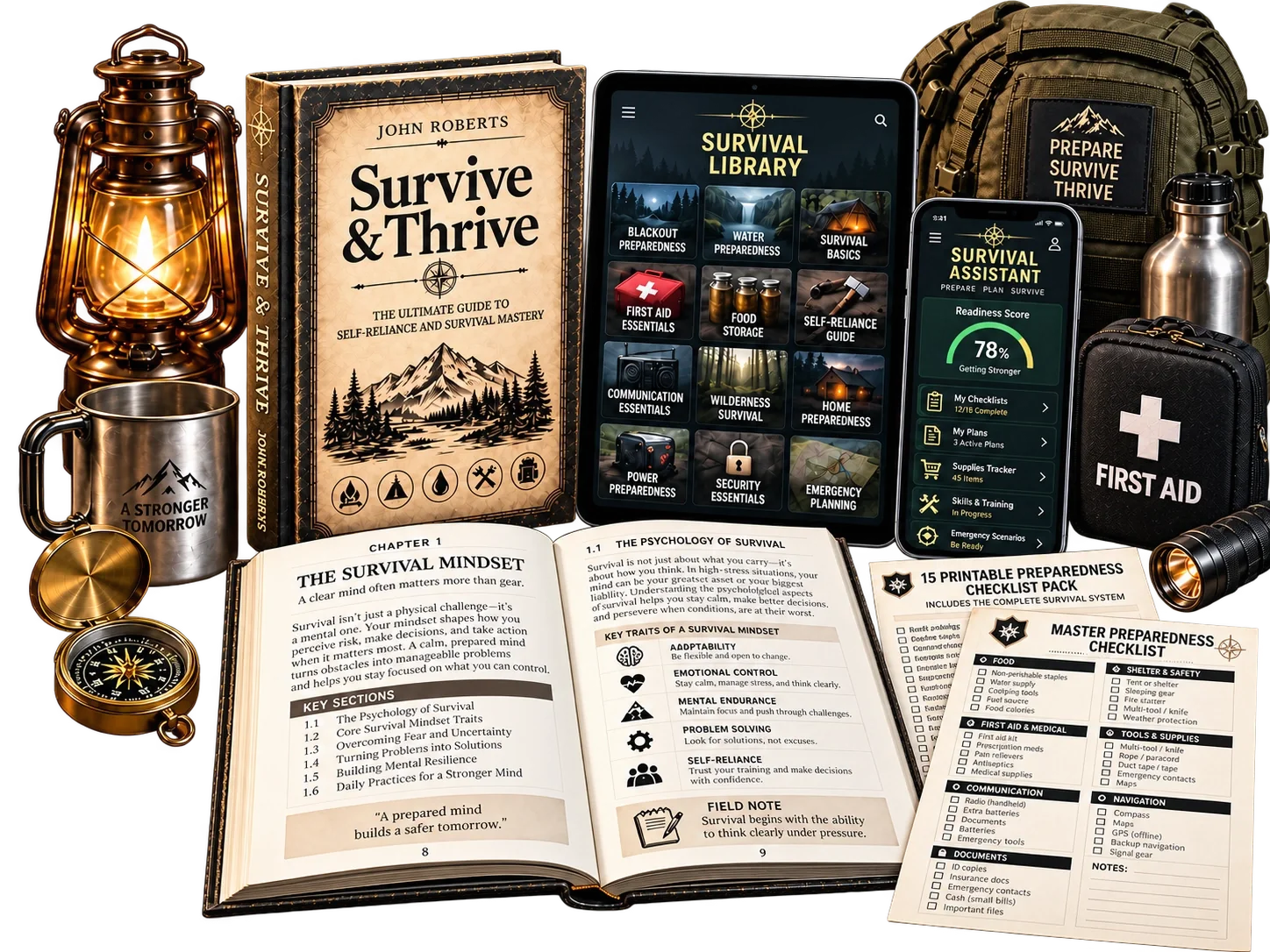
Food planning connects to water, lighting, communication, documents, and the ability to leave if needed. The Complete Survival System brings those areas together through a 214-page guide, 15 action checklists, Survival Assistant, quickstart tools, and 950+ reference manuals.
Get the free pantry worksheets or explore the free preparedness starting guides.