Dehydration is one of those emergency problems that looks simple until it is not. People hear the word and think, “Drink some water.” Sometimes that is exactly right. Other times the person is already losing fluids faster than they can replace them, or they are too sick, too hot, too confused, or too worn down to catch up on their own.
I have seen dehydration sneak up during ordinary days, not just during hard outdoor work. A child with a stomach bug. An older neighbor during a heat wave. Someone cleaning storm debris who keeps saying he is fine because he is still on his feet. That is what makes dehydration worth taking seriously. It does not always announce itself with drama. It often starts as a small decline in performance.
The practical goal is simple: notice it early, stop the loss when you can, replace fluids in a way the body can actually use, and recognize the line where home care is no longer enough.
What Dehydration Actually Means
Dehydration happens when the body does not have enough fluid to keep normal functions working well. That can happen because the person is not drinking enough, because the body is losing fluid through sweat, fever, vomiting, diarrhea, or heavy urination, or because both are happening at the same time.
The mistake many people make is treating dehydration like a water-only problem. Water matters, but fluid balance also depends on salts and other electrolytes. If someone has been sweating heavily, vomiting, or dealing with diarrhea, plain water may help, but it may not be the whole answer. The body often needs a steady replacement of fluid plus electrolytes, not a dramatic flood of water all at once.
That is why dehydration belongs inside a real first aid plan, not just as an afterthought. If you are building supplies for the house, vehicle, or evacuation bag, it should sit beside wound care, fever control, and the ordinary items discussed in building a first aid kit that covers the problems people actually face.
The Early Signs to Catch
Early dehydration often looks like ordinary fatigue. That is the trap. The person may be thirsty, tired, cranky, headachy, lightheaded, or slower than usual. Their mouth may feel dry. They may stop urinating as often, or their urine may get darker.
In a household emergency, I pay attention to behavior before I wait for a textbook sign. Is the person suddenly quiet? Are they making poor decisions? Are they moving slower than everyone else? Are they complaining about a headache after sweating for hours? Those small changes matter because dehydration often shows up first as reduced judgment and reduced energy.
Common early signs include:
- Thirst that keeps coming back
- Dry or sticky mouth
- Headache
- Muscle cramps
- Dizziness when standing
- Unusual tiredness
- Less urination than normal
- Darker urine
- Irritability or foggy thinking
None of those signs alone proves a crisis. Together, especially during heat, illness, heavy work, or limited water access, they are a warning.
When Dehydration Turns Serious
Severe dehydration is not a “wait and see” problem. It can become life-threatening, especially in infants, children, older adults, people with chronic illness, and anyone exposed to heat.
Get emergency medical help if someone loses consciousness, has seizures, becomes confused or difficult to wake, shows signs of heatstroke, has a very rapid pulse or rapid breathing, cannot keep fluids down, has not urinated for a long stretch, or keeps getting worse despite careful rehydration.
I would rather make that call early than explain later why I waited. The dangerous part of dehydration is not thirst. It is the strain placed on circulation, temperature control, kidneys, and mental clarity. Once those systems start slipping together, the person may not be able to think their way out of it.
Watch closely for:
- Confusion, delirium, or a major change in alertness
- Fainting or loss of consciousness
- Very rapid heartbeat or breathing
- No urination or very dark urine
- Hot skin, heat illness signs, or high fever
- Repeated vomiting or inability to keep fluids down
- Severe weakness, listlessness, or shock-like symptoms
- Worsening condition after reasonable first steps
Home care is for mild cases that are improving. Serious signs need professional help.
First Move: Stop the Loss
Before you think about how much someone should drink, look at why they are losing fluid. If the person is overheating, move them to shade or a cooler room. Loosen tight clothing. Reduce exertion. Use fans, cool cloths, or misting if available. If the problem is vomiting or diarrhea, reduce activity and focus on small, steady sips instead of large drinks.
This is basic systems thinking. If the drain is wide open, filling the bucket faster may not solve the problem. You have to slow the loss while replacing what is missing.
During a power outage or storm cleanup, the same logic applies. Do not let one person keep carrying the physical load because “he is tougher.” Rotate jobs. Build rest breaks. Keep water visible. Make people drink before they feel desperate. In heat, pride is a lousy safety plan.
Rehydrating Without Making It Complicated
For mild dehydration in an alert person who can swallow and keep fluids down, start with small amounts often. Sipping is usually better than chugging. If someone drinks too much too fast, especially while nauseated, they may vomit and lose even more fluid.
Useful options include:
- Water for mild thirst and normal daily replacement
- Oral rehydration solution for fluid loss from vomiting, diarrhea, or heavy sweating
- Electrolyte drinks when appropriate and available
- Broth or salty foods paired with fluid for some mild sweat-related losses
- Ice chips or tiny sips when nausea makes drinking difficult
Do not use salt tablets as a casual fix. They can create problems if used the wrong way. The safer practical approach is steady fluid replacement and appropriate electrolytes, with medical help when the person is not improving.
For children, older adults, and people with medical conditions, be more cautious. Dehydration can move faster in those groups, and they may not communicate thirst clearly. An older person may look “off” before they complains. A child may become listless before anyone realizes how little they have kept down.
Clean Water Still Matters
In real emergencies, dehydration is often tied to water access. The tap stops. A boil notice goes out. Stores are picked clean. A stomach illness moves through the house. People then make the second mistake: they drink questionable water because thirst feels more urgent than contamination risk.
Sometimes that tradeoff becomes unavoidable, but it should not be your normal plan. Keep stored water at home, rotate it, and know how you would make questionable water safer before you are forced to decide while someone is already sick. The basics in household water storage that still works when the tap stops and water purification methods that matter when clean water stops being easy support the same goal: prevent dehydration without creating a new illness.
A clean rehydration plan beats a desperate one.
Signals Most People Ignore
Dehydration is easier to prevent than fix after it gets serious. The early signals are usually visible if someone is paying attention.
Here are the signals I watch for:
- Someone stops taking normal bathroom breaks during a long work period.
- A person who was talking normally becomes quiet, irritated, or slow to respond.
- A child has fewer wet diapers or goes a long time without urinating.
- An older adult becomes confused during heat, illness, or a power outage.
- A worker stops sweating normally in hot conditions and starts looking flushed or strange.
- Headaches appear across several people in the same hot room.
- People ration water too aggressively because they are afraid of running out.
- A vomiting or diarrhea illness continues through the day without steady fluid replacement.
That last point matters. People often treat stomach illness as a comfort problem. In a preparedness situation, it becomes a fluid-loss problem first. The same calm decision-making that helps with panic in emergencies before it spreads also helps here. Slow the situation down. Watch the person. Make one good decision at a time.
Build a Dehydration Plan Before You Need It
The best dehydration plan is boring. That is a compliment.
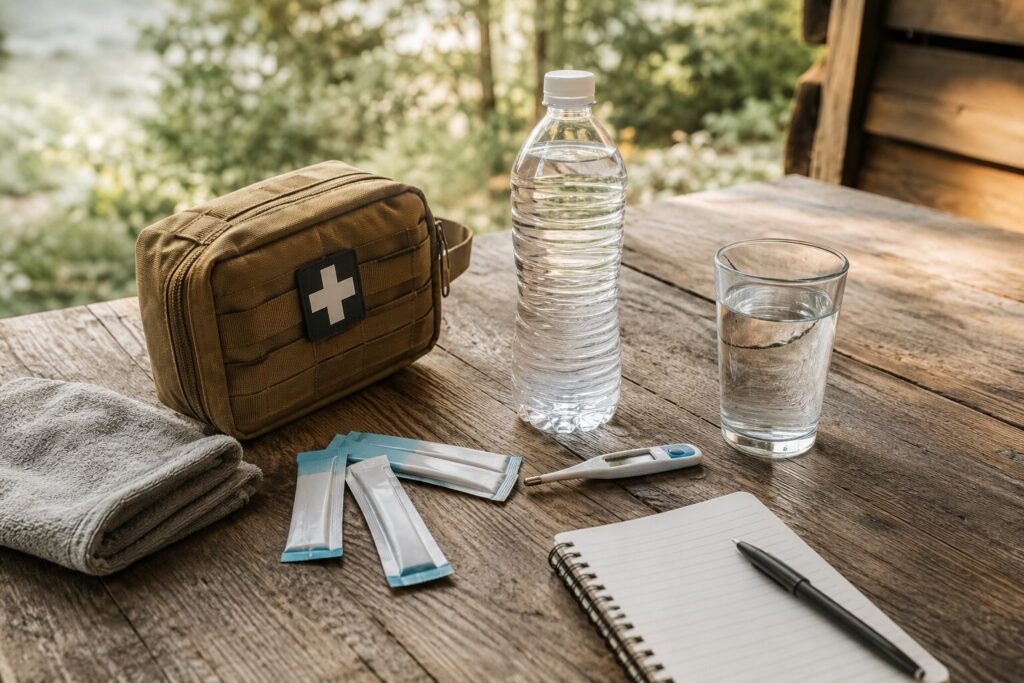
Keep oral rehydration solution packets or ready-made electrolyte replacement in your first aid supplies. Store more water than you think you will need. Keep a few easy foods that pair well with fluids. Know who in your household is higher risk. Have a thermometer. Have a way to cool one room during heat if the power fails, even if that means shade, battery fans, wet cloths, and a plan to relocate if the home becomes unsafe.
For vehicle kits, include water, electrolyte packets, and a small first aid setup. For home kits, think in days, not hours. For outdoor work, make hydration part of the job plan before the work starts.
I like simple rules because simple rules survive stress:
- Drink before thirst becomes urgent.
- Replace electrolytes when fluid loss is heavy.
- Rest before heat exhaustion takes over.
- Watch behavior, not just complaints.
- Get medical help when serious signs appear.
Preparedness works best when the ordinary problems are handled well. Dehydration is ordinary until it is dangerous.
Mistakes That Make Dehydration Worse
The first mistake is waiting for the person to ask for help. Dehydrated people may not think clearly, especially in heat or illness.
The second mistake is giving large amounts too quickly. Small, repeated sips are often more useful than forcing a big drink.
The third mistake is ignoring ongoing loss. If vomiting, diarrhea, heavy sweating, fever, or heat exposure continues, rehydration has to keep pace, and sometimes home care will not be enough.
The fourth mistake is treating every case the same. A healthy adult who got behind on water during yard work is not the same as a toddler with vomiting, an older adult in a hot apartment, or a diabetic person urinating frequently and acting confused.
The fifth mistake is confusing “still awake” with “still fine.” Alertness can change fast. If the person is getting weaker, stranger, or less responsive, move from home care to medical care.
Key Takeaways
Dehydration starts when fluid loss or poor intake leaves the body short of what it needs to function.
Mild dehydration can often improve with rest, cooling, small steady sips, and appropriate electrolyte replacement.
Serious signs like confusion, fainting, seizures, heatstroke symptoms, very rapid pulse or breathing, inability to keep fluids down, or worsening condition require emergency medical help.
Children, older adults, and people with medical conditions need closer attention because they can decline faster and may not report thirst clearly.
A good dehydration plan includes stored water, clean water methods, oral rehydration supplies, cooling options, and a habit of watching behavior early.
Step-by-Step Actions
- Move the person out of heat and stop unnecessary exertion.
- Check alertness, breathing, pulse, temperature, urination pattern, and ability to swallow.
- If severe signs are present, call emergency services.
- If the person is alert and can drink, give small sips often instead of forcing large amounts.
- Use oral rehydration solution or an electrolyte drink when fluid loss involves heavy sweating, vomiting, or diarrhea.
- Keep the person resting and cooling while you watch for improvement.
- Track urination, mental clarity, dizziness, and whether fluids stay down.
- Get medical help if the person worsens, cannot keep fluids down, stops urinating, becomes confused, or does not improve.
Checklist
- Stored drinking water available
- Oral rehydration solution or electrolyte packets in the first aid supplies
- Thermometer available
- Plan for cooling one room during a power outage
- Clean water backup method ready
- Extra fluids available during heat, illness, and outdoor work
- Higher-risk household members identified
- Clear emergency signs known by the household
- Vehicle water and electrolyte backup packed
- Medical help plan ready for severe or worsening dehydration