Building a Basic Survival Kit That Covers More Than People Expect
People make survival kits weird too early.
That is one of the cleaner ways to say it. They either build them like a movie prop, all drama and no sequence, or they build them like a shopping addiction with zippers. Then the whole thing gets heavier, uglier, and less useful than it needed to be. I have seen plenty of kits that looked prepared and felt prepared and were still missing the plain boring things that actually settle a situation down when normal life suddenly goes sideways.
A basic survival kit should not feel like a museum of rugged identity. It should feel like an answer sheet. What helps if the lights go out and stay out longer than expected. What helps if I am delayed overnight. What helps if the weather turns sharp, if I miss a route, if I am thirsty, wet, cold, cut, tired, or stuck somewhere less comfortable than I planned for. That kind of thinking builds better kits, and it builds them faster too.
The thing is, people love categories more than functions. They want to own a survival knife because it sounds decisive. They want a tactical pouch because it photographs well. They want a prebuilt kit in a glossy red bag because it saves them from thinking. But most real kit value comes from a quieter question: what problem does this item solve when I am under a little pressure and not thinking brilliantly.
That is the standard I trust. And if you are still figuring out where kits fit into the bigger preparedness picture, the site’s Start Here page is the best general on-ramp.
Start With the Failure Points
A useful kit starts with what usually breaks first.
Light disappears. Water becomes uncertain. Small injuries get annoying fast. Phones die. Weather changes. Information gets worse. Movement gets slower. And then there is the general mental drag that shows up once you realize this is not resolving as quickly as you hoped. A decent basic kit gives you a little leverage against all of that.
This is why I do not think a basic survival kit needs to be huge. It needs to be honest. A flashlight or headlamp that actually works. Water or a way to make bad water less risky, whether that means carried water, stored reserves, or some form of water treatment. Some first aid basics. A cutting tool that is genuinely usable. Fire-starting if the environment and context justify it. Weather protection. A little food. A way to charge or preserve communication. Maybe a map, maybe a notebook, maybe a whistle, depending on where the kit lives and what it is for.
That last point matters more than people think. A kit in a car is not the same as a kit in a daypack, which is exactly why a car emergency kit checklist deserves its own practical setup. A household emergency kit is not the same as something you carry on foot, and a 72-hour emergency supplies checklist can help households cover the first critical stretch more cleanly. A one-night delay kit is not the same as a deep backcountry kit. People get into trouble when they hear the word basic and assume there is one universally correct loadout. There is not. There are overlapping functions, yes. But the environment still gets a vote.
The Bag Is Not the Kit
I know this sounds obvious, but people get hypnotized by containers. They spend more effort choosing the bag than choosing the contents, which is backwards in a very recognizable way.
The bag matters some. It should be durable enough, easy enough to organize, comfortable enough that you will actually carry it if that is the point. Fine. But the bag itself is mostly logistics. It is not readiness. A beautiful empty pouch system is still empty.
I also think a lot of people build kits too deep before they build them broad. They buy three versions of the same tool, or specialty tools for edge cases, while skipping simple versatility. A basic kit is better when it covers the main lanes first: light, water, warmth, first aid, communication, and a little redundancy. Not perfect coverage. Just sane coverage.
If I had to choose between a tidy expensive bag with mediocre contents and a plain bag with well-chosen contents, I would take the plain one every time. The bag can improve later. The function needs to exist now.
A Real Example of a Basic Kit Doing Its Job
Picture an ordinary commuter who works twenty miles from home, keeps a backpack in the car, and does not think of himself as a survival person. Then a winter storm hits earlier than forecast. Traffic locks up. Some cars slide off the road. Fuel gets wasted fast because people keep running the heater longer than they should, then shutting it off, then turning it back on because the temperature keeps dropping. Phone batteries slide down because everyone is checking maps, texting, refreshing updates, doing all the little anxious movements people do when they cannot make the road move, which is exactly why an emergency communication plan matters more than people think.
Now, most of the problems in that scene are not heroic problems. They are ordinary discomfort and uncertainty problems. Darkness comes early. Feet get cold. Information is partial. A small headache starts. Hunger makes people a little duller. Someone cuts a hand on packaging trying to open something in bad light. Somebody realizes too late that the charger cable in the console stopped working a month ago. None of this is cinematic. Still matters.
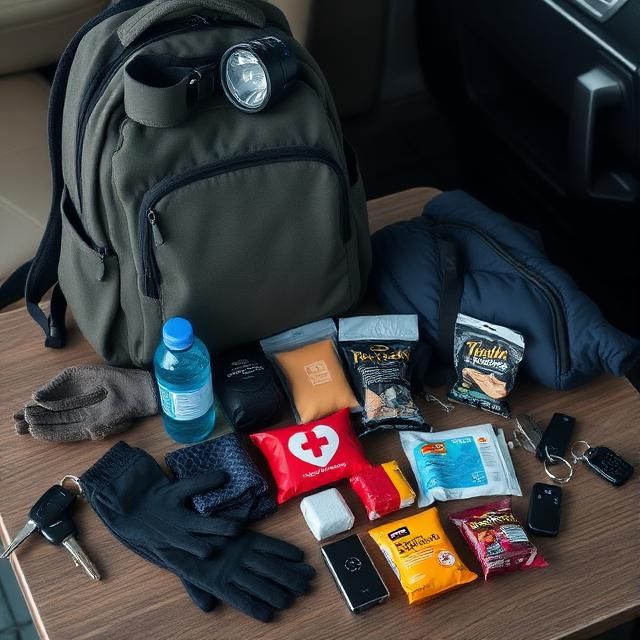
The commuter with a decent basic kit has a much different evening. Headlamp. Power bank and cable that actually fit the phone. Water bottle. Calorie-dense snack. Gloves. A knit cap. Small first aid pouch. Emergency blanket or compact insulated layer. Maybe a paper map in the glove box because digital confidence is lovely until the battery is not. Maybe traction aid or a small shovel depending on region. Nothing dramatic there, really. But the whole tone changes. The situation is still inconvenient, maybe dangerous depending on conditions, but it is not eating through the person mentally in the same way.
That is what good kit design does. It lowers friction before friction multiplies.
Water, Light, and Warmth Usually Matter First
If somebody asked me where to spend their attention first, I would start there. Water, light, warmth. Maybe not in that order every time, but those are the staples.
Light is simple to underestimate because modern life hides darkness from people. A dead flashlight is one of those petty failures that becomes a very large annoyance once everything around it is less stable. I like a headlamp more than most people expect because hands-free light changes what you can actually do. Sort gear, walk stairs, check a tire, open packaging, treat a blister, read a map, calm a child. A flashlight is still useful, obviously. I just think headlamps win more often in practical life.
Water matters even when the emergency is short because thirst changes judgment early. It does not have to become a medical problem before it becomes a planning problem. Carrying water is the first layer. Having some treatment capacity is the second if your setting makes that realistic. In an urban commuter kit, stored water is usually the priority. In a field kit, treatment starts mattering more.
Warmth is broader than people think. It is not just blankets. It is dry socks, gloves, hat, shell layer, emergency bivy, hand warmers maybe, some way to reduce heat loss before you begin shivering hard and thinking badly. People love action tools and neglect body regulation. That is a mistake. A predictable mistake. Still one.
First Aid in a Basic Kit Should Stay Basic
This is another place people go off the rails. They try to build a clinic into a pouch and end up with clutter they do not understand.
A basic kit should handle common immediate issues first: cuts, blisters, minor bleeding, pain, small burns, basic wound cleaning, medication access, maybe compression wrap, maybe gloves, maybe a few items specific to the household like inhalers or backup prescriptions where appropriate. If you have training, the kit can widen. But training should lead the contents more than fantasy should.
I am not saying serious trauma gear is silly. It is not. It just belongs in the right kit, with the right purpose, in the hands of somebody who has at least thought through how and when it gets used. For many people, a basic survival kit is supposed to buy stability, not pretend to be an ambulance.
That might sound like I am lowering the standard. I am not. I am narrowing it to what is actually dependable.
Redundancy, but Not Hoarding
A kit should have some backup built in. Not ten backups. Some.
Two light sources is sensible. Two ways to make fire in an outdoor or vehicle context can be sensible. More than one charging path can be sensible. A duplicate of one tiny critical item often matters more than a pile of novelty extras. Spare batteries. Backup lighter. Extra cable. Water purification tablets tucked behind the filter. Those kinds of things.
Preparedness gets worse when redundancy turns into emotional overpacking. People start solving their anxiety instead of solving the problem. Then the kit becomes heavy, disorganized, and weirdly hard to use. Which is almost funny, except it usually stops being funny right when the person needs it.
I like kits that can be searched quickly under stress. That means categories make sense, pouches are not overfilled, and the most-used items are reachable without unpacking the entire bag like a yard sale on wet pavement.
Keep the Kit Close to Real Life
One reason some kits work and others sit untouched for years is simple: the useful ones are built around the owner’s real patterns.
If you spend hours in a car every week, that matters. If you live in an apartment and walk stairs often, that matters. If you have kids, commute by train, carry medication, deal with winter, spend weekends outdoors, or work late in places where outages would leave you on your own for a while, all of that shapes what basic means for you.
So I would rather see a modest kit that fits your real life than a perfect one built for a stranger’s scenario. The person who actually carries their kit, checks it, rotates the snacks, replaces the batteries, and knows where everything sits is in better shape than the person with a larger bag that stays untouched in a trunk corner until something smells odd in July.
That is not an exciting truth, but it is a useful one.
A Basic Kit Should Be Rehearsed, Not Admired
I think this is where preparedness becomes real. Use the flashlight. Open the first aid pouch. Charge the power bank and make sure the cable still works. Try walking with the bag. Pull out the gloves in the dark. Boil water with the stove if the kit includes one. Not constantly. Just enough that the contents stop being theoretical.
People talk about gear confidence, but most of that is just familiarity. The first time you should not be learning how your kit behaves is when conditions are ugly and your hands are cold. That lesson comes cheap in the driveway and expensive on the roadside.
A basic survival kit is not impressive because it is full. It is impressive, if that is even the word, because it is ready. And ready usually looks a lot plainer than people expect.
Key Takeaways
- A basic survival kit should solve likely failures, not chase dramatic scenarios.
- Function matters more than branding, bag style, or tactical aesthetics.
- Water, light, warmth, first aid, and communication support usually deserve attention first.
- Redundancy helps when it stays targeted and manageable.
- The best basic kit is the one built for your real environment and actually maintained.
Step-by-Step Preparedness Actions
- List the most likely problems you could face in your actual daily environment before buying more gear.
- Build around core functions first: light, water, warmth, first aid, communication, and a little food.
- Choose a bag or container that helps you carry and organize the kit, but do not mistake the bag for readiness.
- Add one level of practical redundancy for the most important items without overpacking.
- Tailor the kit to where it lives: car, backpack, workplace, apartment, or field use.
- Check and rehearse the kit often enough that nothing inside feels unfamiliar or dead.
Quick Preparedness Checklist
- Headlamp or flashlight
- Spare batteries or charging plan
- Drinking water
- Basic snacks
- Gloves and simple warmth layer
- Compact first aid supplies
- Phone charging cable and power bank
- Small cutting tool
- Weather protection
- Organized bag or pouch system
Skills Practiced in This Module
- kit design
- problem-first planning
- gear prioritization
- redundancy judgment
- field organization
- readiness maintenance