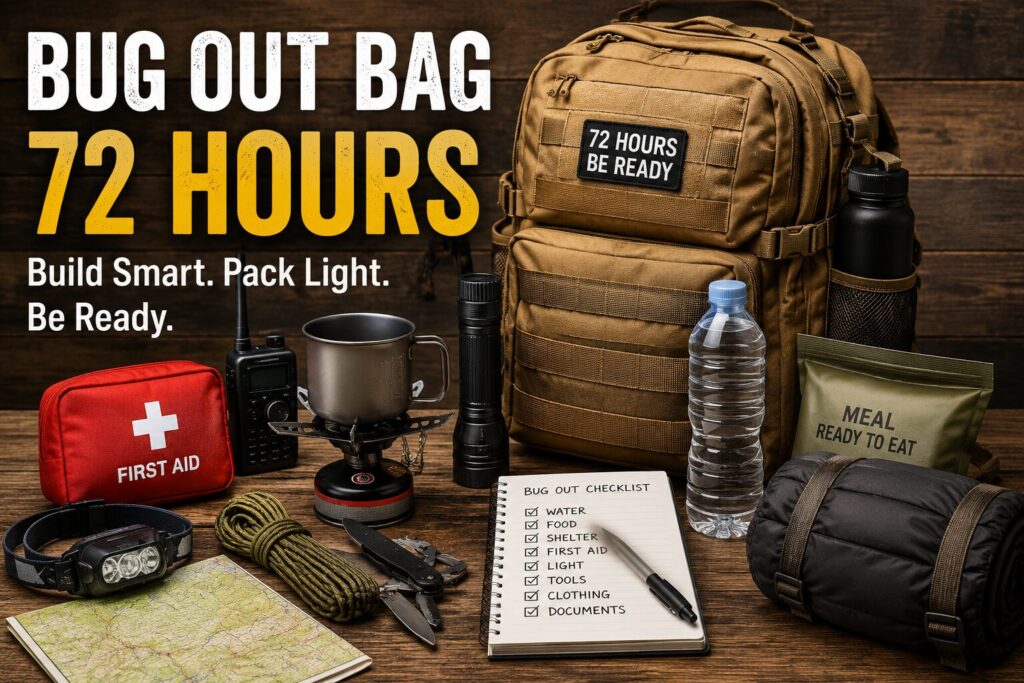
Bug-Out Bag Checklist: What to Pack for 72 Hours
A bug-out bag should help you leave home quickly and remain functional for roughly three days. It is not supposed to carry everything you own or solve every survival problem.
The best 72-hour bag covers the first practical needs of an evacuation: water, food, medication, basic shelter, weather protection, light, communication, documents, hygiene, and a few tools. It must also be light enough that the assigned person can actually carry it.
That last part matters. A bag can look impressive on the floor and still fail when somebody has to carry it down stairs, load it into a vehicle, walk around a road closure, or manage a child and a pet at the same time.
I treat a bug-out bag as one part of a larger evacuation system. The bag supports the plan. It does not replace the plan.
Start With the Job the Bag Must Do
A practical household bag should help you:
- leave within minutes instead of packing from scratch
- get through the first hours of confusion
- carry essential medication and documents
- stay hydrated and fed while traveling
- manage one or more nights away from home
- handle weather, minor injuries, hygiene, and delays
- keep lights, phones, and information available
- reach a safer destination
Most real evacuations involve vehicles, shelters, hotels, relatives, public buildings, traffic delays, fuel problems, and disrupted services. Pack for that world, not a fantasy of living indefinitely in the wilderness.
Start with a written household evacuation plan. Decide where you may go, what routes you will try, how you will communicate, and who is responsible for people, pets, medication, documents, and bags.
Water and Hydration
Water is heavy. One gallon weighs a little over eight pounds, so carrying three gallons per person in a backpack is unrealistic for most households.
Pack a practical mobile supply:
- two durable water bottles
- commercially bottled water where space allows
- a compact filter suitable for the expected environment
- purification tablets as a backup
- a collapsible container
- electrolyte packets when medically appropriate
The goal is to leave with usable water and a way to extend it. Your broader household plan should still include stored water. The guide on how much water to store for an emergency explains the larger home supply.
Do not assume every outdoor source can be made safe with one small filter. Chemical contamination, fuel, saltwater, and some runoff require different decisions.
Food for Three Days
Choose compact, familiar, shelf-stable food that can be eaten without cooking:
- energy or protein bars
- nuts and trail mix
- shelf-stable meat packets
- nut-butter packets
- crackers and dried fruit
- ready-to-eat meals
- infant, medical, allergy-safe, or pet food as required
Avoid heavy cans, complicated cooking, and foods that create more thirst than they solve. I prefer food that can be eaten in a vehicle, shelter line, or short roadside stop. An evacuation is not the time to discover that every meal needs boiling water.
Medication and First Aid
Medication is often more important than general gear.
Include:
- required prescriptions
- a written medication and allergy list
- copies of prescriptions when available
- personal medical supplies
- spare glasses
- a compact first-aid kit
- nitrile gloves
- wound-cleaning supplies
- bandages and gauze
- household-specific emergency medication
Do not bury critical medication at the bottom. Keep it labeled, protected, and reachable. Some medication cannot tolerate prolonged heat or freezing, so follow official storage guidance and use an approved insulated pouch when needed.
Clothing, Weather, and Sleep
Pack for exposure, not appearance:
- one change of clothes
- extra socks and underwear
- rain shell or poncho
- weather-appropriate outer layer
- work gloves
- warm hat or sun hat
- sturdy shoes kept near the bag
- emergency blanket
- lightweight tarp or compact bivy
- cordage
- sleeping bag or blanket when climate and vehicle space justify it
- dust masks
A reflective emergency blanket is useful, but it is not a complete cold-weather system. Review the bag at seasonal changes.
Light, Power, and Communication
Pack more than one way to see and receive information:
- headlamp
- flashlight
- spare batteries
- charged power bank
- charging cables
- car charger
- battery or hand-crank radio
- whistle
- waterproof notepad and pencil
- printed contact list
Phones are valuable, but networks can overload and batteries drain faster while searching for signal or running maps. A printed contact list and written meeting plan still work when the phone is lost, broken, or dead.
Documents, Cash, and Identification
Use a waterproof pouch for:
- copies of identification
- insurance information
- medical information
- emergency contacts
- vehicle information
- pet vaccination records
- local paper maps
- small bills and coins
- spare keys
- a recent household and pet photo
Do not place every original document in a bag that could be stolen or lost. Use copies where appropriate.
Hygiene and Sanitation
Pack:
- toilet paper in a waterproof bag
- hand sanitizer and soap
- toothbrush and toothpaste
- moist wipes
- menstrual products
- diapers and child supplies
- garbage bags and plastic ties
- disposable gloves
- small towel
- masks appropriate to likely hazards
Garbage bags are worth their weight. They can control waste, separate wet or contaminated items, protect gear, or serve as emergency rain protection.
Tools That Earn Their Weight
Useful tools are simple and multipurpose:
- sturdy multitool
- compact knife where legal and appropriate
- duct tape wrapped around a flat card
- lighter and waterproof matches
- compact cordage
- paper map
- permanent marker
- small repair kit
Avoid heavy tools that merely look capable. Every item should answer: What problem does this solve, and is it worth carrying?
Paper navigation remains important. The guide to map reading when GPS goes dark explains routes, checkpoints, and backup roads instead of merely owning a folded map.
Household-Specific Items
Generic lists fail because households are not generic.
Add what your people actually need:
- baby formula and bottles
- mobility aids
- hearing-aid batteries
- sensory or comfort items
- medical-device power supplies
- pet leash, carrier, bowls, food, and medication
- translated instructions
- caregiving documents
- climate-specific clothing
- school or work pickup information
One person should not carry every shared item. Distribute weight based on strength, mobility, and responsibility. Children may carry a light comfort bag, but not critical supplies that cannot be lost.
Use a Weight Limit, Not Just a Shopping List
The common failure is adding gear until the zipper barely closes.
A workable bag must pass three tests:
- The assigned person can lift it without straining.
- The person can carry it for at least 15 to 20 minutes.
- The bag does not prevent that person from helping a child, pet, injured person, or older relative.
There is no perfect universal weight. Body size, fitness, injuries, terrain, heat, and distance matter. For many adults, keeping the loaded bag near 10 to 15 percent of body weight is a useful starting point, not an absolute rule.
Test it. Walk with it. Use stairs. Load it into the car. The test will expose bad straps, loose items, excess weight, and things you cannot reach.
What Usually Gets Left Out
Most lists focus on objects and ignore coordination.
Common omissions include:
- a written destination
- backup routes
- medication timing
- who carries the pet
- where keys are kept
- vehicle fuel level
- who picks up children
- an out-of-area contact
- cash
- shoes and glasses
- a plan for separated family members
The bag supports movement. The household plan controls the movement.
Signals Most People Ignore
Move the bags closer to the exit when:
- wildfire or flood conditions worsen nearby
- officials begin discussing evacuation zones
- a storm track shifts toward your area
- road closures begin appearing
- fuel stations develop lines
- cell service becomes unreliable
- smoke, water, wind damage, or utility failures spread
- someone in the household will need extra time
- pets are already stressed or difficult to handle
- the safe departure window appears to be shrinking
The best time to load a vehicle is often before the final order. That does not always mean leaving immediately. It means reducing the tasks left if the decision changes.
Maintain the Bag
Review the bag at least twice a year and after every use.
Check expired food, medication dates, leaking batteries, dead power banks, seasonal clothing, children’s sizes, pet supplies, damaged water containers, outdated documents, changed phone numbers, missing cash, and weight creep.
A bag that was correct two years ago may be wrong today.
Key Takeaways
- A bug-out bag supports evacuation; it does not replace an evacuation plan.
- Pack for three practical days of movement, delay, and temporary shelter.
- Water, medication, documents, communication, and weather protection come before interesting gear.
- Every bag should match the assigned person’s ability to carry it.
- Household-specific needs matter more than generic checklist perfection.
- Test the loaded bag before assuming it works.
- Maintain it as people, seasons, medications, and destinations change.
Step-by-Step Actions
- Write down the exact job your bug-out bag must perform.
- Confirm destinations, routes, meeting points, and household responsibilities.
- Pack water, food, medication, first aid, clothing, shelter, light, power, communication, documents, hygiene, and essential tools.
- Add child, medical, disability, older-adult, and pet supplies.
- Divide shared supplies across bags instead of overloading one person.
- Weigh each bag and remove items that do not justify their weight.
- Walk with the bag for 15 to 20 minutes and test stairs, vehicle loading, and item access.
- Label medication, documents, water, and household-specific supplies.
- Store the bag where it can be reached quickly.
- Review it every six months, at seasonal changes, and after every use.
Checklist
- Water bottles
- Filter or treatment backup
- Three days of compact food
- Prescription medication
- Medication and allergy list
- Compact first-aid kit
- Change of clothing and extra socks
- Rain and seasonal protection
- Emergency blanket or compact shelter
- Headlamp, flashlight, and spare batteries
- Power bank and charging cables
- Radio and whistle
- Printed contacts
- Identification, insurance, and medical copies
- Cash and spare keys
- Paper maps
- Hygiene and sanitation supplies
- Multitool, fire-starting method, cordage, and repair supplies
- Child, older-adult, disability, and medical-device supplies
- Pet carrier, leash, food, records, and medication
- Bag weighed and carry-tested
- Review date written on the bag