Tornado Preparedness Checklist for Families
A tornado warning is a terrible time to decide where everyone should go, who is getting the dog, whether the basement is usable, or why nobody can find the flashlight.
Family tornado preparedness is mostly about making those decisions before the sky turns dangerous. You need a place to shelter, more than one way to receive warnings, a short list of supplies already near the shelter, and a plan simple enough that children and adults can follow it quickly.
The National Weather Service recommends choosing a safe room in advance, monitoring forecasts, signing up for warnings, creating a family communication plan, and practicing the plan. The American Red Cross similarly recommends knowing the difference between a tornado watch and warning, gathering emergency supplies, and preparing for power, water, and communications disruptions after a storm.
This checklist turns those recommendations into a household routine you can actually use.
1. Choose Your Tornado Safe Place Now
Your first job is not buying gear. It is deciding where everybody goes.
The best available options are generally, in order:
- a purpose-built storm shelter or FEMA-rated safe room
- a basement or storm cellar
- a small interior room on the lowest floor of a sturdy building
- an interior hallway, closet, or bathroom away from windows when better shelter is unavailable
The National Weather Service advises staying away from windows and using the lowest, most interior location available. Put as many walls as possible between your family and the outside.
Do not wait for a warning to inspect the space. Clear out boxes, tools, glass, chemicals, and anything that could fall. Make sure every family member can reach the shelter quickly.
If you live in a manufactured or mobile home, identify a sturdy nearby building or approved storm shelter that you can reach before dangerous weather arrives. A mobile home is not a safe tornado shelter.
Checklist:
- Primary tornado shelter selected
- Backup shelter selected
- Route to shelter kept clear
- Everyone in the household knows the location
- Mobile-home residents have an off-site sturdy shelter plan
- Pets can be moved to shelter quickly
2. Know Watch vs. Warning
A tornado watch means tornadoes are possible in or near the area. Conditions are favorable. This is the time to stay alert, review the shelter plan, charge devices, bring pets close, and make sure nobody is far from safe shelter unnecessarily.
A tornado warning means a tornado has been detected or indicated and you should take protective action immediately for the warned location.
Do not spend a warning gathering possessions from around the house. The useful preparation happened earlier.
Checklist:
- Adults understand watch versus warning
- Children old enough to understand know that a warning means go to the safe place
- Household members know their county and location
- Everyone knows not to wait for visual confirmation of a tornado
3. Use More Than One Warning Method
Outdoor sirens are not designed to be your only indoor warning system. Weather can also knock out electricity or internet service.
Use overlapping alert methods:
- Wireless Emergency Alerts enabled on phones
- local emergency-management notifications when offered
- a NOAA Weather Radio with battery backup
- a trusted weather app
- local radio or television when available
Keep the NOAA Weather Radio or another battery-powered receiver close enough to the shelter to grab quickly—or simply store it there.
If someone sleeps with a phone on silent, uses hearing assistance, or may not wake to an alarm, include that person specifically in the household warning plan.
Checklist:
- Wireless Emergency Alerts enabled
- Local alert system enabled if available
- NOAA Weather Radio working
- Spare batteries available
- Nighttime warning plan established
- Accessibility needs included
4. Put a Small Tornado Kit at the Shelter
A tornado shelter kit is not the same thing as storing every emergency supply you own in one room. The immediate job is getting through the storm and the first minutes afterward safely.
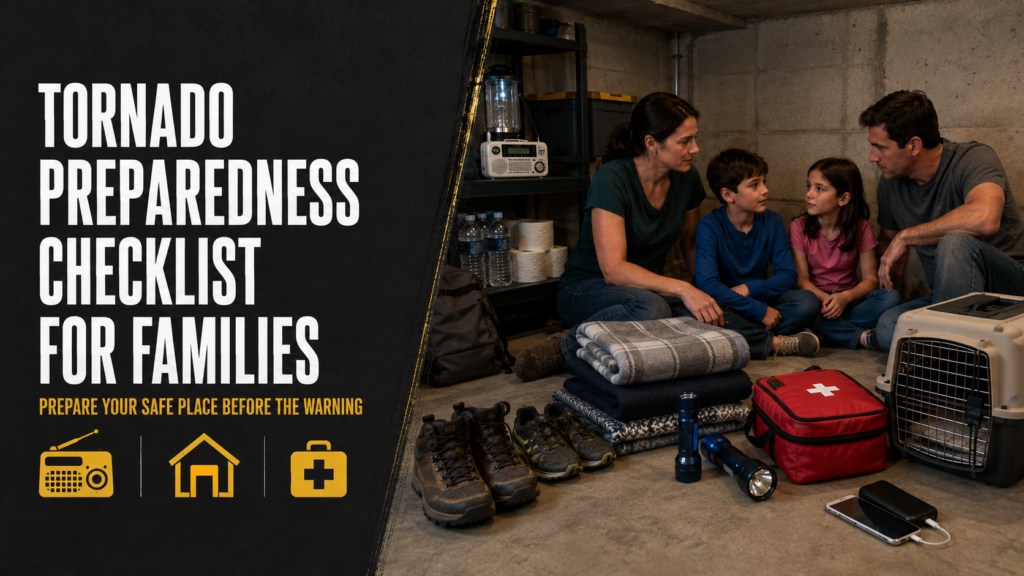
Useful shelter items include:
- sturdy shoes for each person
- work gloves
- flashlights or headlamps
- spare batteries
- NOAA Weather Radio
- first-aid kit
- essential medications
- phone power bank and charging cable
- whistle
- copies of critical contact information
- water
- pet leash, carrier, or restraint
- comfort item for young children
Shoes matter more than many families realize. Broken glass, nails, splintered lumber, and debris can make walking dangerous immediately after a tornado.
Keep critical prescription medicine accessible. Do not create a plan that requires somebody to cross the house during a warning to retrieve it.
For broader supplies, the site’s 72-hour emergency supplies checklist covers food, water, lighting, communications, and household backup needs beyond the shelter itself.
Checklist:
- Sturdy shoes
- Gloves
- Flashlights/headlamps
- Radio and batteries
- First-aid kit
- Essential medicine
- Phone power bank
- Whistle
- Water
- Pet restraint/carrier
5. Protect Heads and Necks
Flying and falling debris causes many tornado injuries. Once everybody is in the best shelter available, protect heads and necks.
Keep practical protective items in or near the safe area, such as:
- helmets that fit the people who may use them
- thick blankets
- a mattress or heavy padding when practical
Do not waste warning time searching the house for protective gear. If you intend to use it, store it where you shelter.
Children should be taught that the goal is to get low, stay together, and protect the head and neck until an adult says the immediate danger has passed.
6. Make the Plan Work for Children
A family plan fails if it assumes every adult will be home and every child will calmly improvise.
Teach children a few simple rules:
- Know the tornado safe place.
- When told to shelter, go immediately.
- Do not go outside to look at the storm.
- Stay away from windows.
- Protect your head and neck.
- Stay in the safe area until an adult gives the all-clear.
Ask schools and childcare providers how they handle severe-weather warnings. Make sure older children know whom to contact if a tornado separates the family.
The existing family emergency plan can be used to record meeting places, contacts, responsibilities, and reunification decisions that apply to tornadoes and other emergencies.
Checklist:
- Children know the shelter location
- School/childcare tornado policy understood
- Family reunification contact chosen
- Children know not to leave shelter to find a parent
- Comfort items stored for young children if useful
7. Include Pets Before the Warning
Pets often hide when thunder, wind, or alarms begin. Trying to find a frightened animal during a tornado warning wastes time.
When severe weather is expected:
- bring outdoor pets inside early
- keep carriers accessible
- keep leashes near the shelter
- place a small amount of pet water and necessary medication with emergency supplies
- make sure ID tags and microchip information are current
If the safe room is cramped, practice getting the carrier and family into the space before storm season.
8. Practice a Fast Family Tornado Drill
The National Weather Service recommends practicing your plan. A useful drill should answer one question: Can everybody reach protection quickly without confusion?
Run the drill from realistic starting points—bedrooms at night, the living room, basement, garage, or backyard.
During the drill:
- Sound a simple household alert.
- Move everyone to the safe place.
- Bring only the items assigned in advance.
- Secure pets if that is part of the plan.
- Practice head-and-neck protection.
- Time how long the process takes.
- Fix anything that caused delay.
Do not turn the drill into a complicated survival exercise. The goal is repetition and speed.
Checklist:
- Drill completed at least seasonally or whenever the plan changes
- Nighttime route tested
- Pet movement tested
- Mobility limitations tested
- Delays corrected
9. Plan for Mobility, Medical, and Accessibility Needs
Some family members may need to act earlier than others.
A person using a wheelchair, walker, oxygen system, CPAP, hearing device, or other medical equipment may need extra time or backup power. An older adult may need help reaching a basement. A person with sensory or cognitive disabilities may respond better to a practiced visual or verbal routine.
During a tornado watch or when severe storms are approaching, move needed equipment closer to the shelter and avoid creating last-second transfers.
Keep a written medication list and emergency contacts with the shelter kit. If electrically powered medical equipment is essential, incorporate that need into the household’s broader power-failure plan.
10. Think About Where the Family Is During the Day
Tornadoes do not wait until everyone is home.
Discuss the safest available place at:
- home
- work
- school
- daycare
- regular stores
- sports facilities
- places of worship
- relatives’ homes
If a tornado warning catches you in a vehicle, the better objective is to reach a sturdy building when that can be done safely before the tornado arrives. Do not treat an overpass as a tornado shelter. NWS guidance specifically warns against sheltering under overpasses.
Never race a tornado based on what it looks like from the road. Storm motion is difficult to judge visually, and traffic may stop your escape.
11. Prepare for the Power Outage After the Tornado
The tornado may last minutes. The disruption afterward may last much longer.
Be ready for:
- power failure
- downed lines
- broken glass and debris
- blocked roads
- interrupted cell service
- damaged water or gas lines
- unavailable pharmacies or stores
Have enough household food, water, medication, lighting, and communications capability for a wider emergency. The emergency communication plan is especially useful when family members are separated.
If using a portable generator after a storm, operate it outside and well away from doors, windows, and vents according to manufacturer and official carbon-monoxide safety guidance. Never run a generator inside a home, garage, basement, or other enclosed area.
12. What to Do Immediately After a Tornado
When the immediate threat passes:
- Keep listening for additional warnings. One tornado can be followed by another.
- Check household members for injuries.
- Give first aid within your level of training.
- Call 911 for life-threatening emergencies when service is available.
- Put on sturdy shoes and gloves before moving through debris.
- Stay away from downed power lines.
- Avoid damaged buildings until authorities say they are safe.
- If you smell gas or suspect a leak, leave the area and follow utility/emergency instructions; do not create sparks or flames.
- Use text messages when networks are congested and your communication plan calls for them.
- Check on neighbors when it is safe to do so.
Do not climb onto damaged roofs or enter unstable structures simply to inspect property.
Family Tornado Preparedness Master Checklist
Shelter
- Primary safe place selected
- Backup safe place selected
- Shelter route clear
- Everyone knows where to go
- Mobile-home alternative arranged if applicable
Warnings
- Wireless Emergency Alerts enabled
- Local alert service enabled
- NOAA Weather Radio tested
- Spare batteries available
- Watch versus warning understood
Shelter Supplies
- Sturdy shoes
- Work gloves
- First-aid kit
- Essential medication
- Flashlights/headlamps
- Power bank
- Radio
- Whistle
- Water
- Pet restraint/carrier
- Head/neck protection available
Family Plan
- Children know what to do
- Pets included
- Accessibility needs included
- School/work procedures understood
- Out-of-area or reunification contact chosen
- Family emergency contacts written down
Practice
- Tornado drill completed
- Nighttime drill considered
- Pet movement tested
- Mobility needs tested
- Plan updated after problems found
After the Storm
- Household has food and water backup
- First aid available
- Communications backup available
- Everyone knows to avoid downed lines and unstable buildings
- Generator/CO safety understood if backup power is used
Final Rule
A family tornado plan should be short enough to use under stress.
Know where you are going. Know how you will receive the warning. Keep critical supplies at the shelter. Practice moving there. Include children, pets, medications, and mobility needs before the storm arrives.
A tornado warning is not the beginning of the planning process. It is the moment your planning gets used.
Sources
- NOAA / National Weather Service, Tornado Preparedness: https://www.weather.gov/safety/tornado-prepare
- NOAA / National Weather Service, Tornado Hazards and Safety: https://www.weather.gov/safety/tornado-hazards
- American Red Cross, Tornado Safety Tips: https://www.redcross.org/get-help/how-to-prepare-for-emergencies/types-of-emergencies/tornado.html
- American Red Cross, Emergency Kit Supplies: https://www.redcross.org/get-help/how-to-prepare-for-emergencies/survival-kit-supplies.html