Panic in Emergencies and What Actually Helps Before It Spreads
People talk about panic as if it is some wild separate thing that appears out of nowhere and takes over a crowd all at once. I do not think that is usually how it works. Most of the time, panic builds the way other failures build. Unevenly. Quietly at first. A few people lose their footing mentally, then other people start reading the room, then uncertainty begins doing what uncertainty does when it gets loose in a bad environment.
That matters, because if panic were just random chaos then there would not be much to do about it besides endure it. But panic usually has ingredients. Confusion is one. Isolation is another. Lack of trustworthy information is a big one. So is physical discomfort, by the way. Heat, darkness, noise, thirst, crowding, that stuff matters more than the polished experts like to admit. People do not become more reasonable when the air feels wrong and nobody can explain what is happening.
I think this gets missed because people like dramatic explanations better than ordinary ones. They want to say the crowd panicked. Maybe. But often the crowd was under-informed, compressed, stressed, and reacting to a situation that kept getting less legible by the minute. That is a little different. Still dangerous. But it suggests something useful: panic is not only emotional weakness. A lot of it is broken orientation.
And once you start seeing it that way, the whole subject changes.
Panic Is Usually a Loss of Useful Structure
A person can tolerate a lot if the situation still makes some kind of sense. Pain with a plan is one thing. Fear with direction is one thing. Even bad news lands differently when people understand what is happening and what they are supposed to do next. The real trouble starts when events outrun people’s mental map.
That is the moment I pay attention to. Not just when someone is frightened. Fear is normal. Fear can even be useful, at least for a while. Panic is different. Panic is what happens when fear gets detached from usable action and starts bouncing around without a frame.
You can see this in simple places. A subway platform where an announcement is vague and delayed. A grocery store during a fast-moving storm warning. An apartment building after the power goes out and nobody knows if it is a short outage, a local one, or part of something wider. The physical setting matters, sure, but the psychological pattern is surprisingly similar. People start scanning each other because the environment is no longer giving them enough clear instruction. Then the mood begins to travel person to person.
I do not love the phrase herd behavior because it gets used lazily, but social contagion is real. People borrow cues. They do it fast. If one person runs, other people want to know why. If three people sound certain, even stupidly certain, their confidence can outweigh the quieter person who is actually thinking clearly. That is one of the uglier little facts in emergencies. Accuracy and authority do not always arrive together.
The Scene Where Things Tilt Sideways
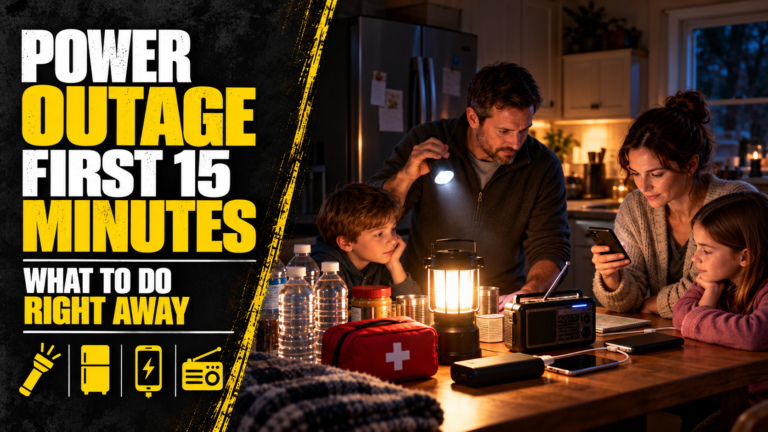
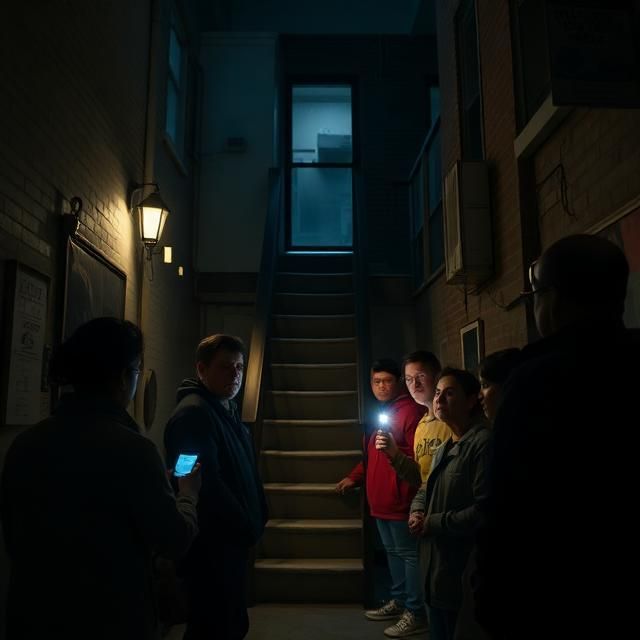
Picture a large apartment building on a hot summer evening. Not a glamorous place, just a regular mid-rise with families, older tenants, kids coming in and out, grocery deliveries, the ordinary churn. Then the power drops.
At first it is just inconvenient. Hallway lights go dark. Air conditioning stops. People check their phones. Someone jokes from behind a door about the electric bill finally winning. A few emergency lights come on, dim and sickly. Nobody likes it, but the mood still feels temporary.
Then twenty minutes pass.
Elevators do not return. The cell signal slows because everybody is checking at once. A rumor starts that the outage is citywide, which may or may not be true. Someone says the water pressure is dropping on the upper floors. A mother comes down the stairwell carrying a toddler and two bags because she does not want to get stuck upstairs if things get worse. Somebody else is angry now, talking too loud, saying the building management never prepares for anything. Another tenant opens the exterior door and props it because the lobby feels airless, which sounds harmless until strangers start peering in and residents stop feeling secure.
Now the building is doing two things at once. It is having a utility problem and a human coordination problem. That second part is what interests me. Because once the social atmosphere starts slipping, people make worse decisions. They leave medications upstairs because they do not want to climb back up. They repeat rumors as if repetition makes them stronger. They make small frantic choices that feel productive and are not.
The person who helps most in a scene like that is often not the loudest or bravest. Usually it is the person who can restore enough structure that everybody else stops mentally spinning. Somebody says what is known, what is unknown, what the immediate priorities are. Get water now if pressure is still good. Check on the older residents. Keep stairwells clear. Charge what you can. Do not spread outage claims you cannot verify. That kind of thing.
I know that sounds simple. It is simple. That is part of the reason it works.
Information Quality Changes Human Behavior Fast
One of the stranger realities in emergencies is that bad information often does more damage than bad conditions, at least in the beginning. Conditions matter, obviously. But people can endure a fair amount of inconvenience when they trust the picture they are being given. When information gets muddy, the imagination starts filling in gaps, and the imagination is not usually conservative.
This is why calm, specific language matters so much. Not motivational language. Not fake reassurance. Specific language. We have no sign of smoke. The outage appears limited to this block. Water is still running on lower floors. Emergency services have not issued an evacuation. We are checking on Mrs. Alvarez in 4B now. Those kinds of statements do useful work because they shrink the uncertainty field.
What does not help is broad nervous language. Everybody relax. Do not panic. We are all in danger. This is insane. Nobody knows anything. Those phrases spread emotional temperature without improving orientation. People think they are communicating urgency, and maybe they are, but they are also breaking the little structure that keeps a stressful event from becoming a social mess.
The thing is, people under stress listen for shape more than content sometimes. Tone, certainty, pace, what details get repeated. That is why a half-informed person with a strong voice can do so much damage. They sound like structure while actually spreading disorder.
The Body Joins the Problem
I think preparedness people sometimes act as though panic is purely mental, and I do not buy that. The body has a vote. If someone is overheating, dehydrated, hungry, exhausted, claustrophobic, or breathing stale air in a packed room, the emotional side of the emergency gets harder to manage because the physical side is already pushing them in the wrong direction.
That is one reason small acts of physical stabilization matter more than they seem. Water. A place to sit. Airflow. Light. Space. Direct eye contact. Slower breathing, but I would be careful how you phrase that to a frightened person because nobody likes being coached like a child when they already feel overwhelmed. Better to ground them in something concrete. Sit here for a second. Drink this. Tell me what you know for sure. Look at me. We are going one step at a time.
That last part matters. One step at a time is not therapist language in an emergency. It is load management. Panic loves stacked uncertainty. Break the stack and the person often becomes more reachable.
I have seen this in smaller incidents too. A minor car crash on a wet road. A child separated from a parent in a crowded public place. A man convinced his chest tightness means immediate death when the actual issue, at least in the moment, is spiraling hyperventilation. Not every intense reaction is irrational. That is important. Sometimes people are reacting strongly because the situation actually is bad. But even then, useful structure still helps.
What Actually Reduces Panic
I do not think there is one magic move. Usually it is a cluster of boring things done early.
Clear information is first. Then clear roles. Then visible practical action. If people can see that somebody is checking exits, calling for help, getting water, locating a first aid kit, accounting for children, or verifying a hazard instead of talking around it, the emotional temperature often drops a notch. Not because the danger is gone, but because action has started to outrun speculation.
This is why practiced households and practiced teams tend to look calmer than unprepared ones. They are not made of better emotional material. They just have fewer decisions to invent under pressure. A family emergency plan, even a pretty basic one, reduces panic because it gives people pre-decided structure. Same thing with emergency communication plans. Same thing with a blackout kit that is always in the same place. Preparedness is often just preloaded order.
And maybe that is the cleanest way to say it: panic expands where order is absent.
I do not mean military order. Just enough structure that people stop wasting precious energy guessing at everything all at once.
A Few Mistakes That Make Panic Worse
Some habits reliably pour fuel on the situation.
Crowding people with instructions. Arguing publicly about what to do when nobody has enough information yet. Repeating rumors with confidence. Talking too fast. Using worst-case language because it makes the speaker feel serious. Dismissing someone’s fear too bluntly. Leaving obvious vulnerable people unaddressed. Failing to name the next practical step. All of that tends to spread emotional static.
There is also a softer mistake I see a lot. People wait too long to impose structure because they are afraid of overreacting. That hesitation is understandable. Nobody wants to be the weirdly controlling person in a problem that turns out to be minor. But if the situation is degrading, early calm organization is almost always cheaper than late emotional cleanup.
I would rather have a building, family, or small group feel mildly over-organized for fifteen minutes than chaotic for two hours because everybody was trying not to make a fuss.
Preparedness Helps Before the Emergency Even Starts
The real reason to think about panic in advance is not that you will someday command a crowd. Probably you will not. It is that panic scales down into ordinary life all the time. It shows up in households, cars, offices, schools, apartment buildings, trailheads, church parking lots, airport gates, and stores when normal assumptions break faster than people can replace them.
So the question becomes pretty practical. What can I do now that makes panic less likely later?
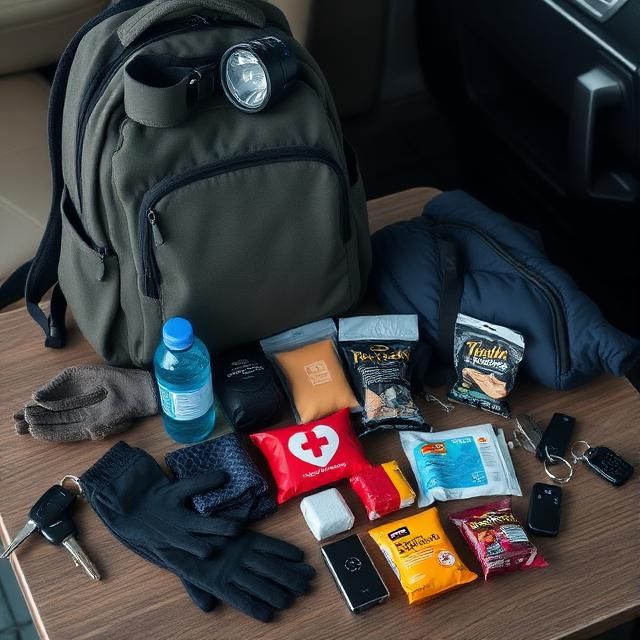
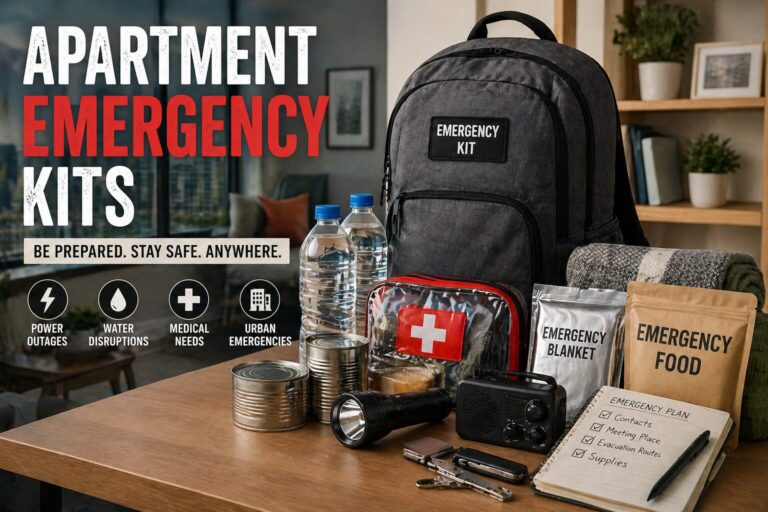
Store water where it can be reached easily. Keep lights and batteries in obvious places. Build one communication plan your household can remember without digging for it. Learn how your building works when the power fails. Keep first aid supplies organized instead of decorative. Practice finding the next step when something small goes wrong. That habit carries over.
A person who can say, all right, here is what we know and here is what we do next, is worth a lot in an emergency. More than the flashy person, usually. More than the person with dramatic language and no sequence. Calm is not a personality trait as much as people think. A lot of it is trained orientation.
And that is encouraging, honestly. It means panic is not just something that happens to helpless people from the outside. It can be interrupted. Not always completely. Not perfectly. But more often than people realize.
Key Takeaways
- Panic usually grows out of uncertainty, broken orientation, and social contagion, not pure randomness.
- Fear is normal; panic becomes dangerous when fear loses connection to useful action.
- Clear information, visible action, and simple structure reduce panic fast.
- Physical stress like heat, thirst, darkness, and crowding often makes emotional instability worse.
- Preparedness works partly because it gives people preloaded order before stress arrives.
Step-by-Step Preparedness Actions
- Build one simple household emergency plan that covers communication, light, water, and immediate priorities.
- Practice using calm, specific language instead of vague reassurance or dramatic warnings.
- Store basic stabilizers like water, lights, batteries, and first aid supplies where they can be reached without hunting.
- Learn the likely failure points in your home, building, workplace, or daily environment.
- In stressful situations, reduce the next step to one concrete action instead of stacking five decisions at once.
- Pay attention to physical stressors like heat, dehydration, crowding, and darkness because they often intensify panic.
Quick Preparedness Checklist
- Household emergency plan
- Printed emergency contacts
- Flashlight or headlamp
- Charged power bank
- Stored drinking water
- Basic first aid kit
- Familiar meeting point or fallback plan
- Habit of giving one clear next step
Skills Practiced in This Module
- emotional regulation
- uncertainty management
- crisis communication
- situational structuring
- social awareness
- practical leadership