

Most Bad Rainwater Setups Fail Before the Rain Starts
People like the idea of rainwater collection because it feels simple. Put a barrel under a gutter, wait for weather, done. I get why that idea sticks. It has a nice old-school competence to it. The problem is that a lot of those setups look better than they work.
A barrel full of leaf tea and mosquito larvae is technically water storage, I guess, but not in the way most people mean it. The useful version starts earlier. Roof material, gutter condition, downspout routing, first-flush diversion, lid fit, overflow direction, access for cleaning. Those are the real bones of it. The barrel is just the visible part people photograph.
And if you are thinking about rainwater for preparedness, not decoration, you need to care about reliability more than charm. A pretty little setup that overflows in the first storm and grows slime by week two is not a water plan. It is yard furniture with ambition.
Catchment Area Matters More Than Barrel Size
This is one of the first places people get misled. They buy storage first because storage is easy to picture. What actually determines how much water you can collect is the roof section feeding the system and how much rain your area gets over time.
A simple way to think about it: a decent rain on a moderate roof can produce a surprising amount of water. Not a little. More than most people expect. Which means the collection surface and the path the water takes matter a lot, maybe more than the tank itself at first.
If the roof is filthy, shedding grit, bird droppings, or old debris into damaged gutters, your collection system is inheriting every one of those problems. So before someone starts dreaming about off-grid independence from two storms and a plastic drum, I would rather see them clean the gutters, inspect the roof, and trace the water path with boring seriousness.
The thing is, volume without control gets messy fast. A huge roof can overwhelm a small barrel in minutes. You need overflow planning, solid placement, and some idea of what happens when the container is already full and the storm keeps going, which storms like to do.
Start With Household Water Storage You Can Store Well
I think this is the saner way to approach it. Not how much can I catch in theory, but how much can I catch, protect, and use without turning the setup into another maintenance problem.
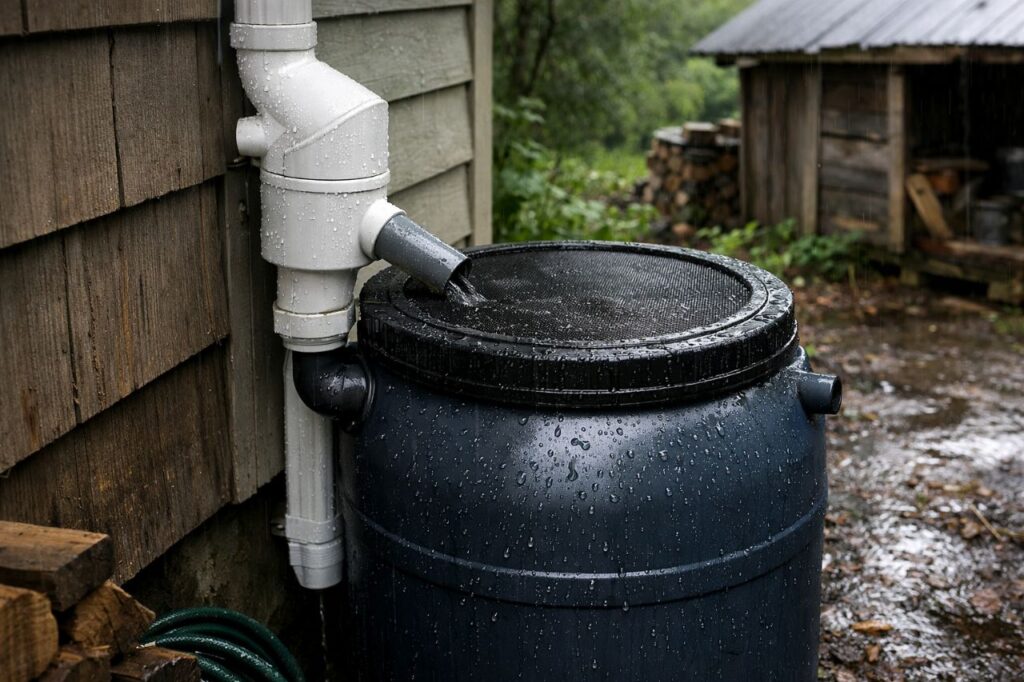
For a simple household system, food-grade barrels or purpose-built cisterns make sense. Opaque containers help because sunlight is basically an invitation for algae. Tight-fitting lids matter because insects and debris do not take days off. Screens on inlets help, though they are not magic. They clog, and clogged screens are part of the real life of this kind of setup.
And placement matters more than people admit. A heavy water container is heavy in a very rude, non-negotiable way. One gallon weighs a bit over eight pounds. Multiply that by a full barrel and suddenly the charming DIY idea is sitting on a weak platform, leaning toward a fence, making future-you solve a stupid problem in the rain.
Stable base. Level ground. Easy access. Some shade if practical. Not too far from where you will actually use the water. Nothing glamorous there. Still important.
The First Flush Is Not Optional If You Want Cleaner Water
When rain starts after a dry stretch, the first water washing across the roof is usually carrying the worst of the debris load. Dust, pollen, droppings, bits of leaves, whatever settled up there since the last storm. Letting that first wave dump straight into your storage is one of those shortcuts that feels harmless right until you open the barrel later.
A first-flush diverter gives that early dirty runoff somewhere else to go before cleaner flow enters storage. There are fancy commercial versions and there are simpler homemade versions, and honestly the exact style matters less than the principle. The principle is solid.
No, it does not make the water instantly potable. It just makes the collected water better at the start, which is worth a lot. People sometimes treat water systems like an all-or-nothing argument. Either perfectly drinkable or totally worthless. Real preparedness is usually more layered than that.
Cleaner catchment means less contamination entering storage. Less contamination entering storage means less trouble later. Not zero trouble. Less.
You Need to Decide What the Water Is For
This question clears up a lot.
If the water is only for garden use, flushing toilets, washing gear, or general non-drinking utility, your system requirements loosen a bit. You still want clean collection and storage, but the treatment burden is different.
If the water might become drinking water in an emergency, then your standards need to rise, which is where water purification stops being optional knowledge. Now you are thinking about filtration, boiling, chemical disinfection, maybe multiple steps depending on the risk. Roof runoff is not magically safe because it fell from the sky five minutes ago. By the time it reaches your container, it has had plenty of chances to pick things up.
I think people do better when they label their systems honestly. Utility water. Emergency reserve pending treatment. Irrigation only. That sort of thing. Ambiguity breeds bad decisions, especially when people are tired and supplies are thin.
Maintenance Is the Price of Reliability
This is where enthusiasm drops off. Maintenance is dull, repetitive, and unforgiving when ignored. Unfortunately, water systems really like maintenance.
Gutters need cleaning. Screens need checking. The inside of containers eventually needs inspection. Sediment shows up. Seals crack. Spigots leak. Overflow lines clog with whatever the season is dropping on your property. If you neglect the system for six months and then announce that you have water independence, well, maybe not.
A rainwater setup does not have to be complicated, but it does have to be kept alive. I would rather have a small maintained system than an elaborate neglected one every single time.
One practical habit helps a lot: after major storms, do a short walkaround. Check lid position, overflow path, stability, and water clarity. Just look. Small problems stay small when you catch them early, and with water systems early matters.
A Good Preparedness Setup Looks Boring
I mean that as praise.
A good setup is stable, screened, covered, easy to drain, easy to inspect, and not full of improvised nonsense that made sense for ten minutes on a Saturday. It has a reason for being where it is. The overflow is directed away from foundations. The container is not sagging on cinder blocks placed by optimism alone. The spigot can actually fit a bucket under it. These little details end up being the difference between something you use and something you apologize for.
The homemade systems that last usually have a little restraint in them. Enough DIY spirit to be affordable, enough discipline to avoid dumb choices. That balance is hard for some people. They either overbuild or they improvise past the point of sense.
Think Through a Dry-Spell Example Before You Need One
Picture a summer stretch where the municipal supply is interrupted for a day or two, maybe longer than expected, and everyone suddenly starts paying attention to water in a way they should have done earlier. If your rainwater system already exists, already works, and already has collected water set aside for utility use, you are calmer right away.
You can flush toilets without burning through treated drinking water. You can wash hands or gear after treatment appropriate to the use. You can support the household in small practical ways while everyone else is still arguing about whether the hardware store has any containers left.
But if your plan was to buy barrels after the advisory goes out, or to assemble parts during the storm, that plan collapses into wishful thinking. Preparedness is rude like that. It rewards yesterday’s effort, not today’s intentions.
And yes, if you are serious, maybe you eventually grow into larger cisterns, better filtration, pumps, or integrated off-grid plumbing. Fine. Still, the basic lesson does not change: start with a modest system you understand and maintain, then expand from something real.
Rainwater Collection Is a System, Not a Barrel
That is probably the point I would keep repeating if I had to cut this whole thing down to one line. It is a system.
Catchment. Routing. First flush. Storage. Overflow. Access. Treatment. Maintenance. Intended use. Miss two or three of those and the project starts lying to you. It looks capable while quietly becoming less useful.
The nice part is that none of this is especially mysterious. You do not need a giant homestead to start doing it well. You need a realistic scale, decent containers, a cleaner collection path, and the discipline to maintain what you built. That, more than anything, is what turns rain into stored advantage.
Key Takeaways
- Rainwater collection works best when you treat it as a full system instead of just a barrel under a downspout.
- Roof condition, gutter cleanliness, and first-flush control shape water quality before storage even begins.
- Opaque, covered, stable containers help protect collected water from light, debris, insects, and spills.
- The intended use of the water determines how much treatment and labeling discipline you need.
- A small maintained setup is more valuable than a bigger neglected one.
Step-by-Step Preparedness Actions
- Inspect the roof, gutters, and downspouts you plan to use so you understand the actual catchment path.
- Choose a food-grade barrel or purpose-built container with a secure lid and stable base.
- Add inlet screening and a first-flush solution so the dirtiest early runoff stays out of storage.
- Plan overflow direction so full containers do not dump water against structures or create erosion.
- Label the stored water by intended use and keep treatment supplies ready if emergency drinking use is possible.
- Check the system after storms and on a routine schedule so small maintenance problems do not stack up.
Quick Preparedness Checklist
- Clean roof section and working gutters
- Downspout routing to storage
- Opaque covered barrel or cistern
- Stable level base
- Inlet screen
- First-flush diverter
- Overflow path
- Spigot or access point
- Water-use labels
- Treatment method for emergency drinking use
Skills Practiced in This Module
- catchment planning
- water storage setup
- contamination reduction
- overflow management
- maintenance discipline
- emergency water planning