Most Gear Problems Start Before the Emergency
People usually think the essential survival gear question starts when something goes wrong. Storm coming. Vehicle stuck. Power out. Trail lost. Water source sketchy. That’s too late, or almost too late.
The gear question really starts earlier, when life is normal and people are still pretending every tool they own has equal value. It doesn’t. Some gear sits in a drawer for years and never earns back the space it takes up. Other gear ends up doing three jobs in one ugly afternoon and suddenly becomes the only thing you care about.
That’s the difference I pay attention to now. Not what looks impressive. Not what photographs well spread across a truck tailgate. What actually keeps working when the day gets inconvenient, muddy, dark, cold, or just a little mean.
A lot of survival gear talk goes wrong because people chase categories instead of functions. They buy a “survival shovel” because it sounds rugged. They buy a giant knife because it feels decisive. They buy kits stuffed with tiny plastic junk because a company managed to make clutter feel like readiness. Then a real problem shows up and they realize what they needed was light, water treatment, fire, navigation, a way to cut, a way to carry, and maybe a way to stay warm without improvising nonsense.
The gear that matters most is usually boring in the beginning. That’s fine. Boring gear is often the gear that saves you from having to become interesting later.
Start With Failure Points, Not Shopping Lists
The easiest way to think about essential survival gear is to ask what usually breaks first.
Light disappears fast. Water becomes uncertain faster than people expect. Weather shifts. Small injuries slow you down. Communication fails. Batteries die. Cheap lighters go missing. A route that looked obvious on a phone turns dumb the second the signal drops.
That’s why I think the best gear loadout is less like a display case and more like a quiet answer sheet. What do I use if I lose light? What do I use if I need drinkable water? What do I use if I need heat? What do I use if I need to cut cord, fabric, tape, or packaging? What do I use if I have to move after dark? What do I use if my hands are cold and I’m irritated and the weather is not interested in helping me think clearly?
That kind of framing helps because it cuts through fantasy pretty quickly.
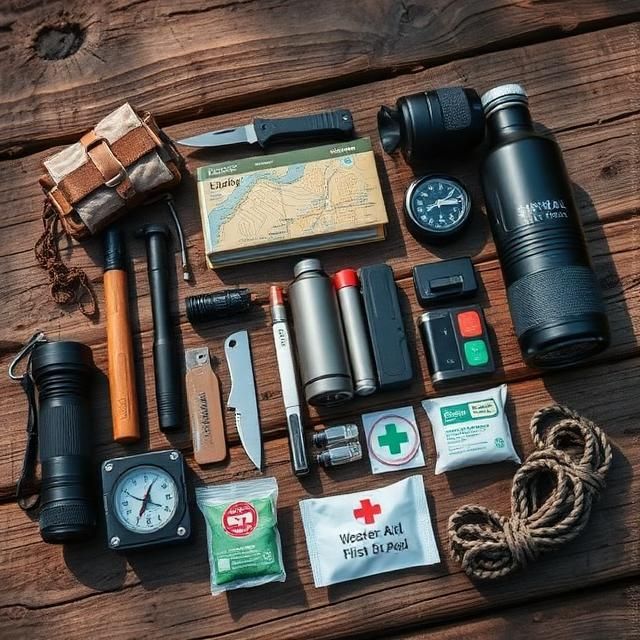
For most people, essential survival gear starts with six things: a dependable light, a practical cutting tool, fire-starting gear, water treatment or storage capability, a real navigation backup, and some kind of insulation or weather protection. Not glamorous. Just hard to replace once you need them.
Light First, Because Everything Else Gets Harder in the Dark
People underestimate lighting until they’ve tried doing ordinary tasks in bad darkness. Not movie darkness. Real darkness in a stairwell, a roadside shoulder, a wet camp, a garage with no power, a neighborhood blackout, a wooded trail after the sun falls faster than expected.
A flashlight is obvious. A good flashlight is less obvious. You want one that is bright enough, simple enough, and durable enough that you can use it half-asleep without fumbling through five nonsense modes. I’m not interested in novelty strobe settings when I’m trying to read a map or check a tire.
A headlamp matters too, probably more than people think. Hands-free light changes what you can actually do. You can filter water, dress a wound, cook, climb stairs, sort gear, repair something, or carry a child without turning your mouth into a flashlight holder. It’s one of those upgrades that feels optional until it very much isn’t.
And spare batteries, or a charging plan, belong in the same conversation. A dead light is not gear. It’s a memory.
Water Gear Is Really About Time
A lot of survival problems are just time problems wearing different clothes. Water gear buys time.
If you already have water, a bottle or canteen keeps you moving. If the source is uncertain, treatment keeps you from gambling on a bad decision. If your route changes, storage capacity gives you options. That’s why I think water gear should be layered. Carry water. Carry a way to purify more. And if you’re going farther than a short easy outing, carry at least one backup method that does not depend on a single fragile gimmick.
Portable filters are useful. Purification tablets still matter. Boiling still matters. People love to pretend old methods become irrelevant once a new product arrives. They don’t. Redundancy is not paranoia when the alternative is intestinal regret thirty miles from convenience.
The thing is, water gear also affects behavior. A person with one half-empty bottle starts making different decisions than a person with enough capacity and treatment options. That matters. Good gear does not just solve the problem after it arrives. Sometimes it keeps you from backing yourself into the problem in the first place.
Cutting Tools, Fire, and the Gear That Actually Gets Touched
A practical knife belongs in the essential category. Not because every situation is dramatic, but because sharp edges solve ordinary problems constantly. Food prep, cordage, tape, fabric, packaging, tinder prep, gear adjustment, quick repair work. A plain solid knife earns its keep over and over.
That doesn’t mean enormous. It means useful. Comfortable grip. Predictable edge. Easy to maintain. Strong enough for real work and small enough that you’ll actually carry it.
Same story with fire-starting gear. Everyone likes the romance of primitive fire-making until the weather is cold, their hands are clumsy, and they just need flame now. Carry a lighter. Carry a backup lighter. Add a ferro rod if you want deeper redundancy. Fine. But don’t let performative toughness replace practicality.
I’ve seen people spend more time debating blade steel than deciding whether they had dry tinder packed. That is backwards. A lot of preparedness talk gets pulled toward identity when it should stay with function.
Navigation and the Quiet Value of Not Getting Lost Stupidly
Phones are great right up until they are not. Battery, breakage, cold, signal, glare, water, a bad drop onto rock. Pick one.
That’s why navigation backup belongs in essential gear, even for people who mostly travel familiar ground. A paper map and a basic compass are still real tools. They do not care about cell service. They do not crash. They do not update themselves into confusion. You do need to know how to use them, obviously, but that’s part of the point. Some gear requires a little competence. Good. It should.
And this is where gear and skill stop being separate topics. A compass without familiarity is dead weight. A water filter you’ve never tested is optimism with branding. Essential gear is not just what you own. It is what you can use under mild stress without a tutorial.
Weather Protection Is Usually More Important Than People Want to Admit
A lot of people love the dramatic tools and neglect the humble ones. Extra socks. Gloves. A shell layer. A compact poncho. A hat. Emergency blanket. Dry storage. Those are not sexy purchases, but weather beats ego pretty reliably.
If conditions turn cold and wet, the gear that preserves heat starts outranking everything else fast. Not forever, maybe, but for long stretches of real human discomfort it becomes the main game. People do not think clearly when they’re soaked, cold, and embarrassed by how preventable the situation was.
Even in urban emergencies, weather protection matters more than it seems. Walking home in rain during a transit shutdown feels different when you have dry layers, decent footwear, and a small light. It feels very different when you don’t.
The Best Gear Is Gear You Will Actually Carry
This is where a lot of otherwise smart setups fail. People build a perfect loadout that stays in a closet because it’s too heavy, too expensive-looking, too complicated, or too annoying to move.
An essential gear setup has to survive contact with your real habits. If you commute, some of it should live in your bag. If you drive, some of it should stay in the vehicle. If you hike, it should fit the pace and terrain you actually use, not the expedition fantasy version of yourself. If you’re building a home emergency kit, it should be organized enough that another person can find it quickly.
Maybe that sounds obvious, but obvious is where people usually fail. They think about ideal gear and forget operational gear. The stuff that is with you when the power goes out, when the road closes, when the trail disappears, when the building alarm starts, when the weather changes its mind.
That’s the gear that counts.
What Essential Survival Gear Usually Looks Like in Real Life
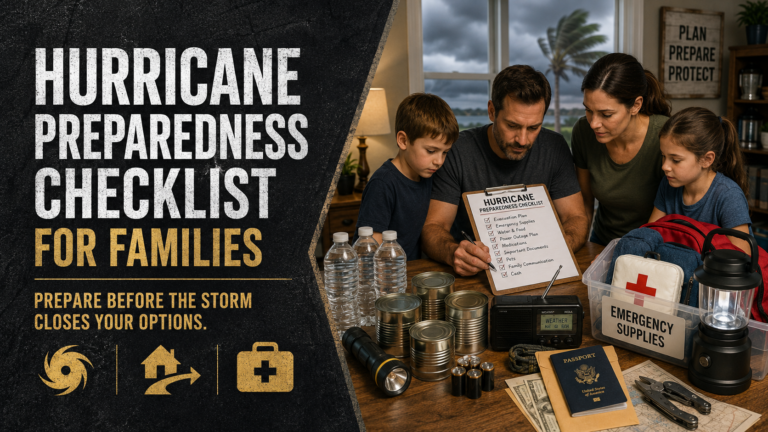
For most people, a sane essential setup is not huge. It’s a dependable flashlight or headlamp, spare batteries or charging, a useful knife or multitool, two fire-starting methods, water storage plus treatment, a map and compass or route backup, weather protection, some cordage, first aid basics, and a way to carry it without hating yourself.
That’s not every possible tool. It doesn’t need to be. The point is not to cover every cinematic scenario. The point is to carry the tools that solve the most likely problems first and give you room to think if things keep getting worse.
And honestly, that’s enough. More than enough for most people if the gear is chosen well and used enough that it stops feeling theoretical.
Key Takeaways
- Essential gear should solve common failure points, not just look impressive.
- Light, water, cutting tools, fire, navigation, and weather protection matter first.
- Backup methods matter because real conditions rarely fail one thing at a time.
- A useful gear setup has to match your real habits and carry patterns.
- Gear only counts as essential if you can use it under stress.
Step-by-Step Preparedness Actions
- Audit your current kit and remove bulky items that do not solve likely problems.
- Build around core functions first: light, water, fire, cutting, navigation, and weather protection.
- Add one backup method for the most important categories, especially light and fire.
- Test each item so you know it works before you rely on it.
- Place gear where you will actually have it: bag, vehicle, home kit, or outdoor loadout.
- Review your setup seasonally and adjust for weather, travel, and routine changes.
Quick Preparedness Checklist
- Flashlight or headlamp
- Spare batteries or charging plan
- Practical knife or multitool
- Primary lighter
- Backup fire starter
- Water bottle or canteen
- Water treatment method
- Map and compass
- Weather layer or poncho
- Basic first aid items
Skills Practiced in This Module
- gear selection
- risk prioritization
- water planning
- field readiness
- redundancy planning