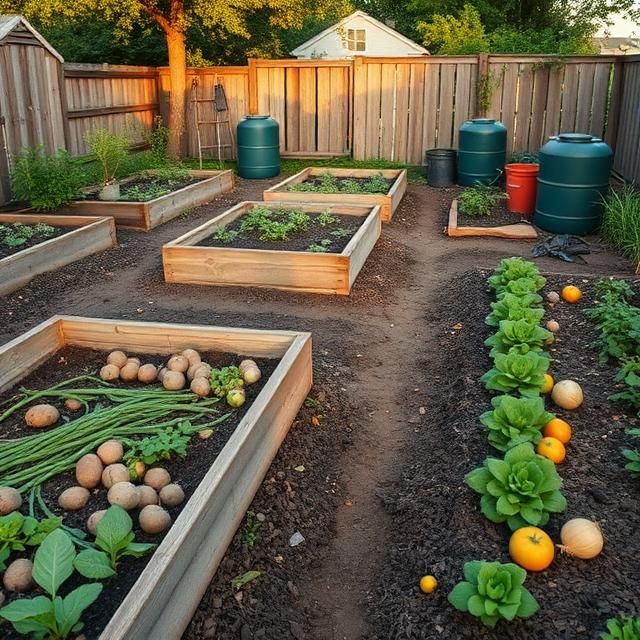
Growing Food for Self Reliance That Actually Feeds More Than Your Optimism
People like the idea of growing their own food because it feels clean and decisive. Put seeds in the ground, water them, maybe pull a few weeds, and at the end you get independence with dirt on it. That is the dream version. The real version is more useful and a lot less flattering. Growing food for self reliance is not about proving you have pioneer energy. It is about building a system that still produces when the weather gets rude, your schedule gets crowded, insects arrive early, and your first nice-looking plan turns out to be too fragile.
That is why I think a lot of people start in the wrong place. They start with identity. They want to be a person who gardens. They want raised beds that look great in April and seed packets lined up like ambition. Fine. Nothing wrong with that. But self-reliance gardening is not really a decorative hobby with moral benefits. It is closer to logistics. Water in, fertility in, labor in, losses accepted, food out. Sometimes less food than you hoped, which is part of the lesson.
If someone wants a garden that truly supports preparedness, the first shift is simple: stop thinking mostly about what seems fun to grow and start thinking about what gives real return. That return can mean calories, shelf life, repeat harvests, nutrition, reliability, seed-saving value, or just the fact that a crop grows well where you live without turning into a full-time argument with the climate.
Grow What You Will Actually Use, Not What Looks Good in a Post
There is a common beginner mistake that never really goes away because it is emotionally satisfying. People grow a little of everything. A tomato plant, some basil, a pepper, maybe carrots that never quite size up, maybe lettuce that bolts the second the weather stops cooperating. Then they stand back and feel productive. And they were productive, sort of. But that is not the same thing as building food resilience.
Self reliance improves faster when you focus on crops that do at least one useful thing very well.
Potatoes give serious calories for the space. Beans store well and pull a lot of weight in a practical pantry. Winter squash can keep longer than people expect if the varieties and storage conditions are decent. Sweet potatoes can be excellent in the right climate. Corn is more space-hungry than many people realize, but in some places it belongs. Herbs are nice, sure, but nobody ever calmed a supply problem by proudly harvesting six sprigs of thyme.
That sounds a little mean, maybe, but it matters. A preparedness garden should earn its water and labor. If your household eats green beans constantly, then grow a lot of green beans. If nobody likes beets, stop pretending beets are part of the plan just because they survive hard times in someone else’s article. Self reliance gets stronger when the garden matches appetite. Food you will not eat is not stored resilience. It is compost with a motivational backstory.
Calories Matter More Than People Want Them To
This is where the romance gets thinner.
A garden can improve self reliance without fully feeding a household. In fact, that is the honest expectation for many people. But if the goal is preparedness, you should still think in calorie terms at least some of the time. Lettuce is pleasant. Radishes are quick. Microgreens are fine. None of those are the backbone of anything beyond morale and maybe nutrition diversity. Useful, yes. Foundational, no.
If a person is serious, they should divide crops into rough groups:
- calorie crops
- nutrient crops
- flavor crops
- storage crops
- repeat-harvest crops
Not every bed has to do the same job. That is part of the point. The trouble comes when every bed quietly becomes a flavor bed and the gardener keeps calling it food security.
One of the more honest exercises is to weigh harvests for a season and compare them to the household’s actual eating patterns. Most people are surprised. Either the garden produced more than they realized in a few categories, or it produced a charming spread of accessories. Accessories are not useless. I like tomatoes as much as anyone. But preparedness improves when somebody admits the difference between garnish and infrastructure.
Water Decides What Kind of Confidence You Really Have
Gardens make optimists out of people until the water situation gets uncertain.
This is one reason food growing ties so closely to broader household resilience. A garden without a water plan is a fair-weather project. If you are trying to build real self reliance, you need to think past the hose. What happens during restrictions, outages, pump trouble, or a run of brutal heat? How much water does the growing area really need? Which crops are thirstier than they are worth? Which beds should get priority if water gets tight?
That thinking fits naturally with household water storage that still works when the tap stops. Domestic water security and garden water security are not identical, but they are definitely related. If the house has no water discipline at all, the garden plan is probably less resilient than it looks.
Then there is catchment. A lot of people imagine rain barrels as a kind of symbolic preparedness gesture, something halfway between useful and decorative. They can be much more than that when the system is actually planned, maintained, and scaled with a little realism. The same practical logic behind rainwater collection that actually gives you usable water matters here too. Storage capacity, overflow control, filtration expectations, access, and seasonal refill patterns all shape whether captured water becomes a real support system or just a clever object near a downspout.
Mulch matters, too. Probably more than many beginners want to hear, because mulch is not exciting. But shading soil, slowing evaporation, and reducing weed pressure is exactly the kind of boring advantage that stacks up over a season. Preparedness loves boring advantages.
Soil Is Not a Background Detail
People talk about plants as if seeds contain the whole story. Seeds matter, yes. Soil matters more than the seed packet art, that much I can promise.
Poor soil creates weak plants, erratic growth, pest vulnerability, and disappointing yields that people often blame on bad luck. Sometimes it is bad luck. Often it is exhausted ground, shallow fertility, poor structure, drainage problems, or a pH mismatch nobody bothered to check because testing sounded too technical for a backyard project.
I do not think every small gardener needs to become a soil hobbyist. That way lies a different kind of madness. But adding compost, observing how quickly beds dry out, noticing where water pools, rotating crops intelligently, and paying attention to which plants consistently struggle, all of that tells you more than internet confidence ever will.
A decent preparedness garden is not built by buying premium seeds every spring and hoping quality somehow replaces system weakness. It is built by improving the growing conditions year after year until average results become more dependable. Dependable is better than flashy. Almost always.
The Best Garden Plans Respect Time, Not Just Space
People often underestimate the labor side of self reliance because the labor is scattered. It is never just one dramatic day. It is seed starting, bed prep, transplanting, watering, pest checks, tying up plants, harvesting at the right moment, preserving the surplus, clearing the beds, maybe replanting. Miss two or three of those windows and the garden does not usually collapse, but it gets noticeably less generous.
This is why I think self-reliance gardening should be built around your real life, not your aspirational free time. A household that can reliably care for four productive beds is in a stronger position than a household that installs twelve and lets half the season get away from them. Under stress, maintenance capacity matters. A complicated garden can become one more fragile system begging for attention.
I have seen people plan as if their emergency garden will somehow demand less labor than their hobby garden. That never made much sense to me. Pressure usually reduces available time, energy, and focus. So the smarter move is to build habits now that still function when life gets messy. Fewer crops, better chosen. More mulch. Better spacing. Easier access to tools. Shorter walks for water. Less sentimentality about plants that constantly disappoint.
A Real Example Looks Smaller Than the Fantasy
Picture a household with a modest yard, not a homestead, just enough room for a few beds, some containers, and maybe a narrow side area that gets decent sun. They decide they want more self reliance, but they do not have hours every day and they are not trying to become internet farmers by next Thursday.
The weak version of that plan is easy to recognize. They plant a little of everything, buy whatever seedlings look healthy at the garden center, forget to map the sun, promise themselves they will preserve the harvest later, and treat watering as a problem for future-them. The first tomato harvest feels amazing. Then the squash gets hit with pests, the beans mature unevenly, the lettuce bolts, and August turns the whole thing into a guilt project. They grew food, yes, but the system was built on momentum instead of design.
The stronger version is quieter. They choose potatoes, beans, onions, tomatoes, and one dependable green. They build soil before chasing scale. They add mulch early. They install simple storage for tools so small tasks happen faster. They keep notes on yield, pest timing, and varieties that earn a return. They freeze or can what they truly know how to preserve. Maybe they also run a modest off-grid support layer, not because a garden needs theatrical technology, but because a small pump, lighting, or seed-starting setup can benefit from the same realistic thinking behind solar power basics that still work when the grid doesn’t. Nothing huge. Just practical support that holds up.
By the end of the season, that second household may not have a dramatic photo spread. What they have is better. They know what their space can do. They know what their climate punishes. They know which crops belong in larger quantities next year. That kind of knowledge compounds. Fast, actually.
Preservation Is Part of Growing Food, Not a Separate Hobby
This gets neglected all the time. People focus on production and only later realize that harvests arrive in clumps, not neat weekly subscriptions. If you cannot store, cure, freeze, dehydrate, or otherwise preserve part of the yield, then some of the self-reliance value just rots in place or gets handed away because the timing beat you.
That does not mean every gardener needs shelves of glass jars and a basement that smells faintly of vinegar. It means the garden plan should match the preservation plan. Grow what you know how to hold onto. Or learn one preservation skill per season and expand from there. Even simple habits matter. Cure onions properly. Store potatoes in conditions that actually protect them. Freeze beans before enthusiasm turns into procrastination. Self reliance is full of these ordinary little moments where results are either kept or quietly lost.
Start Smaller Than Your Ego Wants
I think this is one of the best rules in preparedness generally. Start slightly smaller than your imagination wants, then build from proof.
A garden that feeds more than your optimism is usually built in layers. First, establish a few reliable crops. Then improve the water plan. Then improve storage. Then expand the area if the yield and labor say expansion is justified. Add fruit trees if your time horizon supports them. Add seed saving once the basic production is stable. Add more ambitious calorie crops when the soil, water, and routine can actually support them.
That may sound less inspiring than a giant first-year plan, but giant first-year plans are how people end up with expensive lumber, scattered tools, and a strange emotional grudge against zucchini.
The thing is, self reliance through food growing is real. It just usually arrives in a plainer form than people expect. More onions in the pantry. Better beans in storage. Fewer emergency grocery runs. Better judgment about weather. A yard that teaches you what scarcity feels like before scarcity becomes serious. That counts for a lot.
Key Takeaways
- A self-reliance garden works best when it is built around useful crops, not just attractive ones.
- Calories, storage value, and repeatable yields matter more than novelty harvests.
- Water planning, mulch, and soil quality do more for reliability than garden enthusiasm alone.
- Real food resilience includes preservation, not just production.
- Smaller, better-managed systems usually outperform overbuilt gardens that outrun the household’s time and attention.
Step-by-Step Preparedness Actions
- List the foods your household actually eats most often and identify which ones grow well in your climate.
- Choose a short list of crops that cover calories, nutrition, storage, and repeat harvests instead of planting a little of everything.
- Build a water plan that includes mulch, priority beds, and at least one backup source or storage method.
- Improve soil with compost and observation before expanding bed count or buying more varieties.
- Track harvest weights, pest timing, and crop performance for one full season so next year’s plan is based on proof.
- Match the garden to a preservation plan so usable harvests do not disappear in the rush of summer.
Quick Preparedness Checklist
- Crop list based on what the household actually eats
- At least one calorie crop
- At least one storage crop
- Reliable mulch supply
- Garden water backup or storage plan
- Basic compost or soil-improvement routine
- Notes on yields and seasonal failures
- Preservation method for likely surplus
Skills Practiced in This Module
- crop selection
- yield planning
- garden water management
- soil observation
- preservation planning
- seasonal self-reliance judgment