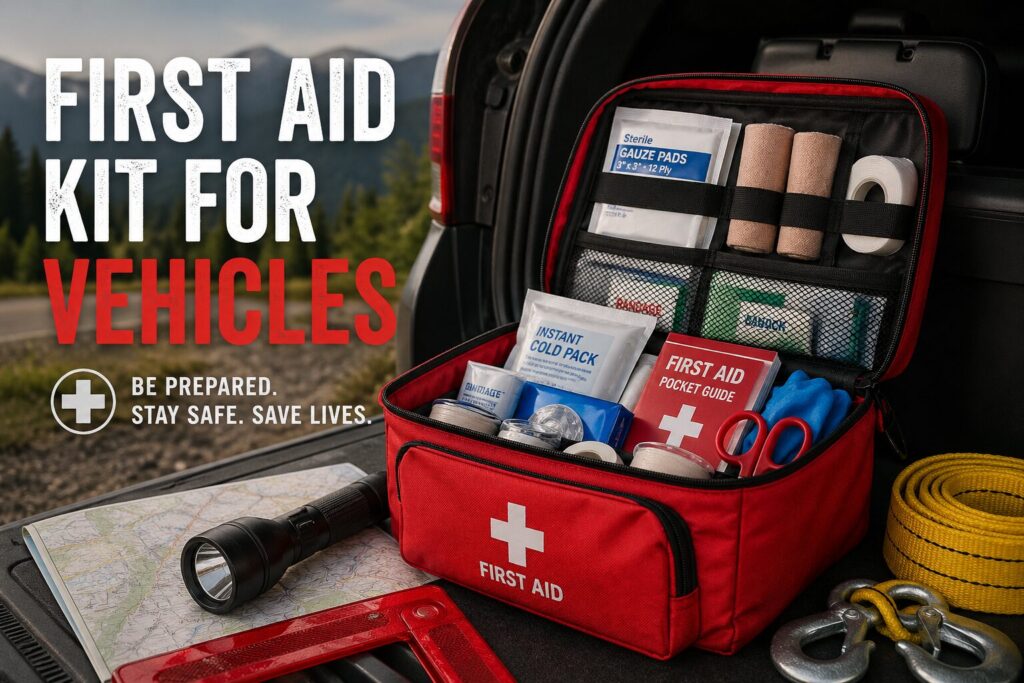
First Aid Kit for Vehicles: What to Keep in the Car Before Minor Problems Get Bigger
A vehicle first aid kit is one of those things people either overbuild or ignore.
They either pack enough gear to impress themselves and never touch it again, or they throw a bargain kit under the seat and call the subject handled. Both approaches miss the point.
A good first aid kit for a car should match the problems that actually happen around vehicles and roadside delays, especially if you are already building out a car emergency kit checklist. Small cuts. Minor burns. Blisters. Headaches. Motion sickness. Basic wound cleaning. Maybe a more serious bleed-control item if the household has the training and intention to use it. Not a mobile hospital. Just a realistic medical layer for real road life.
Vehicle Problems Create Their Own Medical Friction
This is part of what makes a car kit different from a household first aid kit.
You are dealing with limited space, changing temperatures, roadside stress, awkward body positioning, dirt, broken glass sometimes, repeated handling, and the fact that the kit may be needed far from a sink, drawer, or calm room. Even a small problem feels more annoying when you are standing beside a car in bad weather or stuck in traffic with a child who just cut a finger opening packaging.
That is why a vehicle medical kit should be compact, easy to search, and built for speed more than completeness.
What a Practical Vehicle First Aid Kit Should Cover
- Small cuts and scrapes
- Minor bleeding
- Basic wound cleaning
- Pain relief
- Blisters
- Burns from hot surfaces or fluids
- Gloves for cleaner handling
- Household-specific medication needs
If you build the kit around those functions first, it stays much more useful than kits built around fantasy medical identity.
What to Keep in It
- Adhesive bandages in useful sizes
- Gauze pads
- Roll gauze or wrap
- Medical tape
- Antiseptic wipes or simple wound-cleaning supplies
- Nitrile gloves
- Tweezers
- Small blunt-tip scissors if practical
- Pain relief medicine
- Burn gel or simple burn-care supplies
- Blister treatment items
- Any household-specific medications that make sense to store safely
That covers most of what a normal driver or passenger is actually likely to need in a vehicle context.
Where People Usually Get It Wrong
They buy a kit and never check it. Or they stuff one together from leftovers and assume anything red with a zipper counts.
Another common mistake is building the kit with no thought for temperature, access, or organization. A useful car kit should not be buried under unrelated trunk junk or packed so tightly that finding one gauze pad becomes its own crisis.
I also think people forget that vehicles often amplify delay. If traffic locks up or a breakdown leaves you waiting a long time, even a minor medical problem becomes more irritating because you are solving it in a worse environment than you would at home.
A Real Example of a First Aid Kit for Vehicles
Picture a family vehicle during a long weather delay. The road is barely moving. Somebody in the back seat gets carsick. Later, while opening snacks and reorganizing bags, a passenger takes a small cut from packaging and starts bleeding just enough to be annoying. The child in the other seat has a headache and is getting louder about it. Nothing here is severe. But it is all harder because the car is cramped, the day is already worse than expected, and people are running low on patience.
A real vehicle first aid kit handles that scene well. Gloves. Wipes. Bandage. Gauze if needed. Pain relief. Something for nausea if the household normally carries it. Clean, quick, organized. The problem stays the size it began.
That is really the standard I care about. Not medical theater. Size control.
Should a First Aid Kit For Vehicles Include Trauma Gear?
Sometimes yes, but only if there is training behind it.
I am not against more serious supplies. I just think they should be carried honestly. A tourniquet or bleed-control item is not decorative gear. If it is there, someone in the household should understand why it is there, what it is for, and what the limits are. Otherwise people are often just buying emotional relief disguised as preparedness.
A practical vehicle first aid kit should be built from likely use outward, not from fear inward.
How to Store It
- Keep it in a clean pouch or case that stays recognizable.
- Store it where it can be reached without unpacking the whole vehicle.
- Protect it from obvious crushing, leaks, and contamination.
- Check it periodically for expired or heat-damaged contents.
Vehicles are rough storage environments. Heat, cold, vibration, and neglect all take votes. The kit has to survive those conditions well enough to remain useful.
What Good Vehicle Medical Preparedness Looks Like
A good vehicle first aid kit is not enormous. It is fast. It is organized. It is easy to reach. It solves the most likely roadside and travel problems before they become much bigger than they should be.
And maybe that is the best frame for it. A vehicle kit is not there because every drive is dangerous. It is there because road life creates small medical annoyances in bad places at bad times, and a little organized preparation keeps those annoyances from growing teeth.
That is useful enough all by itself.