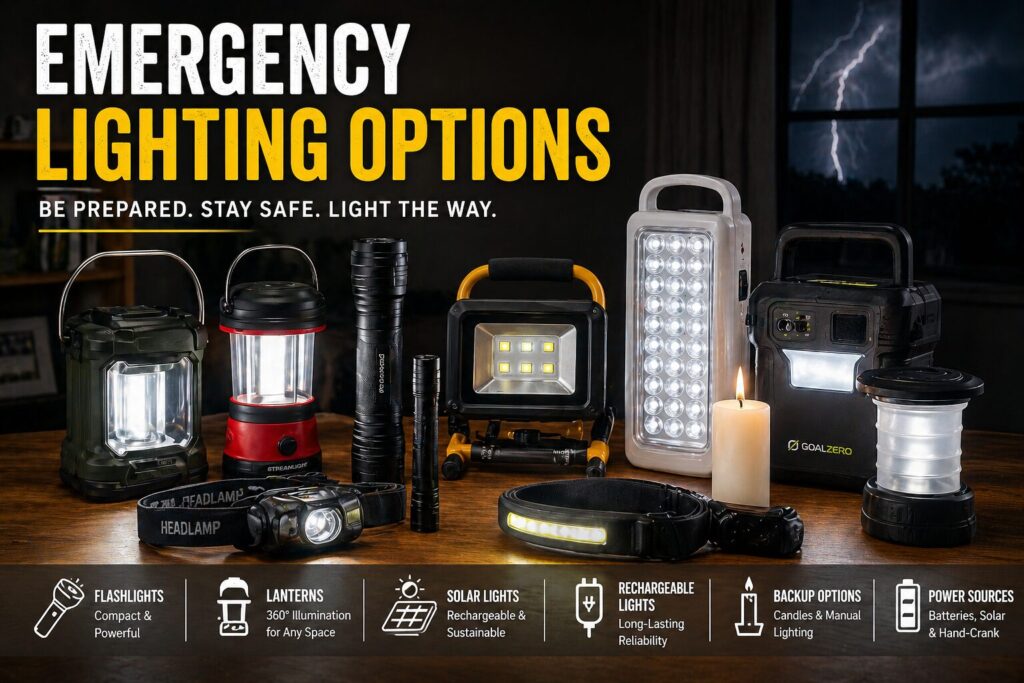
Emergency Lighting Options That Still Make Sense When the Power Stays Out
People usually think about emergency lighting after the lights are already gone.
That is understandable, especially if a household has not thought through power-failure preparation in a practical way. It is also why so many households end up fumbling for weak flashlights, dead batteries, phone screens, or candles they did not really want to depend on in the first place.
Good emergency lighting is less about owning one perfect device and more about matching light to the job. Walking safely. Keeping hands free. Conserving battery. Lighting one room without burning through everything you own. Making the house feel usable instead of instantly smaller.
That is what matters.
Not All Light Solves the Same Problem
I think this gets overlooked constantly. People say they have flashlights as if the category itself finishes the conversation.
But a light for checking the breaker panel is not the same as a light for walking stairs. A light for reading in one room is not the same as a light for cooking, checking on kids, or handling an outdoor problem in rain. A phone flashlight is not the same as a dedicated light source no matter how much people want to pretend it is.
The better way to think about emergency lighting is by use case.
- What helps you move safely?
- What helps you work with both hands?
- What helps a room stay functional for hours?
- What helps without draining the phone you may need later?
Once you start there, the gear choices get clearer fast.
Headlamps Solve More Problems Than People Expect
If I had to pick one lighting tool most households underrate, it would be the headlamp.
Hands-free light changes everything. You can walk stairs, sort a kit, open packaging, check a fuse, help a child, read instructions, clean up a spill, or handle first aid without trying to hold a flashlight in your mouth like a badly organized mechanic.
A good flashlight still matters. Of course it does. But a headlamp is often the more useful first grab once the outage turns active.
I think people resist them because they associate headlamps with camping instead of ordinary household utility. That is a mistake. In power failures, utility beats image.
Room Light Matters Too
A household does not just need movement light. It needs living light.
This is where lanterns, rechargeable room lights, or stable area lighting help. A focused beam is good for tasks. It is less good for making a room feel normal enough to function for several hours.
One decent room light in the main living space often lowers stress more than people expect. People can see each other. Surfaces become usable. Food prep and cleanup get easier. The emotional tone improves because the house stops feeling like a cave with one flashlight argument happening in it.
That change in mood is not trivial. A lot of preparedness is mood management through practical tools.
Phone Flashlights Are Backup, Not a Plan
I know everyone reaches for the phone first. I do it too. But the phone should not be the plan.
Phone batteries are communication, information, coordination, and emergency contact tools. Burning them down for basic household lighting is usually a bad trade unless the outage is extremely short.
A phone flashlight is a bridge light. Useful for the first thirty seconds. Fine for grabbing the real light. Not what I want a household leaning on for the next six hours.
This is one of those habits that seems harmless until the battery percentages start falling at the same speed as people’s patience.
A Real Example
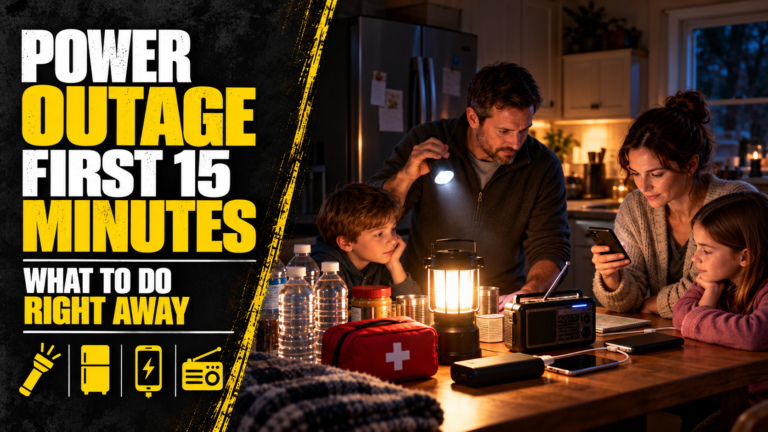
Picture a family in a two-story house just after sunset when the power drops. One person reaches for a phone. Another starts opening drawers. A kid is already upset because the hallway went dark. Somebody remembers there was a lantern somewhere after the last storm, but nobody remembers where it ended up or whether it was charged.
That is the bad version.
The good version is boring in the best way. One headlamp from the kitchen drawer. One flashlight from the hall closet. One rechargeable lantern already in the main room. Spare batteries or charging backup in one known place. The house is not bright exactly, but it is organized. People move without stumbling, which matters even more in high-rise blackout conditions. The phones stay for communication. Dinner may still be annoying, but it is not confused.
That is what better lighting really buys you. Not brilliance. Order.
Candles Are Not the Main Character
People still romanticize candles during outages. I understand why. Warm light, familiar ritual, all that.
But from a practical preparedness angle, candles are limited tools with real downsides. Fire risk, poor task lighting, unstable placement, and extra attention they demand in homes that may already be more chaotic than usual.
I am not saying nobody should ever use one. I am saying candles are not where I would build the plan. Battery light does the main work better and with less drama.
What to Keep Ready
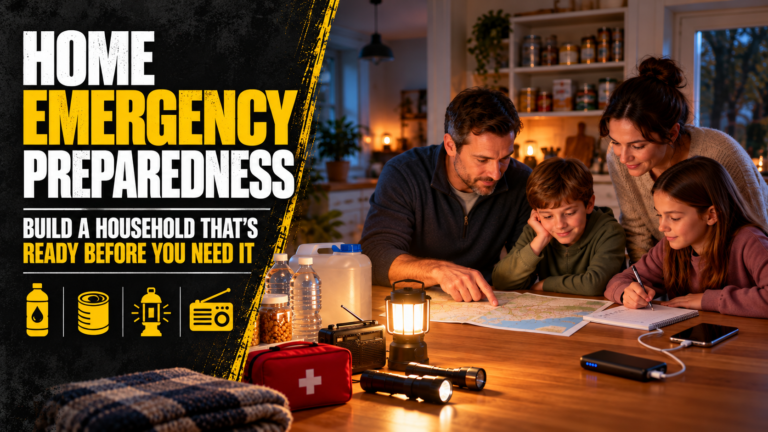
- At least one flashlight that is easy to reach
- At least one headlamp
- One room-light option such as a lantern or rechargeable area light
- Backup batteries or charging support
- One known storage location for all primary lighting gear
That is not a huge system. It just needs to be alive, charged, and findable.
What People Usually Get Wrong
- They rely on phones too heavily.
- They have lights but do not know where they are.
- They forget batteries.
- They only prepare task lighting and not room lighting.
- They never check whether the gear still works.
Again, none of these are complicated failures. They are ordinary ones. That is why they are worth fixing.
What Good Emergency Lighting Really Looks Like
Good emergency lighting is not expensive theatrics. It is layered practicality.
One light to move. One light to work. One light to stabilize the room. Enough battery support that the plan survives longer than fifteen minutes. A household that knows where those things live before the outage starts.
That is enough to change the feel of a blackout in a real way.
And honestly, that is the whole standard. Not impressive. Just useful long enough to matter.