Car Emergency Kit Checklist: What to Keep in Your Vehicle Before You Need It
Most vehicle emergencies do not begin as survival stories. They begin as inconvenience.
A stalled car. A tire problem. Winter traffic that stops moving. A dead battery. A road closure that turns a short drive into a long cold wait. The problem is not usually that people own nothing useful. It is that the useful things are somewhere else.
A car emergency kit closes that gap. It gives you basic light, warmth, water, first aid, communication support, and a few vehicle-specific tools before inconvenience starts turning into exposure, frustration, or bad decisions.
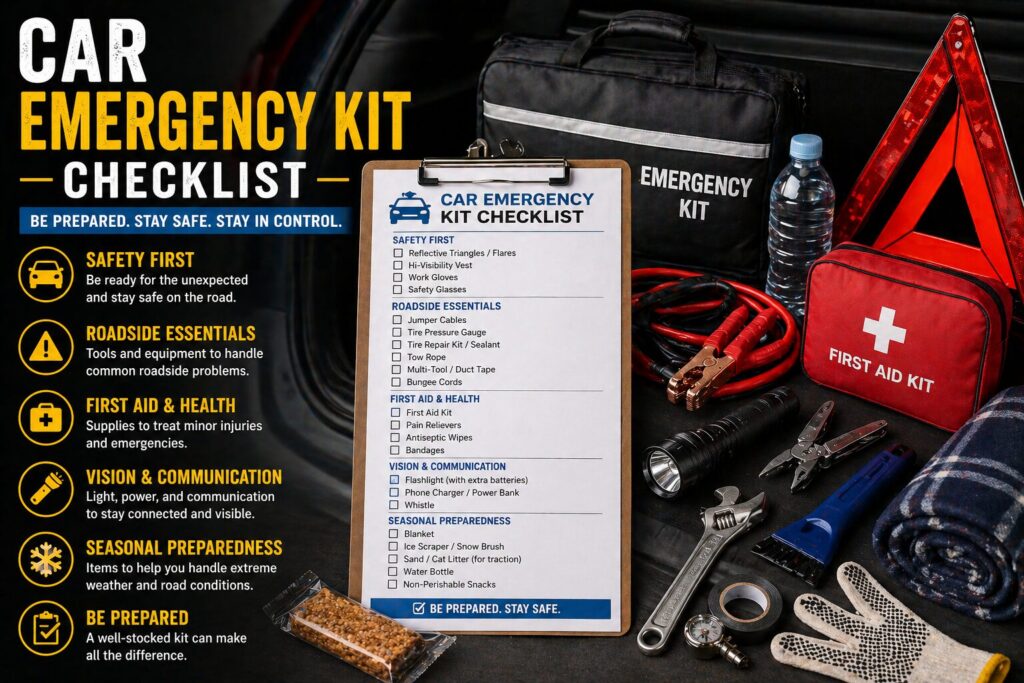
Core Car Emergency Kit Checklist
- Flashlight or headlamp
- Spare batteries or charged rechargeable light
- Phone charging cable that fits your device
- Charged power bank
- Water bottle or stored drinking water
- Shelf-stable snacks
- Compact first aid kit
- Gloves
- Warm hat
- Emergency blanket or compact insulating layer
- Basic rain protection or poncho
- Multi-tool or small cutting tool
- Paper map or printed local routes
- Reflective triangle or visibility aid
- Pen and small notebook
That list handles a lot of ordinary road problems before you ever start talking about specialty gear.
Vehicle-Specific Additions
- Jumper cables or jump starter
- Tire pressure gauge
- Portable tire inflator if practical
- Ice scraper in cold climates
- Small shovel where snow is realistic
- Tow strap if appropriate and you know how to use it
- Work gloves for mechanical tasks
- Paper copy of insurance and emergency contact information
This part of the kit depends more on climate, vehicle type, and how far you typically drive. A commuter sedan in a city has different needs than a rural truck in winter.
What Matters Most in a Roadside Delay
When people are stuck in a vehicle longer than expected, the first useful categories are usually simple:
- Light
- Warmth
- Hydration
- Phone power
- Visibility
- Basic medical support
That is worth keeping in mind because a lot of vehicle kits get overloaded with gadgets and still miss one or two of the plain things that would matter in the first hour.
Winter Changes the Equation
Cold-weather traffic delays are where vehicle preparedness starts looking much less optional.
If traffic locks up, fuel becomes a planning issue. Warmth becomes a planning issue. Dry gloves, hat, extra layer, working light, water, and a charged phone stop sounding like general preparedness advice and start sounding like tonight’s problem.
That is why a car emergency kit should be built around realistic delays, not only mechanical breakdown fantasies, especially in the same kind of cold-stop conditions that make calm decision-making harder than people expect.
How to Store It Without Making a Mess
A vehicle kit works best when it stays organized enough that you can reach what matters quickly.
- Keep medical items together.
- Keep light and power items together.
- Keep cold-weather items in one easy layer.
- Replace used snacks, batteries, and seasonal items before you forget.
- Check the kit at least a few times a year.
A kit tossed loose into the trunk eventually turns into a pile. Piles are much less helpful in bad weather.
Quick Car Emergency Kit Checklist
- Headlamp or flashlight
- Power bank and charging cable
- Water and snacks
- First aid kit
- Gloves and warm layer
- Emergency blanket
- Visibility aid
- Multi-tool
- Jumper cables or jump starter
- Season-specific gear for your region
A good car emergency kit is not about expecting disaster every time you drive. It is about keeping the ordinary failures of road life from becoming bigger than they need to be.