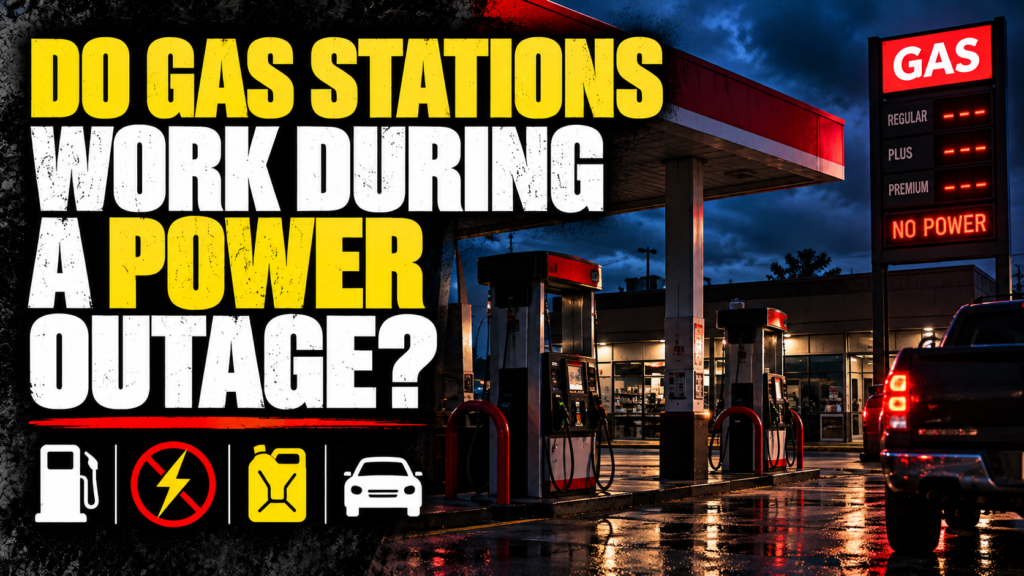
Some gas stations can operate during a power outage, but a station without working electrical power generally cannot dispense fuel. Backup power can keep a station operating if it supplies the equipment needed to sell fuel. That still leaves other questions: Is the station open? Does it have your fuel? Can it accept your payment? Can you reach it?
A tank of gasoline underground is not the same as a usable fuel stop. Before spending your remaining fuel driving from station to station, separate those questions.
Do gas stations work during a power outage without backup power?
A retail fueling station needs electricity for its fuel-handling equipment and controls. Payment equipment and safety systems also have to function. Losing grid power can therefore stop sales even when fuel remains on site.
Florida’s retail fuel transfer-switch program illustrates the equipment involved: pumps, dispensing equipment, life-safety systems, and payment systems all need usable power during an outage.
This is why bringing cash is only a partial answer. Cash can help where the operator can dispense fuel and accepts cash but card processing is unavailable. It cannot supply electricity to a pump. Nor does it guarantee that a station can complete a sale under its operating procedures.
Which stations can keep working?
The useful question is whether a station’s backup arrangement is operating now and supports fuel sales. A generator somewhere on the property is not enough information.
A transfer switch allows an electrical system to change power sources. Having the connection ready and having a suitable generator installed, supplied, and running are different conditions. The Department of Energy’s business outage guidance treats backup power as a system requiring load planning, appropriate equipment, installation, testing, maintenance, and fuel.
Some locations may resume service after backup equipment arrives. Others may have an operating backup already. Ask about current dispensing rather than relying on a general statement that the station is “generator-ready.”
| What you find | What it establishes | What to check next |
|---|---|---|
| The convenience store has lights | Some equipment has power. | Are the fuel dispensers operating? |
| The station advertises backup capability | It has described a preparedness arrangement. | Is that arrangement running and supporting public fuel sales now? |
| Cars are being fueled | Some dispensing is taking place. | Is your fuel type available, and what payment or purchase conditions apply? |
| An online listing says “open” | The listing reports business hours or availability. | When was that information confirmed, and does it refer to fuel sales? |
Power coming back does not guarantee the next delivery
The pump is the last part of a longer supply chain. A station also depends on fuel reaching it.
The U.S. Energy Information Administration explains that power loss at distribution terminals can interrupt tanker loading. Roads can also prevent trucks from reaching stations. Disruption upstream can therefore limit retail supply even where the station itself has electricity.
Keep three conditions separate: the station has power, the station has fuel, and the station can replenish that fuel. Restoring one does not automatically restore the others. There is no useful universal rule that every station will reopen after a certain number of hours.
For the same reason, the next town is not automatically a reliable backup. A wider outage can affect places along the route as well as the destination. The broader city infrastructure dependency chain explains why those failures connect.
Before you drive out looking for fuel
Use the station’s own current information when you can reach it, alongside local emergency updates. If you get through to an operator, keep the call short:
- Are you dispensing fuel to the public right now? Ask about fuel sales, not merely whether the shop is open.
- Do you have the fuel my vehicle requires? Availability of one grade or fuel type does not answer for another.
- What payment methods are you accepting? Do not assume the card terminal or ATM will provide a fallback.
- Are there limits, closing times, or access problems? Conditions can change after the call.
If nobody answers, mark availability as unconfirmed. An unanswered call proves neither that the station is closed nor that a trip will succeed. A report from yesterday is also not confirmation of today’s stock.
Then consider the whole trip. A nearby confirmed option is different from a string of hopeful stops. Account for the return journey and a fallback destination, not just the drive to the first pump.
A fuel-trip decision note
Write down: destination, confirmation time, fuel available, accepted payment, route, fallback, and fuel you must retain for essential travel.
For example, a station confirmed by its operator this morning is stronger evidence than a map icon showing normal hours. That evidence still has a time attached. Before a long trip, reconsider whether the information is fresh enough to justify it.
Build the plan before the tank becomes urgent
Choose a normal refill threshold that fits your household’s essential travel instead of routinely postponing fuel until the warning light. Identify more than one possible station and record contact information while service is normal. Those contacts help you check availability; they are not promises of emergency supply.
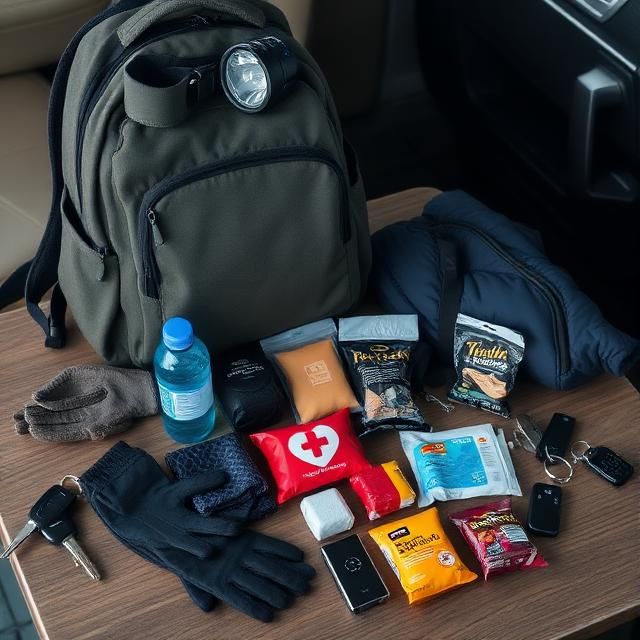
Reduce errands that your household can reasonably avoid. Food already at home and supplies already organized can spare you a trip when fueling options are uncertain. Keep your vehicle emergency kit ready for the journeys you still need to make.
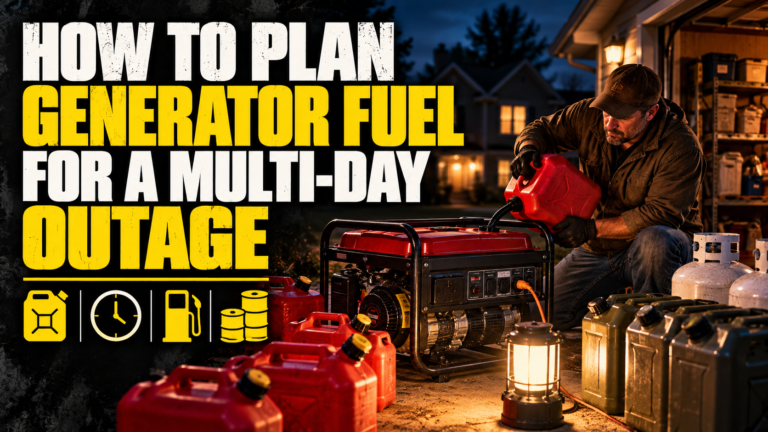
If a generator is part of your household plan, account for its fuel needs separately from transport. Do not count the same supply twice. Use the equipment manufacturer’s consumption information for the loads you intend to run; choosing appropriate generator capacity is a different calculation from ensuring continued fuel access. Use the generator fuel planning guide to calculate operating hours and load-specific fuel needs.
If the outage has just begun, work through the first 15 minutes of a power outage before letting a nonessential fuel search take over your attention. Michigan’s MIREADY guidance recommends identifying electricity-dependent needs and preparing alternatives; fuel access belongs in that same review.
Fuel is one part of the outage plan
Knowing which stations can dispense fuel answers one question. Food, water, communication, sanitation, and family coordination still need workable plans of their own. The Power Grid Collapse Survival System brings those household dependencies together.
For the fuel decision itself, keep the test simple: working equipment, available fuel, an accepted payment method, and a reachable station. Check those conditions before treating another drive as the solution.
Sources and further reading
- Florida Department of Agriculture and Consumer Services: retail fuel transfer-switch program — equipment that backup power must support; a Florida program, not a nationwide requirement.
- U.S. Department of Energy: business utility-disruption planning — preparing and maintaining a usable backup-power arrangement.
- EIA: disruptions to gasoline infrastructure and supply — how terminals, transport, and retail stations connect. Published in 2013; used for supply-chain mechanisms, not current station availability.
- Michigan State Police MIREADY: power outages — household dependencies and preparation priorities.