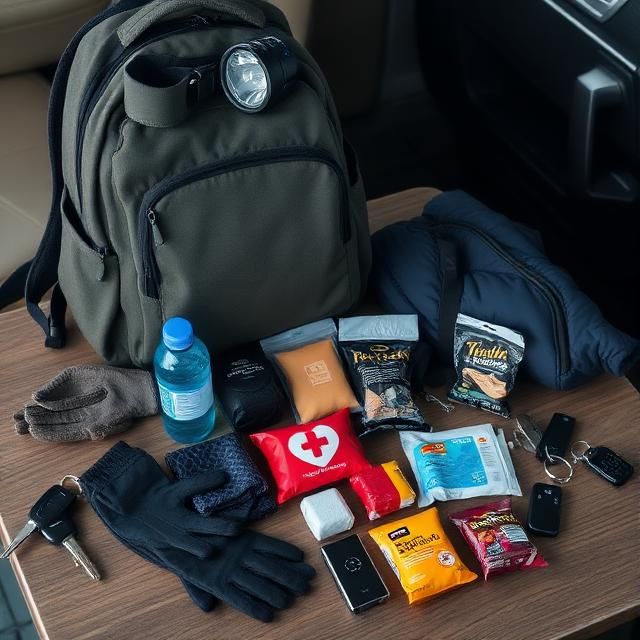
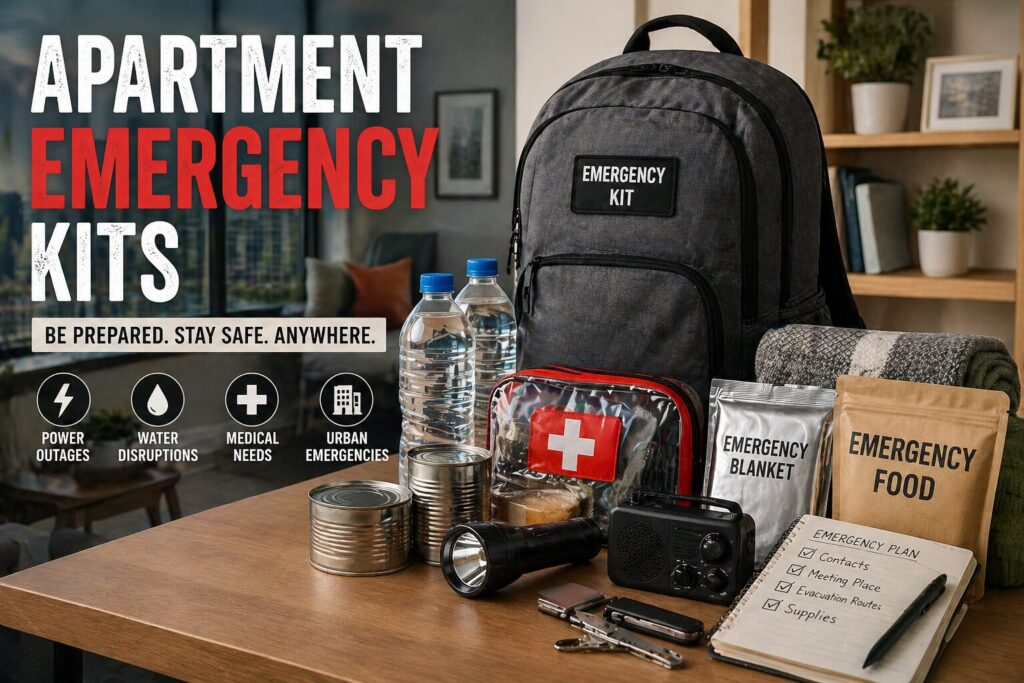
The best place to store emergency supplies in a small apartment is a place the intended user can reach, identify, and use without moving half the household first. A compact reserve does more good when it has a clear location than when it disappears into the deepest available cupboard.
Start with the supplies you already own. Separate the items you may need immediately from the reserve you use while staying home and the essentials you may need to carry. You can use several small storage spots if everyone knows what belongs where.
This is the storage side of apartment preparedness. For the wider equipment choices, start with our apartment emergency kit guide. Here, the job is to make those supplies findable and practical.
Use three storage jobs instead of one giant emergency box
A single bin sounds organized until the light is buried at the bottom or the entire container is too awkward to carry. Assign storage by the job the supplies need to do.
| Storage job | What belongs there | Question to check |
|---|---|---|
| Immediate access | A battery light, needed contact information, and other items you need to locate promptly. | Can the person who needs it find it without emptying the cupboard? |
| Stay-put reserve | Food, water, and household supplies intended for use inside the apartment. | Do the location and storage conditions suit the products and household? |
| Portable essentials | The agreed items that need to travel if you must leave. | Can the assigned person manage the bag, with agreed assistance if needed? |
These jobs may share a cupboard. They do not need matching containers or a dedicated room. They do need clear boundaries: the everyday light should be available even if the reserve stays packed.
Choose locations by access and conditions
A hall cupboard can work for compact equipment if the right shelf is accessible. An under-bed space may suit a reserve container if it slides out easily and the contents tolerate that environment. A portable bag can have an agreed home inside the unit without blocking the door.
Those are examples to evaluate, not universal storage instructions. A spot that works for spare clothing may be unsuitable for food, batteries, medicine, or water. Follow product directions and established care instructions. Avoid treating a hot vehicle, balcony, damp area, or inaccessible high shelf as free emergency storage simply because it is unused.
Keep escape routes clear. Do not put containers in shared corridors, stairwells, or places that interfere with exits or building equipment. Check building rules before making changes. You should be able to improve your organization without drilling into a rental wall or altering a shared system.
For stored water, use CDC guidance on emergency water storage. Container suitability, protection from sunlight, and separation from toxic substances matter. Empty space beside cleaning chemicals is not automatically a suitable water-storage location.
Write locations that someone else can follow
“In the closet” is a reminder for the person who packed it. “Hall cupboard, lower shelf, blue pouch” is an instruction another person can use.
Make a simple register with the item, quantity, exact location, and last check date. Keep related accessories together where practical. A charged power bank without its matching cable creates another search at the moment you wanted the system to be simple.
Use labels that match the register. If you move the pouch, change the record. If a frequently used item keeps migrating, either give it a more workable home or keep an appropriate backup; do not keep writing down a location nobody uses.
Separate the reserve from the carry plan
Supplies that are sensible to keep at home may be impractical to carry. Mark what stays in the unit and what belongs in the portable bag, then agree who handles it. Household mobility, care arrangements, pets, and transport all affect that decision.
A gentle carry check in a safe place can expose an awkward bag. There is no need for a difficult stair exercise or a simulated evacuation. If assistance may be needed, confirm the arrangements with the relevant people and building staff before relying on them.
Our apartment blackout checklist explains the wider building dependencies. Keep confirmed building information with the plan, including the source and date of any answer you intend to rely on.
Try a five-minute find-and-explain check
- Ask another responsible household member to find the first battery light.
- Ask where the spare power cable and household contacts are kept.
- Have them identify the portable essentials without opening every container.
- Record anything that was unclear, inaccessible, or missing its accessories.
- Fix one location or label now, then assign the next task.
Keep normal power, alarms, and care equipment running. The point is to test the storage instructions while conditions are easy. If a cupboard has become a puzzle in daylight, reorganizing it is a better next step than adding another purchase.
Questions about small-apartment emergency storage
Do all emergency supplies need to be in one bag?
No. A location map lets you distinguish the stay-put reserve from portable essentials. Keep the items that need to travel together where practical, and make the rest easy to find.
Can I organize supplies without buying storage bins?
Yes. Start by assigning clear homes to what you own, labeling existing containers, and recording exact locations. Buy a container only when it solves a specific access or protection problem.
What if roommates use the supplies?
Agree which items can be used normally and who updates the record or replaces them. A supply that gets used and recorded is easier to maintain than a reserve everyone borrows from quietly.