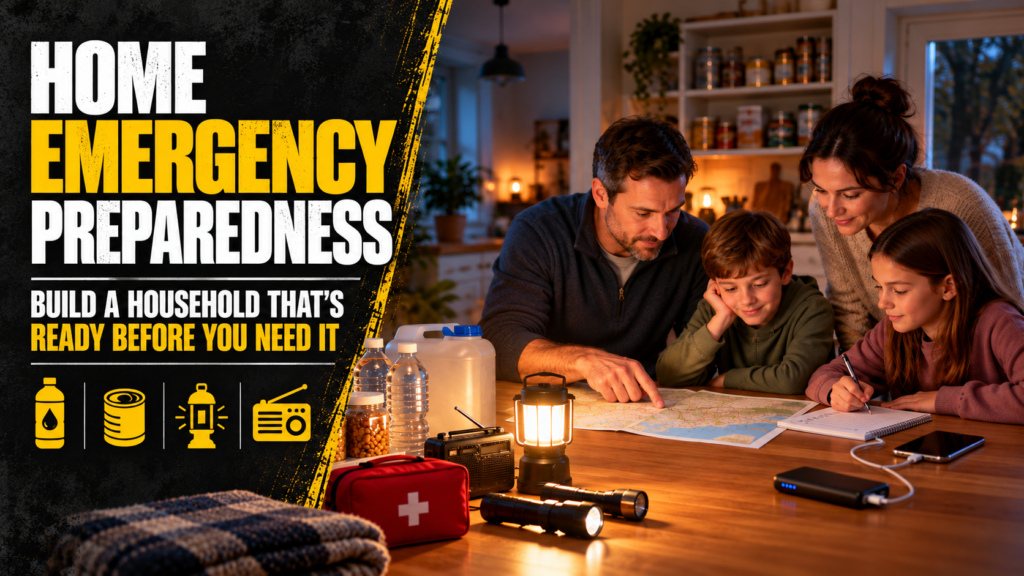
Home Emergency Preparedness: Build a Household That’s Ready Before You Need It
Most people know they should be more prepared.
The problem is that home emergency preparedness can turn into an endless project almost immediately.
How much water should you store?
How much food?
What happens if the power stays out for two days instead of two hours?
What if the water stops running?
What if your family is separated when something happens?
What should be in the car?
What documents should you protect?
What should you pack if you have to leave?
And where do you even start?
That last question stops more people than almost anything else.
You do not need to become a survivalist.
You do not need a bunker.
You do not need to spend thousands of dollars on equipment.
You need to identify the weak points in your household, fix the most important ones first, and build from there.
That is what real home emergency preparedness looks like.
Home Emergency Preparedness Is Really About Reducing Dependence
Think about how many systems your household quietly depends on every day.
Electricity comes through the wall.
Water comes through the faucet.
Food is available at the store.
Gas stations have fuel.
Cell phones connect.
Banks process payments.
Roads remain open.
Emergency services respond.
Normally, that works remarkably well.
But when even one of those systems stops working, your household suddenly has to replace whatever that system was doing for you.
A four-hour power outage may be an inconvenience.
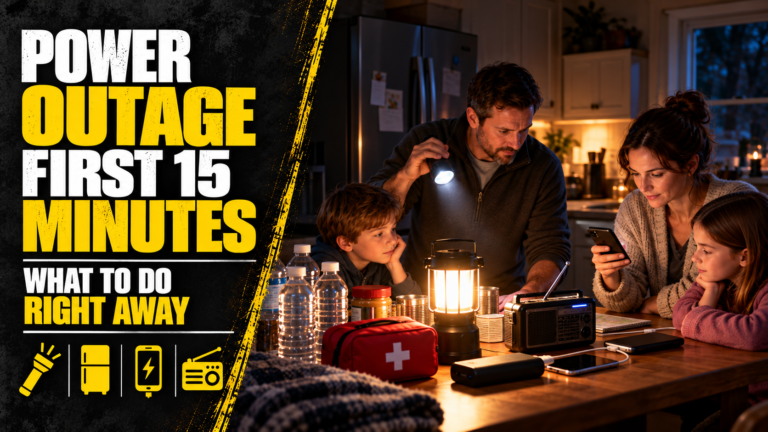
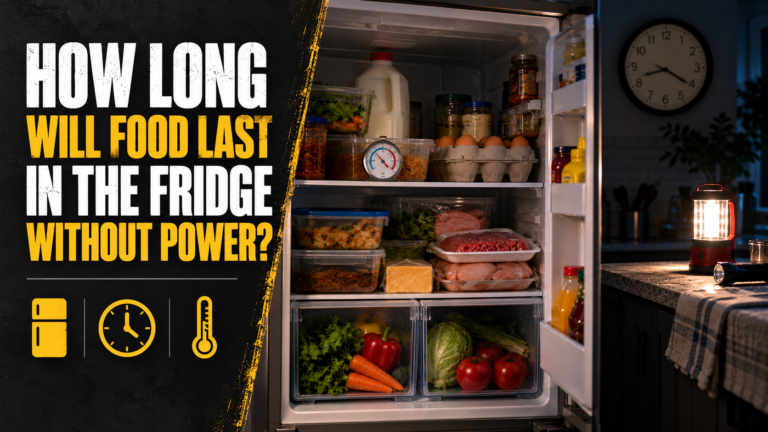
A multi-day outage starts affecting refrigeration, lighting, communications, heating or cooling, charging, cooking, and sometimes water.
A short water interruption is annoying.
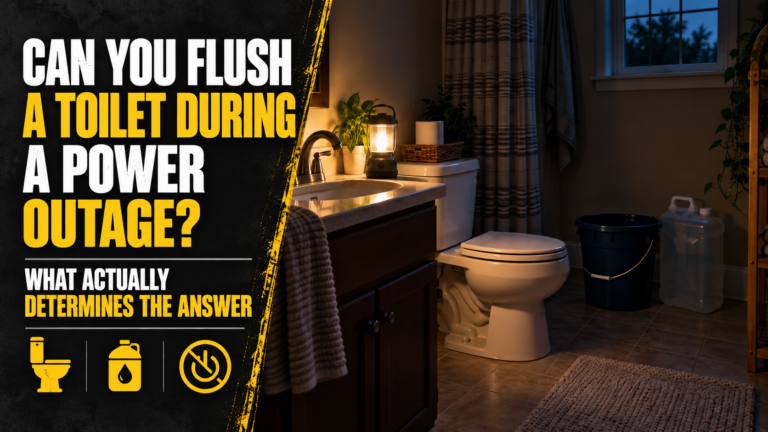
A longer one changes drinking, cooking, sanitation, cleaning, and toilet use.
That is why preparedness should not begin with buying random survival gear.
It should begin with a much simpler question:
What does my household depend on, and what happens when that dependency disappears?
Once you start there, preparedness becomes much easier to understand.
Start With the Failures Most Homes Are Actually Likely to Face
You can spend years studying extreme disasters.
That is not where I would start.
Start with the problems that can turn an ordinary week upside down.
A serious household preparedness plan should account for loss of electricity, interruption of water, food and cooking problems, communication failures, vehicle problems, injuries, evacuation, important documents, pets and dependents, and the possibility that a short emergency lasts longer than expected.
Notice something about that list.
None of it requires the end of civilization.
A strong preparedness system is valuable precisely because relatively ordinary failures can create very real problems.
Preparedness is not a personality.
It is a household habit.
The Biggest Home Preparedness Mistake Is Buying Things Without Building a System
A closet filled with emergency supplies can create the illusion of preparedness.
That does not mean the household actually has a plan.
You can own flashlights and discover that the batteries are dead.
You can own emergency food and have no good way to prepare it.
You can store water without thinking about sanitation.
You can build a beautiful emergency kit and leave it buried underneath boxes in the basement.
You can have everyone’s phone numbers stored in the very phone that just died.
You can own hundreds of survival manuals and still have no idea which one you need when the lights go out.
Equipment is useful. Organization is what makes it usable.
That distinction matters.
The goal is not to accumulate preparedness stuff.
The goal is to become more capable.
A Better Way to Build Home Emergency Preparedness
A useful preparedness system should answer things in the order you are actually likely to need them.
First, understand your household.
Then identify the obvious weak points.
Then handle the basics.
Then organize the information.
Then build greater depth.
That means making sure you have a workable first 72 hours before worrying about obscure long-term scenarios.
It means knowing what you will do during a blackout.
Knowing what water you have available.
Having emergency food you can actually use.
Making sure family members know how to contact one another.
Keeping critical information somewhere other than a single phone.
Thinking through evacuation before you are standing in the driveway trying to decide what to take.
Preparing for the people and animals who depend on you.
Once those pieces are in place, deeper survival knowledge becomes far more useful.
What Would Happen If Something Failed Tonight?
This is one of the most useful preparedness tests you can perform.
Do not imagine some movie-style catastrophe.
Pick one ordinary system and remove it.
The electricity goes out tonight and does not return for 48 hours.
What becomes difficult?
Now remove the water.
What changes?
Imagine your cell network is overloaded.
How does your family communicate?
Imagine you are told you should leave your home.
What do you grab?
Where do you go?
What happens if family members are in different places?
Those questions expose the difference between owning emergency supplies and having actual home emergency preparedness.
And they show you exactly what to work on next.
The Home Emergency Preparedness System I Would Want
This is why SurvivalManualsOnline built The Complete Survival System differently from a giant pile of survival PDFs.
A huge library is valuable.
But handing someone hundreds of manuals and saying “good luck” does not solve the first problem.
The first problem is knowing where to begin.
The Complete Survival System is designed around a simple principle:
Family first. Archive second.
You start with the practical household layer. You work through the things most likely to matter first. Then, when you want deeper information, the larger reference library is there.
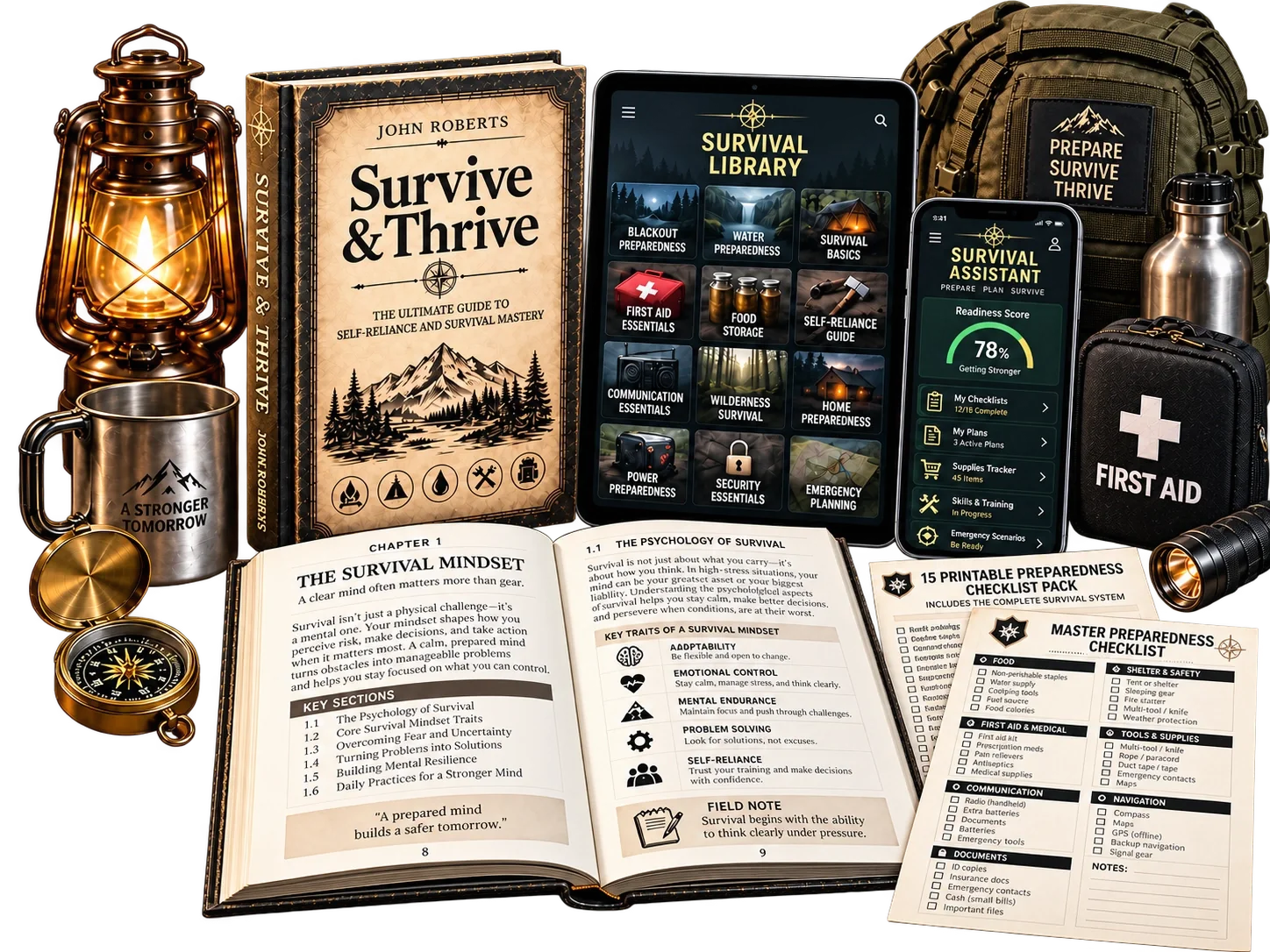
The system brings together:
- A READ THIS FIRST orientation so you know how the system works
- A Family Ready Quickstart Guide for getting the basics under control
- 15 printable household preparedness checklists covering areas such as 72-hour readiness, blackouts, water, communications, first aid information, vehicles, documents, pets, evacuation, emergency food, and home readiness
- Survive & Thrive, the full practical preparedness book
- A Guided Library Index that helps you find information by the problem you are trying to solve
- The Survival Library with hundreds of downloadable survival and reference manuals
- Deeper reference material for people who want to go beyond household basics
- The Survival Assistant, giving you another way to work through preparedness questions and the system’s information
You do not have to consume everything.
You are not supposed to.
You start with what makes your household more capable now.
Then you keep the deeper material for when you need it.
Why Having the Information Before the Emergency Matters
The worst time to begin researching a problem is after the problem has already started.
When the power is out, the internet is unreliable, your phone battery is dropping, stores are crowded, or your family is trying to make a decision, you do not want to begin from zero.
That is when preparation starts paying you back.
The checklist you completed last month matters.
The phone numbers you printed matter.
The water you already stored matters.
The plan your family already discussed matters.
The reference material you already downloaded matters.
The decision you already made matters.
Preparedness gives you something emergencies tend to take away:
options.
You Do Not Need to Prepare for Everything
Trying to prepare for everything is one of the fastest ways to prepare for nothing.
There will always be another scenario.
Another piece of gear.
Another book.
Another possibility.
Home emergency preparedness becomes manageable when you stop asking, “How do I prepare for every disaster?” and start asking:
“What can I do today that makes my household more capable across many different emergencies?”
Stored water works during a blackout, storm, water-main break, contamination problem, or extended disruption.
A family communication plan works during storms, evacuations, network outages, accidents, and regional emergencies.
Emergency food is useful whether the problem is weather, power, transportation, illness, or supply interruption.
A car kit can help during winter weather, breakdowns, evacuations, road closures, or unexpected delays.
Preparedness gets easier when you build capabilities, not collections of scenarios.
Build the System Before You Need the System
There is a line between knowing you should prepare and actually being prepared.
Most people live on the first side of it for years.
They mean to store more water.
They mean to put together the documents.
They mean to talk to the family.
They mean to make the emergency kit.
They mean to organize everything.
Then life gets busy again.
The Complete Survival System exists to help you cross that line.
Not by turning survival into your lifestyle.
By giving you a starting point, a path to follow, practical tools to use, and deeper information to keep.
Be ready without becoming extreme.
That is the entire idea.
Turn Home Emergency Preparedness Into Something You Have Actually Done
You do not need another browser tab telling you that you should prepare.
You need to start putting the pieces in place.
Check the water.
Check the food.
Check the lights.
Check the communication plan.
Check the vehicle.
Check the medical information.
Check the documents.
Check the evacuation plan.
Fix the weak points you find.
Then keep the deeper knowledge where you can get to it.
That is how an ordinary household becomes a more capable household.
And that is exactly what The Complete Survival System was built to help you do.
Stop Wondering Where to Start
Get the quickstart guidance, printable checklists, Survive & Thrive book, Guided Library Index, Survival Library, deeper reference archive, and Survival Assistant together in one organized system.
Get The Complete Survival System →
Home emergency preparedness does not have to take over your life.
It just needs to be done before you need it.