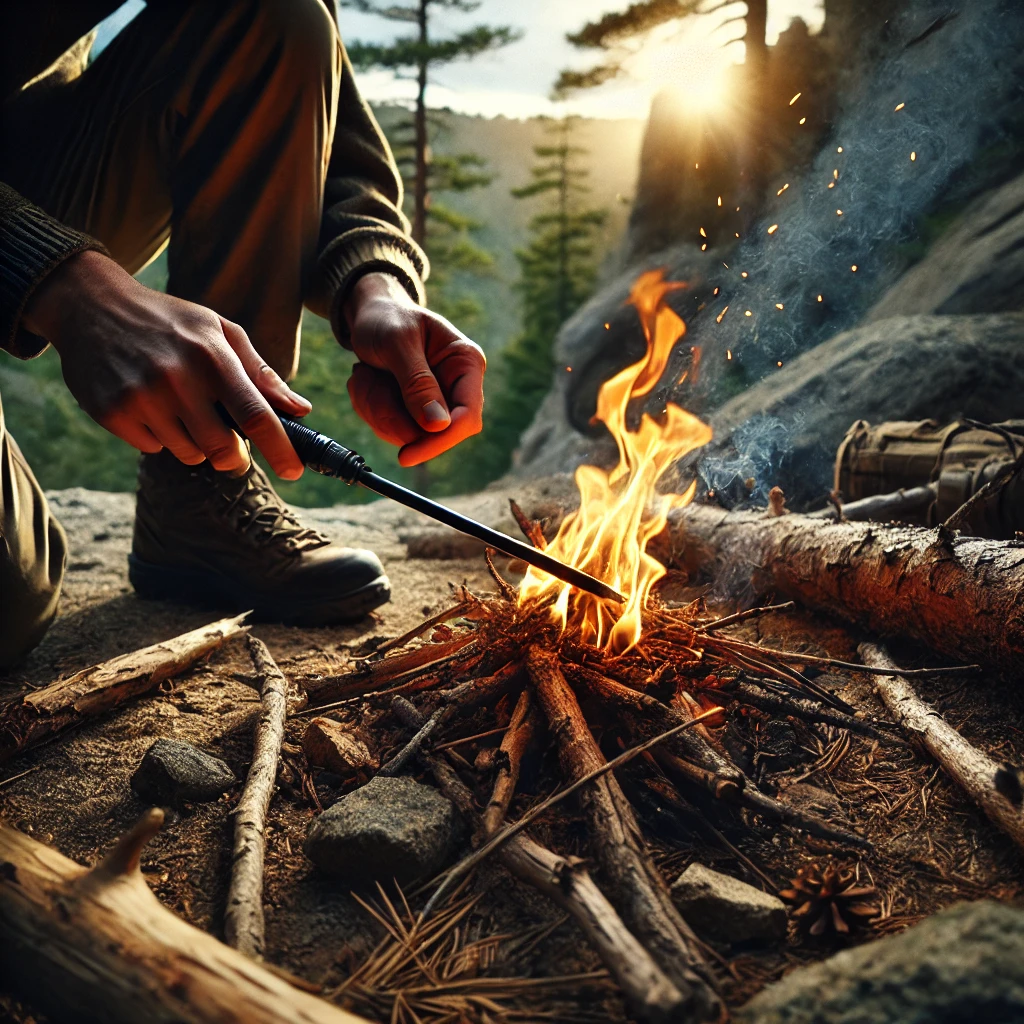
Fire Starting Skills That Hold Up When Conditions Stop Cooperating
People tend to imagine fire starting as a dramatic moment. Spark, flame, success. That part is satisfying, sure. It is also the part that gets overvalued.
Most real fire failures happen before ignition. They happen while a person is choosing bad material, skipping preparation, grabbing oversized sticks too early, or trying to force a flame into a pile that never had much chance of working. The spark gets blamed because it is easy to see. The actual mistake usually showed up earlier.
I think that is one reason fire starting frustrates people so much. They assume the problem is ignition when the problem is often structure. Or dampness. Or impatience. Sometimes all three.
Fire Is a Sequence, Not a Trick
A useful fire starts as a chain. Tinder catches first. Then the smallest kindling. Then material slightly larger than that. Then larger fuel once the fire has enough heat and stability to keep climbing on its own.
That sounds basic because it is basic. It is also where people mess it up. They get a little flame going, feel relieved, and then bury it under wood that belongs five minutes later in the process. Then the fire collapses and they start muttering about bad luck, cheap lighters, wet weather, whatever happens to be nearby and convenient.
The thing is, a weak little flame cannot do grown-up work yet. It needs help. It needs properly sized fuel, dry enough material, and room to breathe.
If I had to reduce the whole skill to one sentence, it would be this: build a bridge from fragile flame to durable heat. That is what you are really doing.
Dryness Matters More Than Tool Pride
I like a ferro rod. I like good lighters too. Waterproof matches, also useful. But people can get a little theatrical about tools and forget what fire is actually eating.
Dry material beats romantic equipment almost every time.
A fancy ignition source aimed into bad tinder is still bad firecraft. Meanwhile a plain lighter with very good preparation works in a lot of conditions people would describe as difficult. Not every condition. But plenty.
This is why I trust people more when they talk about material processing than when they talk about gear brands. Show me how you gather tinder. Show me how you sort kindling. Show me where you look when the outside of the woods feels damp and unhelpful. That tells me more.
What to Gather Before You Ever Strike a Spark
Good fire starting begins with over-preparation at the small end.
You want real tinder, not hopeful debris. Dry grass can work. Shaved inner bark can work. Birch bark can work. Fatwood scrapings can work. Cotton and petroleum jelly absolutely work if you carry them. Thin feather sticks can work. The common factor is not tradition or style. It is dryness and surface area.
Then kindling. More of it than you think. Matchstick-thin, pencil-thin, then finger-thin. Not one vague handful. A real supply.
People often gather enough material for the first thirty seconds and then act surprised when the fire asks for more. It always asks for more. Especially early.
If conditions are damp, I would rather spend extra time building a serious pile of small dry material than rush toward ignition. A prepared five minutes is usually cheaper than a frustrated twenty.
A Real Example
Picture a wet late afternoon in the woods after intermittent rain. Not a cinematic disaster. Just enough weather to make everything annoying.
A person finds a small opening, kneels down, and starts trying to light dead sticks straight off the ground. They have a lighter. It works. The wood smokes a little, hisses a little, then gives up. They try again with more flame and larger sticks because larger sticks somehow feel more serious. Same result.
Now imagine somebody else in the same conditions doing less, but doing it better. They pull bark from the protected side of dead standing wood. Split a few branches and shave the dry interior. Build a platform so the first flame is not sitting directly on wet soil. Make a proper tinder bundle, then a proper small-kindling pile. Protect the ignition point from wind with their body. Light the tinder. Feed the flame in stages. Let it strengthen before asking it to carry bigger fuel.
Same weather. Same forest. Different result.
That is usually how it goes. Fire starting is often less about toughness than about sequence.
Airflow Is Quietly Doing Half the Work
People smother fires all the time without meaning to. They pack material too tightly, collapse the structure while feeding it, or build something that looks solid but cannot breathe.
A fire needs contact between heat and fuel, sure, but it also needs space. Tiny gaps matter. Loose structure matters. The difference between a working little teepee and a crowded little pile is often just airflow and patience.
This is also why some fire lays work better in some conditions than others. A simple upright structure can help a delicate flame rise into small kindling. A lean-to arrangement can help protect the flame from wind. A log-cabin structure often makes more sense after the fire already has a little authority. None of these are religious truths. They are just tools.
I do not think people need to memorize layouts first. They need to understand why the layouts work.
Where People Usually Fail
The common mistakes are boring, which is useful because boring mistakes can be fixed.
- Not enough tinder.
- Kindling that jumps in size too fast.
- Material gathered off wet ground without checking the inner wood.
- Trying to light directly on cold, wet soil.
- Adding bigger fuel too early.
- Assuming the ignition tool will compensate for bad preparation.
That list looks simple because it is. But it covers a lot of real failures.
What Good Practice Actually Looks Like
If somebody wants to become genuinely dependable with fire, I would not start with dramatic methods. I would start with repetition under ordinary conditions.
Build tinder bundles from different materials. Practice sorting sticks by size. Start fires on damp days, not only easy sunny ones. Try using a lighter and a ferro rod so you understand the difference between sustained flame and spark ignition. Learn how dry inner wood feels when you expose it with a knife. Carry backup tinder and then practice not needing it every single time.
That kind of practice is not flashy, but it builds the right instincts.
And then there is safety. A useful fire is controlled. Keep the site clear. Respect local rules. Do not leave coals half-dead and call it done. Extinguishing properly is part of firecraft, not a boring chore after the interesting part.
What This Skill Is Really Buying You
A dependable fire gives you warmth, cooked food, a way to boil water, a way to dry gear, light, morale, and sometimes a badly needed psychological reset. But the deeper value is that fire rewards order.
You bring the right material together in the right sequence and the environment gives something back. Heat. Stability. A little control.
I like that about it. Fire is not sentimental. It is honest. If the preparation is bad, the result shows it quickly. If the preparation is good, the result is usually pretty clear there too.
That is why I still think fire starting belongs in the category of foundation skills. Not because it is dramatic. Because it teaches attention, sequencing, patience, and how to build something small into something steady when conditions are less friendly than you hoped.
And honestly, that lesson travels well beyond fire.