Best Foods to Stockpile for an Emergency
The best foods to stockpile are not the most exotic survival meals or the products with the loudest claims. They are shelf-stable foods your household already eats, can prepare with the equipment you will actually have, and can rotate through normal meals before quality declines.
A useful emergency pantry needs four things: calories, protein, variety, and foods that require little or no cooking. Miss one of those and the weakness shows up quickly. A pantry full of rice has calories but becomes difficult if water or fuel is limited. A shelf full of canned meat has protein but gets expensive and monotonous. Snack food is easy to eat but may leave a family hungry and short on useful nutrition.
I use a simple rule: store meals, not ingredients. Each item should connect to something else on the shelf. Beans need rice, tortillas, crackers, or canned vegetables. Pasta needs sauce and a way to boil water. Peanut butter needs crackers, bread, oats, or fruit. When the pieces form complete meals, the pantry becomes a working system instead of a pile of cans.
Start With Foods That Fit Real Emergencies
Most household disruptions are not months-long wilderness situations. They are power outages, storms, temporary water problems, evacuation delays, supply interruptions, or a few days when stores are closed or stripped of basics. Your food plan should work first for those realistic conditions.
Before buying anything, answer three questions:
- Can we eat this without electricity?
- How much water and fuel does it require?
- Will everyone in the household actually eat it?
That filter prevents one of the most common preparedness mistakes: buying cheap bulk food that looks impressive but depends on long cooking times, abundant clean water, or tastes nobody likes.
If your broader plan is still loose, build this pantry alongside a written family emergency plan. Food, water, medications, communication, and cooking methods should support one another rather than being planned separately.
The Best Emergency Food Categories
1. Canned Proteins
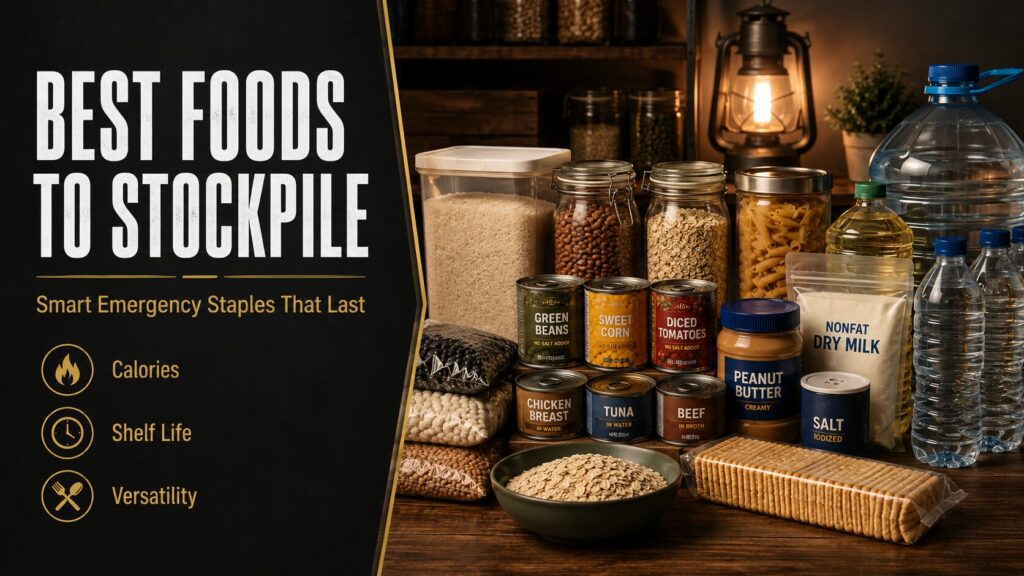
Canned chicken, tuna, salmon, ham, chili, stew, and similar ready-to-eat proteins are among the most useful emergency foods. They can be eaten cold if necessary, add substance to simple meals, and do not require freezer space.
Choose can sizes that match one meal for your household. Once opened, leftovers become a problem when refrigeration is unavailable. A smaller can that gets finished is often more useful than a large economy can that leaves half the food exposed.
Include manual can openers in more than one location. A pantry full of canned food is less useful when the only opener is electric or cannot be found in the dark.
2. Beans and Legumes
Canned beans are ready to eat and use little fuel. Dry beans cost less and store well, but they demand water, soaking, and long cooking. That makes canned beans the better first layer for short emergencies and dry beans a useful second layer when you have reliable water and an alternate cooking method.
Good options include black beans, kidney beans, chickpeas, lentils, and baked beans. Pair them with rice, canned tomatoes, tortillas, shelf-stable cheese products, or seasoning packets to create meals people recognize.
3. Rice, Pasta, Oats, and Other Grains
Rice, pasta, oats, couscous, and boxed grain mixes provide inexpensive calories and make stored proteins stretch further. The best choice depends on fuel and water.
Quick-cooking rice, couscous, instant oats, and thin pasta reduce cooking time. Traditional dry rice and pasta are still useful, but do not make them the only foundation of the pantry. During a power outage, conserving fuel can matter as much as conserving food.
Store these foods in a cool, dry place and protect opened packages from moisture and pests. Clear containers also make it easier to see what needs rotation.
4. Nut Butters, Nuts, and Seeds
Peanut butter and other nut or seed butters provide dense calories, fat, and some protein without cooking. They work well with crackers, oats, tortillas, or dried fruit and are especially useful for quick meals during cleanup, evacuation, or a long outage.
Whole nuts and seeds add variety, but their oils can become rancid over time. Buy quantities you can rotate through normal use rather than treating them as permanent supplies.
5. Canned Fruits and Vegetables
Canned fruit and vegetables provide variety, texture, and nutrients that a pantry built only around starches will lack. Fruit packed in juice can provide both food and usable liquid. Vegetables can be added to soups, rice, pasta, and canned meat.
Choose a mix of familiar foods: corn, peas, carrots, green beans, tomatoes, peaches, pears, pineapple, and applesauce. Do not buy twenty cans of something your family avoids during normal weeks.
6. Ready-to-Eat and No-Cook Foods
Every emergency pantry needs a no-cook layer. Include crackers, granola, shelf-stable milk, cereal, tuna or chicken pouches, jerky, canned meals, fruit cups, protein bars, and foods suitable for household members with specific dietary needs.
The FDA recommends keeping several days of ready-to-eat food that does not depend on cooking or refrigeration. That matters because a loss of power may also remove your stove, microwave, well pump, or normal cleanup routine.
A no-cook layer also protects your fuel. You can save propane, charcoal, or other cooking resources for hot drinks, sanitation, and meals that truly need heat.
Build Meals Before You Build Quantity
A practical stockpile should contain repeatable meal combinations. Here is a simple pattern:
| Meal Type | Base | Protein | Flavor or Produce |
|---|---|---|---|
| No-cook | Crackers or tortillas | Peanut butter or tuna pouch | Fruit cup or dried fruit |
| One-pot | Quick rice or couscous | Canned beans or chicken | Canned vegetables and seasoning |
| Breakfast | Instant oats or cereal | Shelf-stable milk or nut butter | Dried or canned fruit |
| Ready meal | Canned soup, chili, or stew | Included | Crackers or canned vegetables |
Write five to seven combinations your household will eat, then multiply those meals by the number of days you are preparing for. This is more reliable than buying random sale items and hoping they form meals later.
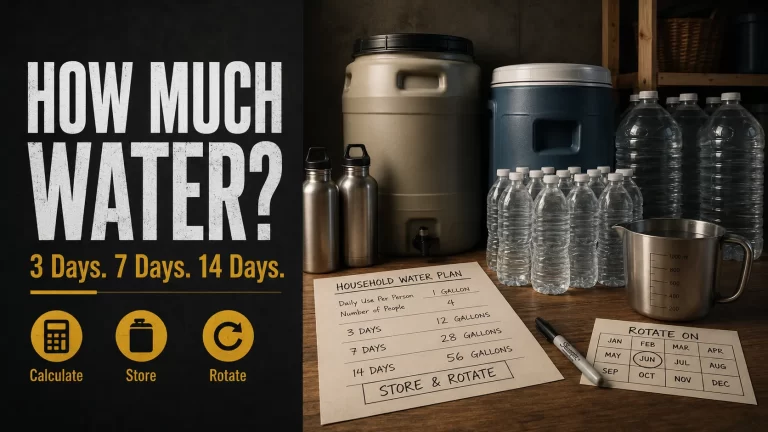
Food planning also depends on water. Dry foods, powdered drinks, sanitation, and cooking all increase demand. Use the household amounts in how much water to store for an emergency when you calculate the food supply.
Storage Life Is Not the Same as Quality
Many dates on shelf-stable foods describe best quality rather than an automatic safety cutoff. USDA guidance notes that, except for infant formula, product dating generally is not a federal safety requirement. Commercially canned low-acid foods such as meats and most vegetables commonly retain best quality for two to five years, while high-acid foods such as tomatoes and many fruits are generally best within about twelve to eighteen months when stored properly.
That does not mean every old container is acceptable. Discard cans that are bulging, leaking, heavily rusted, or deeply dented, especially along a seam. Store food in a cool, clean, dry place away from major temperature swings. Heat and moisture shorten useful storage life.
The better system is rotation:
- Put the newest food behind the oldest.
- Write the purchase month and year where it is easy to see.
- Use stored food in ordinary meals.
- Replace what you consume.
- Inspect the pantry every few months.
This “store what you eat, eat what you store” approach reduces waste and reveals problems before an emergency. You learn which foods the family finishes, which meals need more seasoning, and which packages are awkward to open or prepare.
Signals Your Pantry Is Not Ready
A full shelf can create false confidence. Watch for these warning signs:
- Most meals require electricity.
- Most calories require boiling water.
- There is little protein or fat.
- There are no foods for the first day of an outage.
- One person’s allergy, medical diet, or infant needs are not covered.
- The can opener, stove, fuel, or clean water plan is missing.
- The pantry contains food nobody has eaten in the past year.
- Everything expires or reaches peak quality at the same time.
The last point matters. Buying an entire stockpile in one weekend creates a future rotation problem. Building it over several grocery trips spreads cost and storage dates naturally.
During an outage, use the shelf-stable pantry before repeatedly opening the refrigerator. That preserves cold air and may save perishable food. For a wider household response, see citywide blackout survival.
Key Takeaways
- Stock ordinary shelf-stable foods your household already eats.
- Build complete meals with calories, protein, fat, produce, and flavor.
- Keep a no-cook layer for outages that remove cooking, water, or cleanup options.
- Balance ready-to-eat canned foods with lower-cost dry staples.
- Store food cool and dry, inspect containers, and rotate supplies through normal meals.
- Buy gradually so cost and rotation dates remain manageable.
Step-by-Step Actions
- List five to seven shelf-stable meals everyone in your household will eat.
- Mark which meals require cooking, water, refrigeration after opening, or special equipment.
- Add at least one full day of no-cook foods before buying bulk staples.
- Buy one extra meal combination during each normal grocery trip until you reach your target number of days.
- Add a manual can opener, alternate cooking method, fuel, and enough stored water to prepare the foods you selected.
- Label purchases by month and year, place newer food behind older food, and use the oldest items first.
- Inspect the pantry every three months for damaged containers, moisture, pests, and foods the household is not rotating.
Checklist
- Five to seven complete shelf-stable meals identified: Yes / No
- At least one full day of no-cook food stored: Yes / No
- Protein, carbohydrates, fats, fruits, and vegetables represented: Yes / No
- Manual can opener stored and tested: Yes / No
- Water required for cooking included in water plan: Yes / No
- Alternate cooking method and fuel available: Yes / No
- Infant, allergy, medical, and dietary needs covered: Yes / No
- Food stored in a cool, clean, dry location: Yes / No
- Damaged, leaking, bulging, rusted, or deeply dented containers removed: Yes / No
- Oldest food positioned for first use and rotation date scheduled: Yes / No