Survival Shelter Skills That Matter When Exposure Becomes the Real Problem
People hear the word shelter and tend to picture a structure. Branches, walls, ridgepole, debris, maybe something that looks halfway impressive from ten feet away.
I think that is part of the reason people get this skill wrong. They focus on what the shelter looks like instead of what it is supposed to do. A survival shelter is not a craft project. It is heat management, weather management, and energy management under time pressure.
That difference matters. A crude ugly shelter that blocks wind, gets you off wet ground, and reduces heat loss is doing its job. A more elaborate one that burns daylight and body energy while you keep getting colder may not be.
And that is usually the real tension in shelter building. Not beauty. Not tradition. Tradeoffs.
Exposure Gets Dangerous Faster Than People Expect
Food is important. Water is important. Shelter can still become the first urgent problem in bad weather because exposure starts working on you right away.
Wind strips heat. Wet ground steals it. Rain soaks insulation. Snow complicates everything. Even mild cold feels less mild once a person is tired, damp, underfed, or stuck out longer than expected. Heat can be just as unforgiving in a different direction. Too much sun, bad airflow, trapped humidity, no shade, poor hydration. A shelter is not always about getting warm. Sometimes it is about staying out of the part of the environment that keeps grinding you down.
I think people underestimate how small advantages matter here. A little wind protection. A dry layer between you and the ground. A lower volume of space to warm. Better overhead cover. Those things do not look dramatic. Still, they change the night.
The Site Choice Is Half the Shelter
A lot of shelter problems begin before the first branch gets placed.
If you build in a low wet spot because it looks convenient, the shelter is already losing. If you build under dead limbs, close to unstable ground, in a drainage path, or where wind has a straight shot at you, same story. The shape of the shelter might still be fine. The decision underneath it is what failed.
A decent site usually does a few things well. It stays out of pooled water. It offers some natural windbreak if possible. It avoids obvious hazards overhead. It gives you access to enough material nearby that construction does not turn into a marathon. And it fits the temperature problem you are actually trying to solve.
That last part gets ignored. A shelter for wet cold conditions is not the same as a shelter for hot dry exposure. Shade and airflow matter more in one. Tight insulation matters more in the other. The location should serve the weather, not your first impulse.
Smaller Often Works Better
Beginners routinely build shelters too large.
It makes sense at first. More room sounds more comfortable. But space has to be managed. In cold conditions, extra interior volume often means extra air your body now has to warm. A shelter just big enough to protect you is usually more efficient than one roomy enough to feel civilized.
I do not mean miserable on purpose. I just mean practical. If heat retention matters, tighter is often better. If shade and airflow matter, broader and more open can make more sense. Shelter design follows the problem.
That is really the pattern throughout this skill. People want one correct shelter. What they need is one correct decision for the conditions in front of them.
A Real Example
Imagine a hiker who underestimates a late-season mountain day. Forecast looked manageable. Then the wind picks up, the trail slows, and rain turns steady enough that clothing starts losing the argument. Nothing theatrical. No movie disaster. Just the kind of ordinary chain that becomes serious because a person is now wet, losing light, and no longer moving well enough to stay warm through effort alone.
The wrong move here is chasing a perfect shelter concept. The right move is reducing exposure quickly.
Find a site with some wind protection. Get off the wettest ground. Use available branches to create a basic frame or lean angle. Add as much insulating debris as conditions allow. Most important maybe, create separation from the ground. People obsess over roofs and forget that cold wet ground is doing ugly work the whole time.
If the shelter is rough but blocks enough wind and keeps the person from direct contact with wet ground, it may already have changed the situation from slow decline to manageable discomfort. That does not sound glamorous. It is still the difference that matters.
Common Shelter Types and When They Make Sense
I do not think people need a huge catalog of shelter names memorized, but a few patterns are useful.
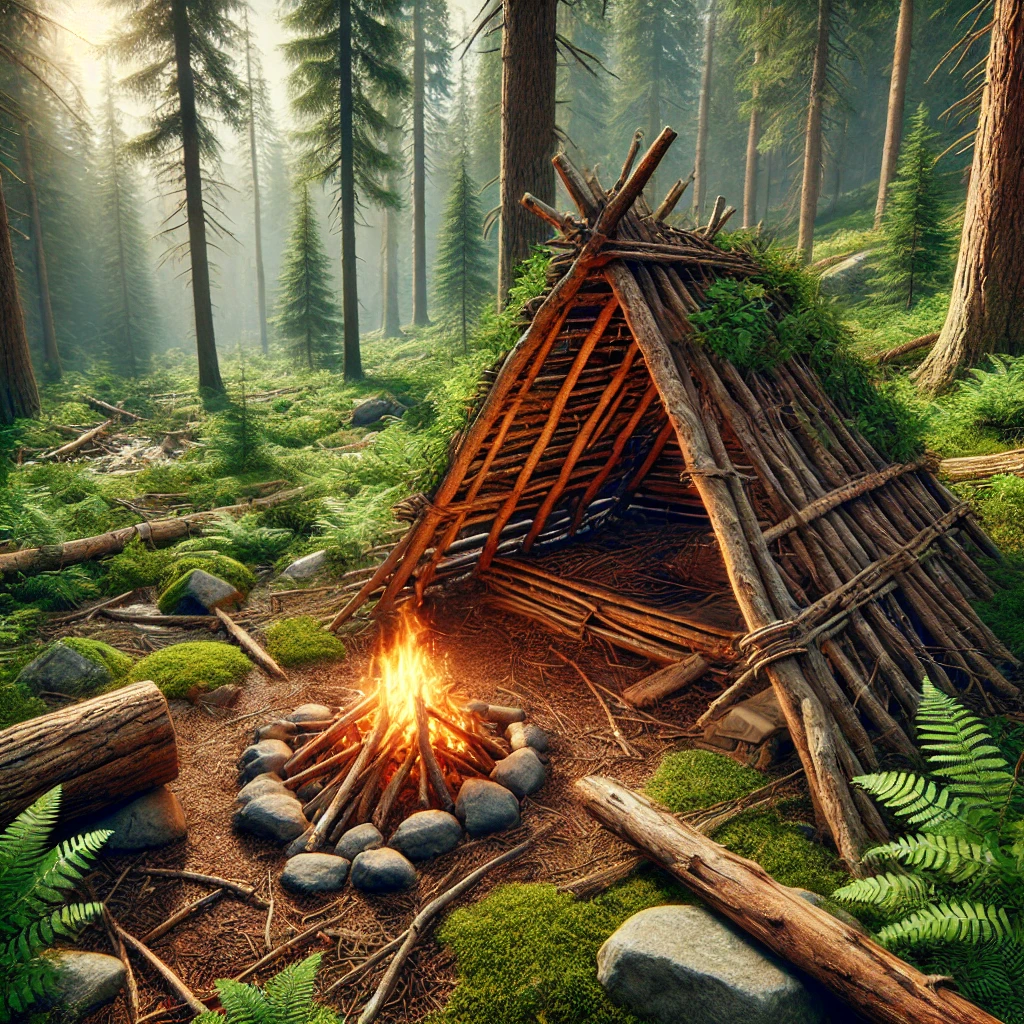
A lean-to is fast and simple when material and conditions allow it. It can work well with a fire in front if local conditions and safety allow that setup. Its weakness is exposure from the open side if wind shifts or weather worsens.
An A-frame gives more enclosure and usually better weather coverage, but takes more material and more time. A debris-style shelter can insulate well if built thick enough, though people often underestimate how much debris thick enough actually is.
Snow shelters are their own world. They can work, and sometimes work extremely well, but they are not beginner toys. Collapse risk, ventilation, and energy cost matter there in a serious way.
The useful principle is not shelter trivia. It is matching build type to conditions, time, and body state.
Ground Insulation Is Not Optional
If somebody forgets everything else I would still want them to remember this: the ground is often the quiet thief.
Leaves, pine needles, boughs, dry grass, bark, a pad, a pack, anything that creates separation matters. In cold or wet conditions, lying directly on the earth can drain warmth fast enough to cancel out a lot of decent roof work.
This is one of those details that looks minor until you actually need the shelter for a full night. Then it stops looking minor.
I have seen people build acceptable overhead cover and still be miserable because they treated the ground like an afterthought. That is not really a shelter failure in the structural sense. It is a heat-loss failure. But the body does not care what category you put it in.
Energy Budget Matters Too
A shelter that costs too much to build can become its own problem.
This is especially true when a person is already cold, dehydrated, injured, or running out of light. You do not always have the luxury to build the most protected shelter possible. Sometimes you need the best shelter you can finish before your condition gets worse.
I think this is one reason shelter skills should be practiced before they are needed. Not because everyone needs wilderness romance in their life, but because practice teaches pace. It teaches how much material a build actually takes. It teaches what looks easy and really is not. It teaches what corners can be cut and which ones should not be.
That is useful judgment. More useful than theory alone, usually.
What People Usually Get Wrong
- They build too large.
- They choose poor ground.
- They neglect insulation under the body.
- They spend too much energy on appearance.
- They pick a shelter type that does not match the actual weather problem.
- They wait too long to start building.
That last one matters a lot. Shelter work gets harder when your hands are cold, your patience is thinner, and the light is almost gone. Starting earlier is one of the least exciting advantages in survival. It is still a real one.
What Good Shelter Practice Looks Like
If someone wanted to improve this skill in a grounded way, I would have them practice site choice first. Not construction first. Walk an area and ask where wind would move, where water would collect, what material is available, what overhead hazards are present, how much insulation the ground naturally offers.
Then build something small. A lean-to. A simple frame. A compact debris shelter. Nothing heroic. The point is to understand what actually takes time and what truly improves protection.
It also helps to practice in less-than-ideal weather once basic skills exist. Not reckless conditions. Just conditions honest enough to reveal the difference between a shelter that looks decent and one that actually changes comfort.
What This Skill Really Gives You
A good survival shelter gives cover, yes. More than that, it buys margin.
Margin against weather. Margin against fatigue. Margin against poor decisions that show up once discomfort has been grinding on a person for too long. That is why I think shelter belongs near the center of practical outdoor survival. It gives the body a chance to stabilize and the mind a chance to stop solving ten problems at once.
And like most worthwhile field skills, it is less about perfect construction than honest priorities. Wind first maybe. Ground insulation. Dryness. Size. Time. Energy. If those decisions are sound, the shelter does not need to look like much to do a lot.
That is probably the better lesson anyway. In real conditions, useful beats impressive almost every time.