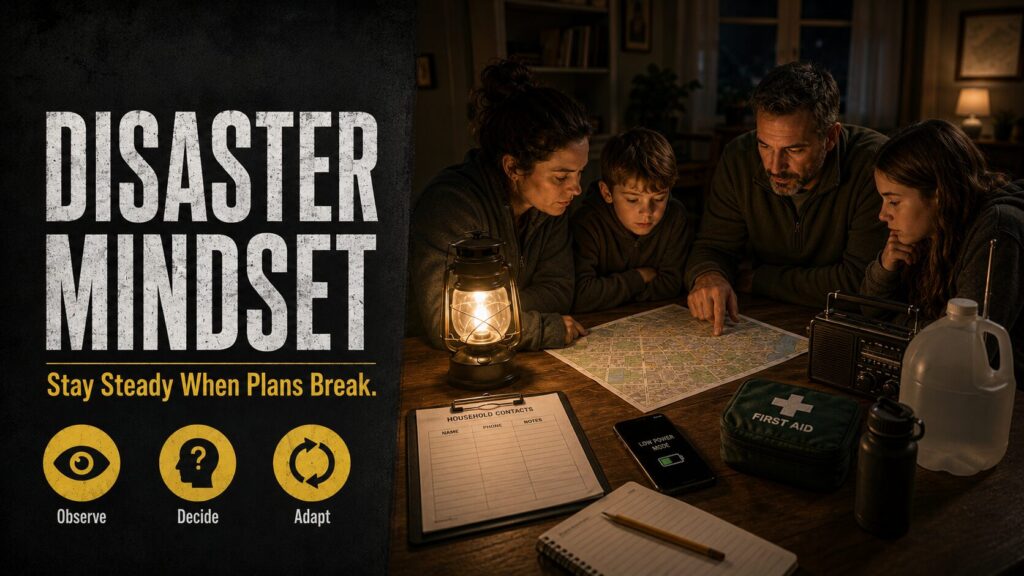
The first mistake people make with preparedness is thinking the plan is the thing that saves them.
A plan matters. I like written plans. I like checklists, labeled bins, water stored where people can actually reach it, and a phone list taped somewhere besides a phone. But the plan is not the whole job. The real job is learning how to stay useful when the plan meets the messy part of life.
That is the part people do not practice enough.
A tree comes down across the road you expected to use. The power goes out before dinner instead of after everyone is asleep. The person who knows where the spare batteries are is not home. A neighbor knocks on the door because their child needs a phone charger, or their basement is taking water, or they just do not know what to do next. Nothing about that is dramatic. It is ordinary stress stacked on top of inconvenience, and that is where a lot of households start losing ground.
The disaster preparedness mindset is not about being fearless. Fear is normal. Frustration is normal too. The useful mindset is more plain than that: slow down enough to see what is happening, make the next sensible decision, and keep your people moving toward safety instead of noise.
The Calm Person Is Usually the Most Prepared Person
Preparedness has a habit of turning into stuff. More gear, more lists, more bins, more clever tools. Some of that is good. I am not against gear. But I have seen calm people with modest supplies do better than scattered people with full closets.
The calm person asks better questions.
Is anyone hurt? Is the house safe to stay in? Is the water still running? Do we need to leave now, or do we need to stop making a small problem bigger? Those questions sound obvious when you read them at a desk. They are harder when alarms are chirping, phones are buzzing, kids are asking what is happening, and you are trying to remember whether the flashlight drawer still has working batteries.
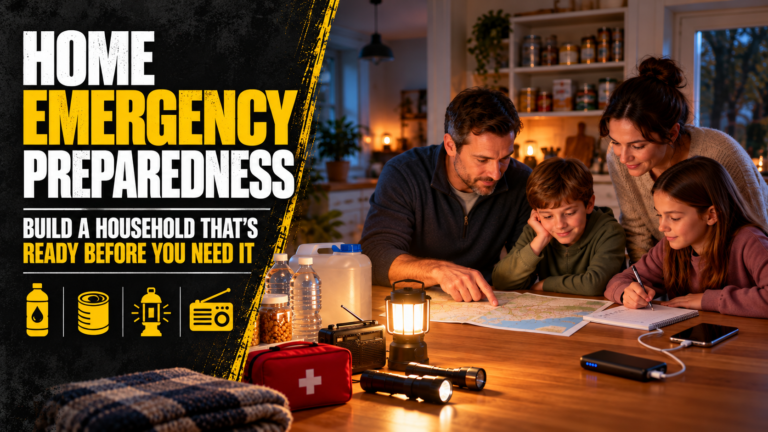
That is why I prefer simple household systems over complicated ones. A good family emergency plan should not require a meeting to understand. It should tell people where to meet, who to contact, what to grab, and what decision makes everyone leave the house. Simple survives stress better than clever.
Preparedness mindset is really the habit of keeping your thinking simple when the situation gets complicated.
Plans Break in Predictable Ways
Most household plans fail in the same few places. Not because people are foolish. Because families are busy, houses are cluttered, and emergencies do not wait for the right time.
Communication is usually the first weak spot. Everyone assumes they will be able to call or text. Then the cell network gets jammed, the phone dies, or someone is in a dead zone. That is why a written emergency communication plan is not some extra detail. It is a pressure release valve. It keeps one missing message from turning into six bad guesses.
The second weak spot is decision authority. People say, ‘We’ll know what to do,’ but they do not define who makes the call if information is incomplete. Leaving early feels silly until it is no longer early. Staying put feels safer until the house, street, or weather says otherwise. A calm household talks through that before the moment comes.
The third weak spot is friction. The kit is buried. The documents are in three places. The car is low on fuel. The dog carrier is in the attic. Someone borrowed the power bank and never put it back.
None of those things look like a disaster on a normal day. Then the lights go out and every loose end becomes a small tax on clear thinking.
The signal to watch for is not just danger. It is friction building faster than your household can absorb it.
The Mindset Shift: From Perfect Plan to Useful Next Move
A lot of people freeze because they are trying to make the perfect decision. They want all the information first. They want confirmation. They want the official instruction, the clear warning, the correct route, the guaranteed answer.
Sometimes you get that. Often you do not.
The better habit is to ask, ‘What is the next useful move that keeps options open?’
That one question has saved more real trouble than big dramatic thinking ever has. If the weather is turning ugly, the next useful move may be charging phones and moving vehicles away from trees. If water pressure drops, it may be filling clean containers before the tap stops. If smoke is in the area, it may be closing windows and deciding what would make you leave.
A useful next move does not have to solve the whole problem. It buys time, reduces confusion, or protects an option.
This is also why I like a staged approach to household readiness. A good 30-day emergency plan works because it builds habits in layers. You do not become steady in a crisis by buying everything on Saturday. You become steadier by making a few good decisions before the pressure starts.
Signals Most People Ignore
The biggest warning signs are often boring.
A forecast changes three times in one day. Gas stations look busier than usual. A local road crew closes a lane near the only easy way out. The power flickers twice. A neighbor mentions the town has had water main problems. The grocery store shelves look thin in one specific area, not empty, just thin. People dismiss those signs because nothing has happened yet.
That is exactly when they matter.
Preparedness mindset means noticing early signals without becoming dramatic about them. You do not need to announce doom because the wind picked up. But you can top off the car, check the radio, pull the lantern where it belongs, and make sure everyone knows dinner may be simple tonight. Quiet action beats loud concern.
I have always trusted the person who does small things early more than the person who makes big promises late.
The other signal people ignore is their own irritation. When a household starts snapping at each other, forgetting steps, or repeating the same question, that is information. It means stress is rising. Assign one task at a time. Stop debating five possible futures and handle the next ten minutes.
That sounds too simple. It is not. A family that can lower its own temperature has a real advantage.
How to Think Under Pressure Without Pretending You Are Fine
You do not need a military mindset to handle a household emergency. You need a working rhythm.
Start with what is true. Not what might happen on the internet, not what someone posted, not the worst thing you can imagine. What is true right now? The power is out. The basement is dry. The wind is still strong. Nobody is hurt. The phones have half a charge. The road north is open, at least for now.
Then separate immediate danger from inconvenience. A cold dinner is inconvenience. A carbon monoxide alarm is danger. A flooded road is danger. A dead phone is inconvenience until it affects safety, contact, or navigation. This sorting matters because stress makes everything feel equal, and everything is not equal.
Next, protect the basics: people, shelter, water, heat or cooling, communication, and the ability to leave. When those are stable, you can think about comfort. Comfort matters, but it comes after safety.
That is the core of the mindset. Not panic. Sorting.
Your Household Needs Fewer Debates and More Defaults
Defaults are decisions you already made.
Where do we meet if we leave the house? Who is the out-of-area contact? When do we stop waiting and start driving? What food gets used first if the power is out? Which neighbor do we check on? Where are the flashlights? Who grabs the pet supplies?
A household without defaults has to negotiate every step while tired. That burns energy fast.
I like defaults because they lower the number of decisions people need to make under pressure. They do not remove judgment. They just keep judgment from being wasted on tiny things. If your household already knows that phones go into low-power mode during an outage, that the first lantern goes on the kitchen table, and that every person fills their water bottle when the tap still works, you are ahead.
The best defaults are visible and boring. Tape the contact sheet inside a cabinet. Keep a small light where your hand naturally goes. Store first-use food where it does not require digging through the whole pantry. Good preparedness often looks unimpressive. That is fine.
The Neighbor Factor
Disasters are local before they are anything else. Even big regional events become very local at your front door, your street, your elderly neighbor, your kid’s school, your nearest intersection.
A preparedness mindset includes other people without becoming responsible for everyone. That line matters. You cannot carry a whole neighborhood. But knowing names, numbers, and who may need help can change the first hour.
One steady neighbor with a working radio or a clear head can help a street make better choices. One confused rumor can do the opposite. This is why casual preparedness conversations before trouble are worth having. Not a big meeting. Just normal talk. Who might need help? Who has small children? Who checks on the older couple at the end of the road?
The mindset here is simple: do not wait until stress is high to learn who is around you.
Key Takeaways
Disaster preparedness mindset is the ability to stay useful when the situation changes. Supplies help, but the calm habit of observing, sorting, deciding, and acting matters just as much.
Most plans fail through communication gaps, unclear decision-making, and everyday friction. Fix those before you worry about perfect gear.
Early action should be quiet and practical. Charge devices, check water, confirm contacts, reduce household confusion, and keep options open.
The best household readiness systems are simple enough to work when people are tired, stressed, distracted, or missing information.
Step-by-Step Actions
- Write down the three decisions your household should not debate during an emergency: when to leave, where to meet, and who to contact.
- Choose one out-of-area contact and make sure every household member has that information on paper.
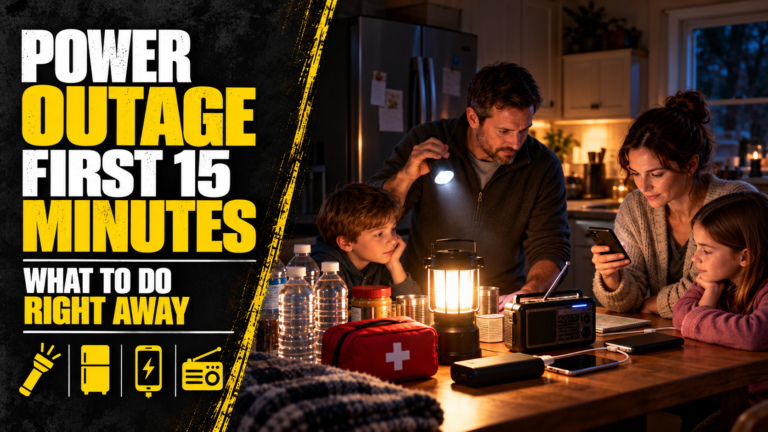
- Put one flashlight, one radio, and one written contact sheet in a location everyone knows.
- Walk through your house and identify the small friction points that would slow you down during an outage or evacuation.
- Create two defaults for power outages: where the main light goes and when phones switch to low-power mode.
- Talk to at least one trusted neighbor about simple check-ins, especially for children, elderly residents, pets, or medical needs.
- Review your plan after the next storm, outage, or near miss, while the weak points are still fresh.
Checklist
- Household meeting place chosen
- Out-of-area contact written down
- Paper contact sheet stored in a visible location
- Communication plan reviewed
- Flashlights and radio easy to reach
- Water containers and bottles identified
- Leave-now triggers discussed
- Pet, medication, and document needs considered
- Neighbor check-in contact chosen
- Post-event review habit started