

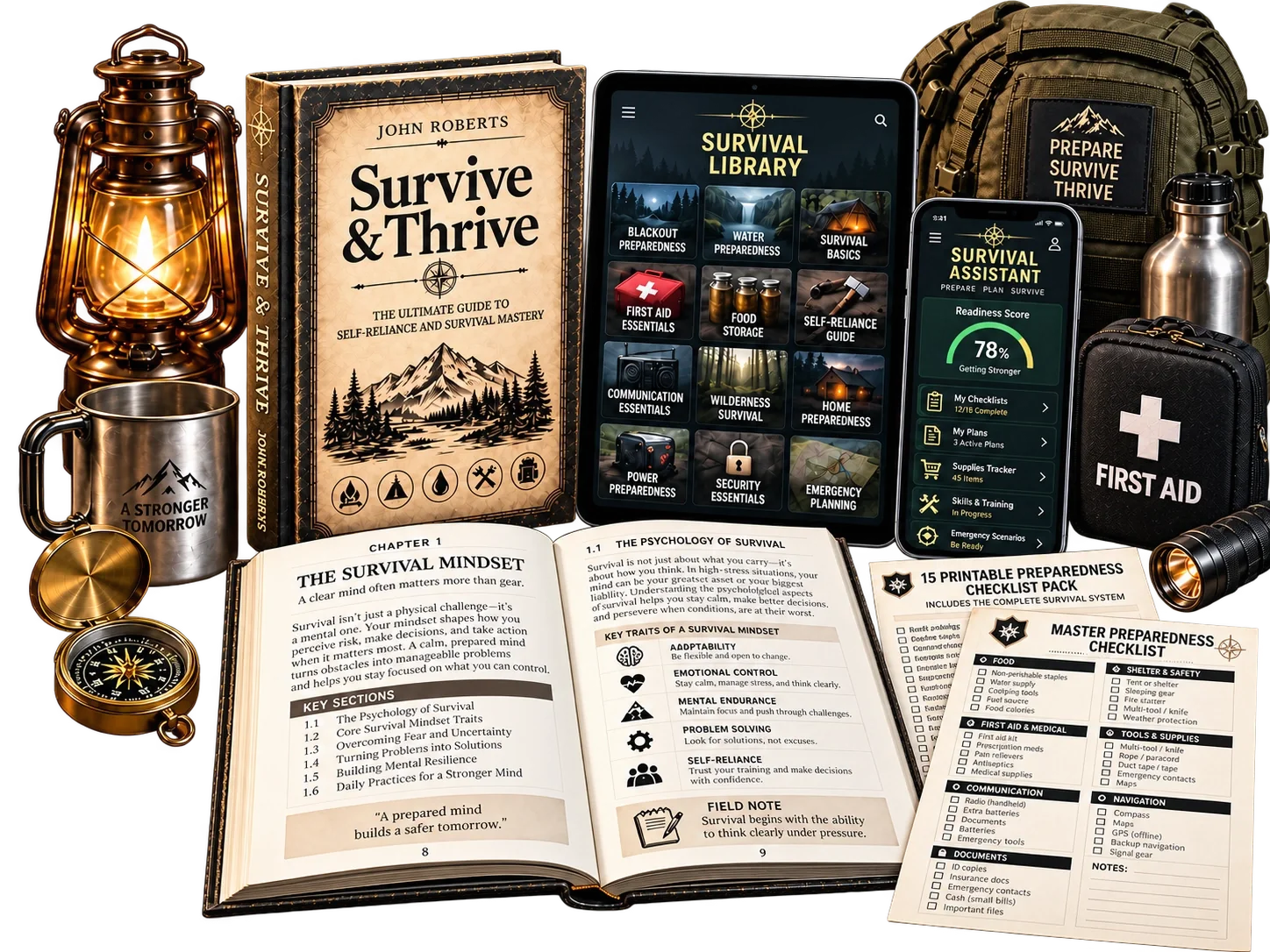
Food and supply chain collapse survival
The shelf is empty.
Your family still needs dinner.
Food and Supply Chain Collapse Survival System
Build the knowledge behind your pantry before missed deliveries, rising prices, and purchase limits turn an ordinary shopping trip into a countdown.
When “we will pick it up tomorrow” stops working, what can your household actually do?
The first shopping trip · One unavailable product
You buy a different brand and think nothing of it.
The usual one is missing. There is an empty strip where it belongs, with the price label still attached.
You choose a substitute. Put it in the cart. Keep moving.
A few aisles later, another gap. Then another.
You ask whether a delivery is coming. The employee does not have a date to give you.
It is annoying. You have other things to do.
At home, you put the bags away and write the missing items on next week’s list.
That is how you have always handled a shortage. You wait, shop somewhere else, or order online.
Every solution assumes another delivery is on its way.
The next trip · Substitutes start disappearing too
The empty spaces are no longer isolated.
People stand in front of the same shelves, checking the same gaps. Someone is photographing them.
The brand you bought last time is gone. So is the cheaper alternative. A handwritten notice limits how many of a remaining item you can take.
You add things you were not planning to buy because you do not want to return and find them missing.
Other people are making the same calculation.
By the time you reach the checkout, the total is higher and the cart solves fewer of the meals you intended to make.
The shopping list has become a record of things your money cannot reliably bring home.
The store is the end of a moving system
You were depending on a shelf.
The shelf was depending on everything behind it.
One missing delivery is a gap on a shelf.
Repeated delays change how the whole store works. Staff cannot promise what will arrive. Customers buy substitutes. Those supplies run down faster too.
A fuel problem stretches transport. A missing ingredient interrupts production. Packaging shortages hold up goods that otherwise exist.
You are seeing the final visible link in a chain you never had to think about.
The supermarket was never your reserve. It was your connection to constant replenishment.
Several days later · More miles, less certainty
You spend fuel looking for food.
One store has part of the list. Another has something you can substitute. The place across town is supposed to have a delivery.
You drive over and find other people arrived first.
The trip costs time and fuel whether you find what you need or not.
Back home, the cupboard still looks reasonably full. Until you stop counting packages and start counting meals.
A jar of sauce without the food you normally serve with it. Flour without a practiced plan for using it. Frozen food that still needs dependable power. Dry staples that still need water and a safe way to cook them.
You have more ingredients than complete answers.
Then the list gets longer.
Soap. Pet food. The household item you always replace just before it runs out. A refill that now requires more calls and lead time.
The emergency has moved beyond groceries.
The following week · The countdown is inside the house
Every meal draws down something you cannot easily replace.
You open the pantry and mentally subtract tonight’s dinner.
Breakfast takes another portion. Lunch takes another. The children do not stop being hungry because the shop has posted a delivery notice.
You start thinking about growing food. Then you look at the ground, the season, and the time a crop needs.
You start thinking about preserving food. Then you realize that jars, safe methods, ingredients, equipment, and practice all belong on a plan you have not made.
Long-term capability does not appear because the short-term supply is running out.
Seeds are a starting material. A harvest is a skill, a season, and work already underway.
The food you own still needs knowledge behind it.
You need to know what you have, how to use it, how to store it safely, and what another week will consume.
You need meals that match the water, fuel, and equipment actually available.
You need to recognize which supplies support several jobs and which depend on something else you forgot to buy.
A freezer full of food needs a power-loss plan. A bag of dry staples needs preparation knowledge. Home preservation needs tested methods rather than a hurried guess.
Without those connections, a pile of purchases can hide the same dependency that emptied the supermarket shelf.
Replace constant replenishment with household capability
Food shortage preparedness starts before the shortage starts choosing your meals.
Count complete meals. Review dietary needs. Track water. Learn storage and rotation. Practice preparation with the foods you actually keep.
Begin gardening and preservation as skills while ordinary supplies still make mistakes easier to correct.
Build practical knowledge around food, water, sanitation, repairs, and the household essentials that disappear from shelves alongside dinner.
You cannot eat an expected delivery. You can use the supplies and skills already in your home.
That is the capability to build now.
Make stored supplies usable
The Complete Survival System
A clear starting path, practical checklists, a core preparedness guide, deep reference material, an offline-capable app, and printable resources. Connect food, water, storage, preparation, and household planning before the next missed delivery.
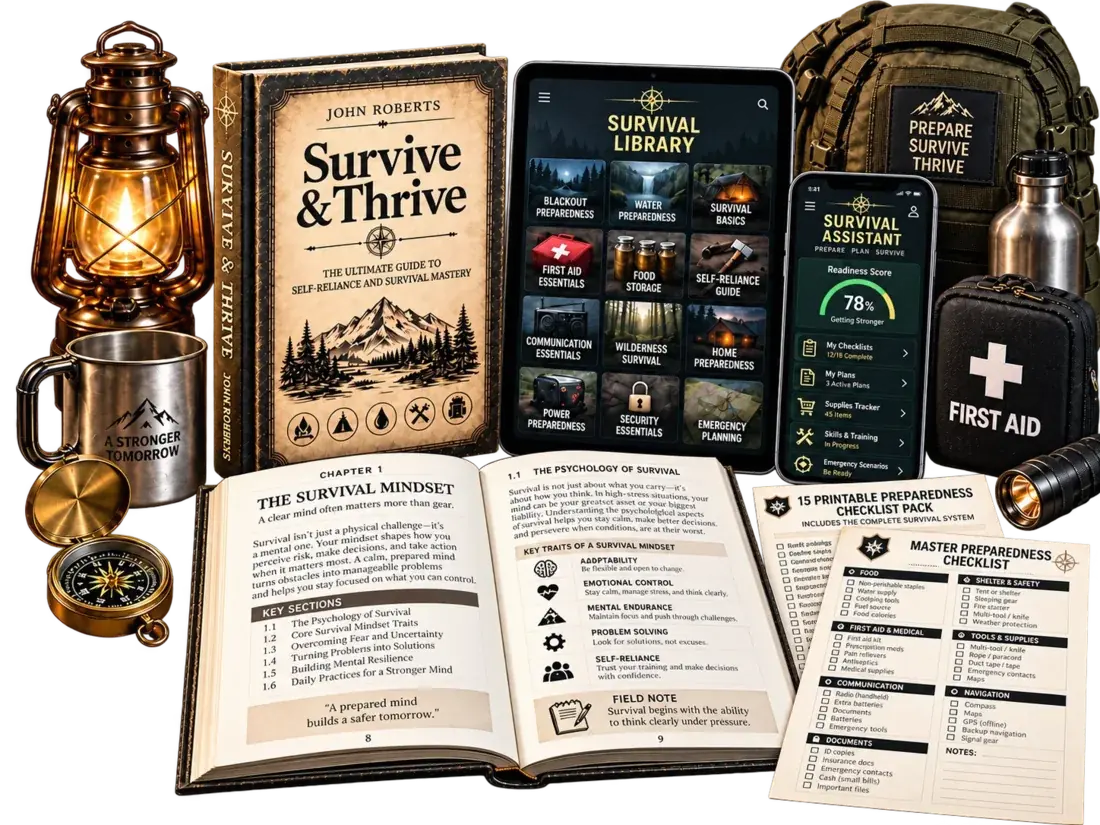
Digital system. Physical gear and printed books shown in the artwork are not shipped.
One purchase · All nine layers
Build the knowledge behind your pantry.
$49.99 USD
One-time payment. Instant digital access. No recurring subscription. Keep the core resource files.
GET THE COMPLETE SURVIVAL SYSTEM
30-day money-back guarantee · Purchase through Gumroad
Use the system to find gaps, complete household work, and connect your supplies to a plan. Learn the fundamentals and keep useful reference close before shopping stops reliably replacing what your family uses.
Nine layers. Put meals behind the inventory.
Build the knowledge
that makes the pantry useful.
01 + 02 · Start with the household
READ THIS FIRST + Family Ready Quickstart
Follow a clear first path. Turn the urge to prepare into work you can complete while food, storage supplies, and normal deliveries still make it easier.
03 · Find unfinished decisions
15 Survival Action Checklists
Review family, vehicle, evacuation, water, and blackout readiness. Expose missing supplies and plans before the next meal exposes a missing ingredient, water requirement, or cooking dependency.

04 · Build practical judgment
214-page Survive & Thrive
The 17-chapter core guide develops preparedness, self-reliance, and action. Build the fundamentals behind household food, water, shelter, and practical decisions so a full cupboard becomes useful capability.
05 + 06 · Keep depth behind the plan
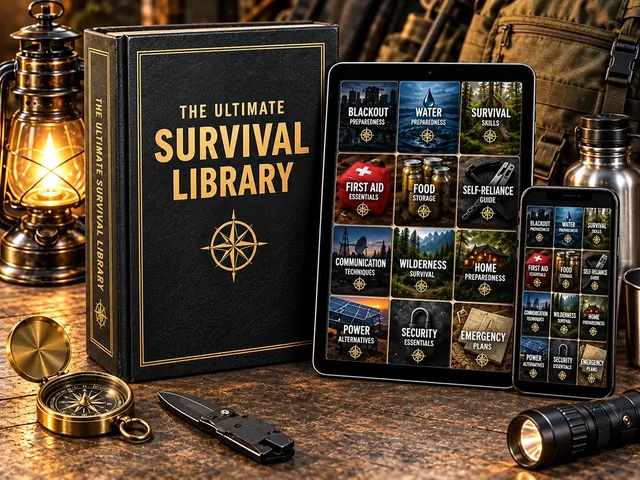
Guided Library Index + 950+ manuals
Find deeper reference on food, water, first aid, shelter, construction, and self-reliance. Use the problem-first index as you develop storage, gardening, preservation, repairs, and practical ways to reduce replacement needs.
07 · Keep specialist study available
Advanced Reference Archive
Historical, military, technical, and specialty resources add deeper study behind the family starting path. Begin with household needs and expand your practical knowledge over time.
08 · Keep references within reach
Offline-ready resource files
Save guides, indexes, checklists, and manuals locally. Print essential plans and references. Keep household information accessible when a connection is unreliable or a phone runs low.
09 · Survival Assistant app included
Know what you have.
Know what needs doing.
Use the Survival Assistant to track household supplies, save family information, review readiness, complete 15 interactive checklists, calculate water needs, and build communication and evacuation plans. Connect the inventory to the people who depend on it.
Its offline-capable core keeps saved plans, emergency guidance, and searchable built-in preparedness knowledge on your device. Prepare it and run the Offline Readiness test before disruption.
The useful inventory is the one your household has completed before the shelves start making your decisions.
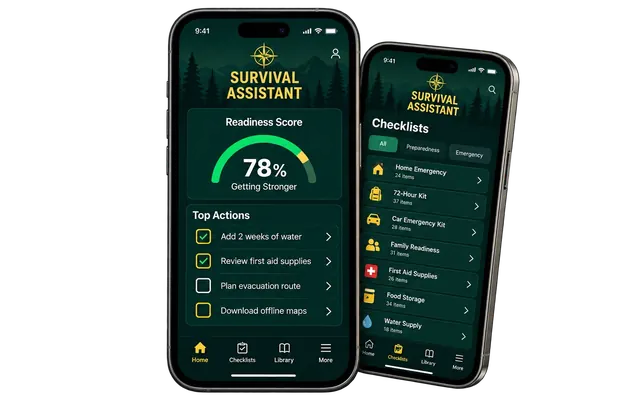
Use offline features on a functioning, prepared device. Save deeper manuals separately, export your household backup, and print essential contacts and plans.
Complete system: $49.99 once · no subscription · 30-day guarantee
Every stored ingredient needs a usable plan
A stack of groceries is not the same as a working food plan.
Food has to fit your household, your water, your cooking options, and your storage conditions. Knowledge connects what you buy to what your family can actually use.
Gear solves individual problems. Knowledge connects the problems.
“We have already stocked the pantry.”
Count complete meals rather than packages. Review the water, cooking options, storage conditions, and household dietary needs behind them. Use the checklists to expose gaps before the next meal depends on something you cannot replace.
“I can grow or preserve food if I need to.”
Start learning and practicing now. Crops need suitable conditions and time. Preservation requires appropriate equipment and tested safety methods. Build those skills before an empty shelf becomes the reason you need them.
“What should I work on first?”
Begin with the orientation and Quickstart. Use the checklists to find the next gap in food, water, or household supplies. Learn the fundamentals in the core guide, then use the index and library to develop the storage, growing, and self-reliance skills your plan needs.
PREPARE BEFORE THE NEXT EMPTY SHELF
$49.99 one-time purchase · instant digital access · no subscription
Before you get the system
Before you build the food reserve.
Is this a separate food-shortage product?
This page applies the existing Complete Survival System to household food and supply-chain disruption. Your purchase includes the nine layers described above.
What kind of preparation is the focus?
Food and water readiness, supply organization, practical reference, household skills, and family planning. Use the guided library for deeper study of storage, gardening, preservation, and self-reliance.
Does the app work offline?
Yes. Its offline-capable core includes saved household information, plans, checklists, emergency guidance, and searchable built-in knowledge. Prepare and test it first. Save deeper manuals separately and print essential contacts and plans.
Does this include food, seeds, or preservation equipment?
Your purchase is a digital knowledge and planning system. Food, seeds, water, physical gear, and printed books are not shipped. Use current, research-tested food-preservation instructions for the specific food and method; historical reference does not replace food-safety guidance.
What does it cost?
$49.99 USD as a one-time digital purchase, with instant access, no recurring subscription, and a 30-day money-back guarantee. Keep the core downloadable files. Physical gear and printed books are not shipped.
Where can I see the complete offer?
Review the full product details, Survival Assistant features, and Survival Library.
Make the reserve yours to use
Do not let the next delivery decide how prepared your family is.
You can keep treating the supermarket as your reserve and the delivery date as your backup plan.
Or you can build a household that knows what it has and how to use it.
Meals accounted for. Water reviewed. Supplies organized. Storage and rotation understood. Skills practiced. References saved before another shopping trip becomes a search for missing pieces.
When the shelf is empty, your family lives on what is already in your hands—and what you know how to do with it.
Count the meals before the purchase limit.
Learn the skills before the last package.
Build the system before the expected delivery fails to arrive.
Put practical capability behind every supply you store.
GET THE COMPLETE SURVIVAL SYSTEM — $49.99
One-time purchase · instant digital access · no subscription
Offline-capable Survival Assistant included · 30-day money-back guarantee
Practical foundations for food readiness
Build reserves you can store and use safely
- USDA: Foods to keep for emergencies recommends nonperishable foods and emergency water supplies.
- FoodSafety.gov: Food Safety in a Disaster or Emergency explains safe food handling when power, storage, and normal conditions are disrupted.
- National Center for Home Food Preservation provides research-based guidance for safe home food preservation.
Use current food-safety guidance and tested preservation methods alongside your household planning and reference study.