

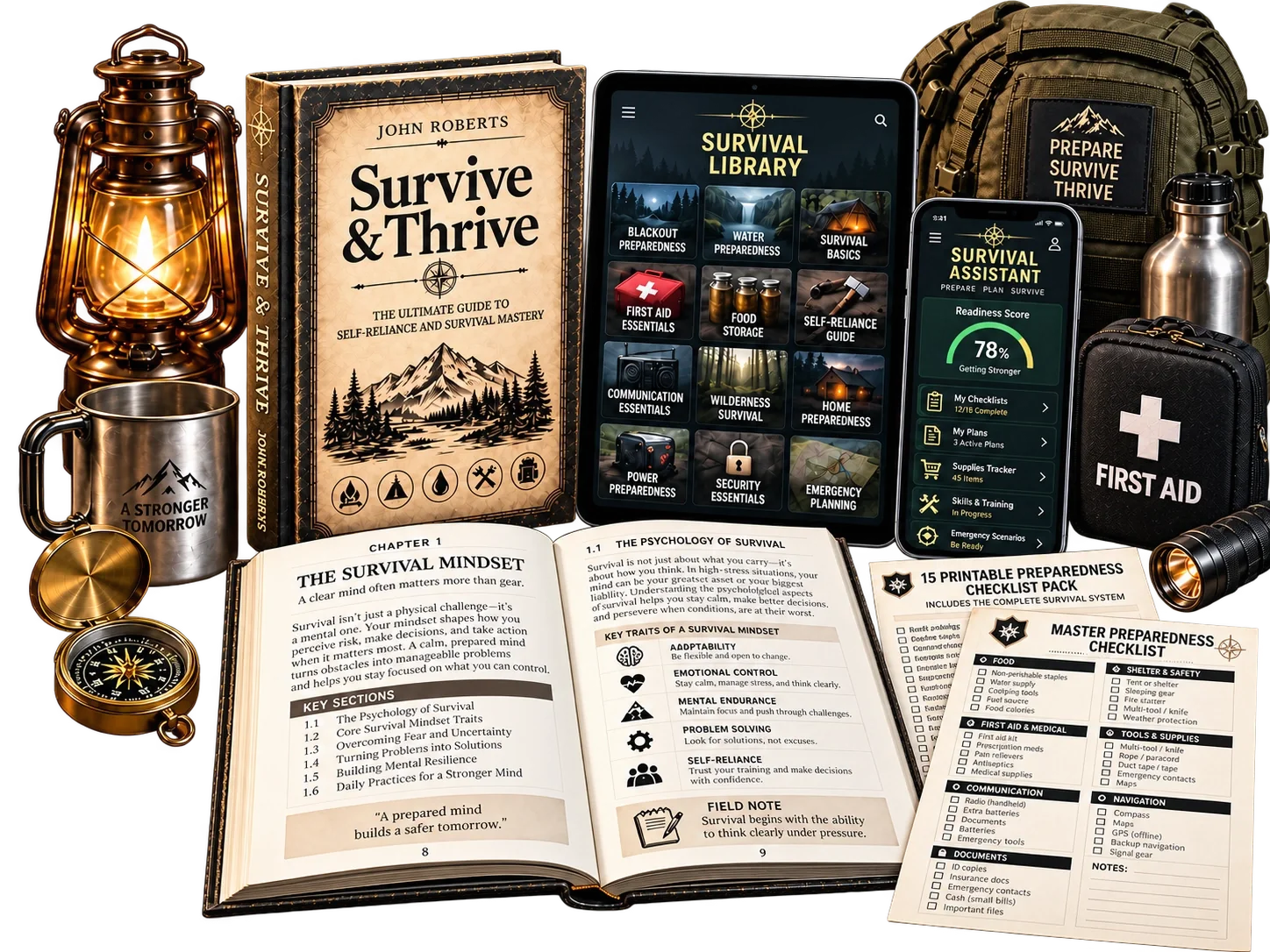
A survival mindset is the ability to keep assessing a situation, manage your response, and adapt your decisions as conditions change. Survive & Thrive introduces that idea in Chapter 1, before moving into equipment and practical skills.
This page is a closer look at the book’s opening material, rather than a separate replacement for the chapter. It explains the ideas shown in the actual chapter-opening and psychology sample pages.
“Preparedness begins with clarity, not fear.”
— Preface, Survive & Thrive
Why the book begins with mindset
A collection of supplies cannot decide what matters next. The book’s introduction connects preparedness with judgment: understanding a problem, choosing priorities, conserving resources, and changing course when circumstances require it.
Starting with mindset gives the later subjects a common foundation. Water, shelter, equipment, navigation, and household disruption involve different practical questions, but all require a person to notice what is happening and make a reasoned decision.
Three traits introduced in the sample
Cognitive flexibility
This is the willingness to revise your thinking when new information arrives. A plan is useful, but following it rigidly after the situation changes can leave you solving the wrong problem.
Emotional control
The chapter discusses managing fear and stress so decisions can remain deliberate. Its focus is on maintaining the ability to think and act, rather than expecting that difficult situations will feel comfortable.
Mental endurance
Uncertainty and discomfort can continue longer than expected. The book introduces endurance as the capacity to remain focused and keep working through those demands.
What the chapter outline promises to explore
The opening page identifies four areas: the psychology of survival, fear management and decisions under pressure, real-world case studies, and mental exercises. The full chapter develops these subjects beyond the short sample shown here.
Connect the idea to an ordinary household plan
Consider a simple planning discussion about a possible power outage. Before adding more equipment, ask who needs information, how people will stay in contact, and what would cause the plan to change. That conversation makes a broad goal such as “be prepared” easier to examine.
This is an illustrative way to use the book’s decision-making theme, not a substitute for local emergency instructions or practical training. The book’s own opening pages emphasize responsible practice and continued learning beyond reading.
Inspect the actual chapter pages
See the Chapter 1 outline and read its psychology sample page. You can compare the book’s presentation with this overview before buying.
Where this leads in the book
Chapter 2 moves to core survival priorities, and Chapter 3 addresses gear and kits. The contents then develops shelter, fire, water, food, navigation, signaling, urban disruption, and other topics. Explore the complete contents to choose the areas most relevant to you.
For another practical introduction on the site, read The Survival Mindset: How to Stay Calm in a Crisis. Return to the book overview when you want to see how the guide fits the complete package.
Based on the preface, introduction, and opening Chapter 1 pages of the customer PDF. Source viewer pages reviewed: 4–6 and 9–12.
Get the book inside the Complete Survival System
Survive & Thrive is included with the 950+ manual Survival Library, Survival Assistant app, 15 action checklists, and quick-start tools. The complete digital package is $49.99 once, with instant access and a 30-day money-back guarantee.
See everything included — $49.99 →
Digital delivery. No physical book is shipped.